What kind of stomach ache is dangerous? Causes, symptoms, and when to see a doctor.
Last updated: 30 Jul 2026
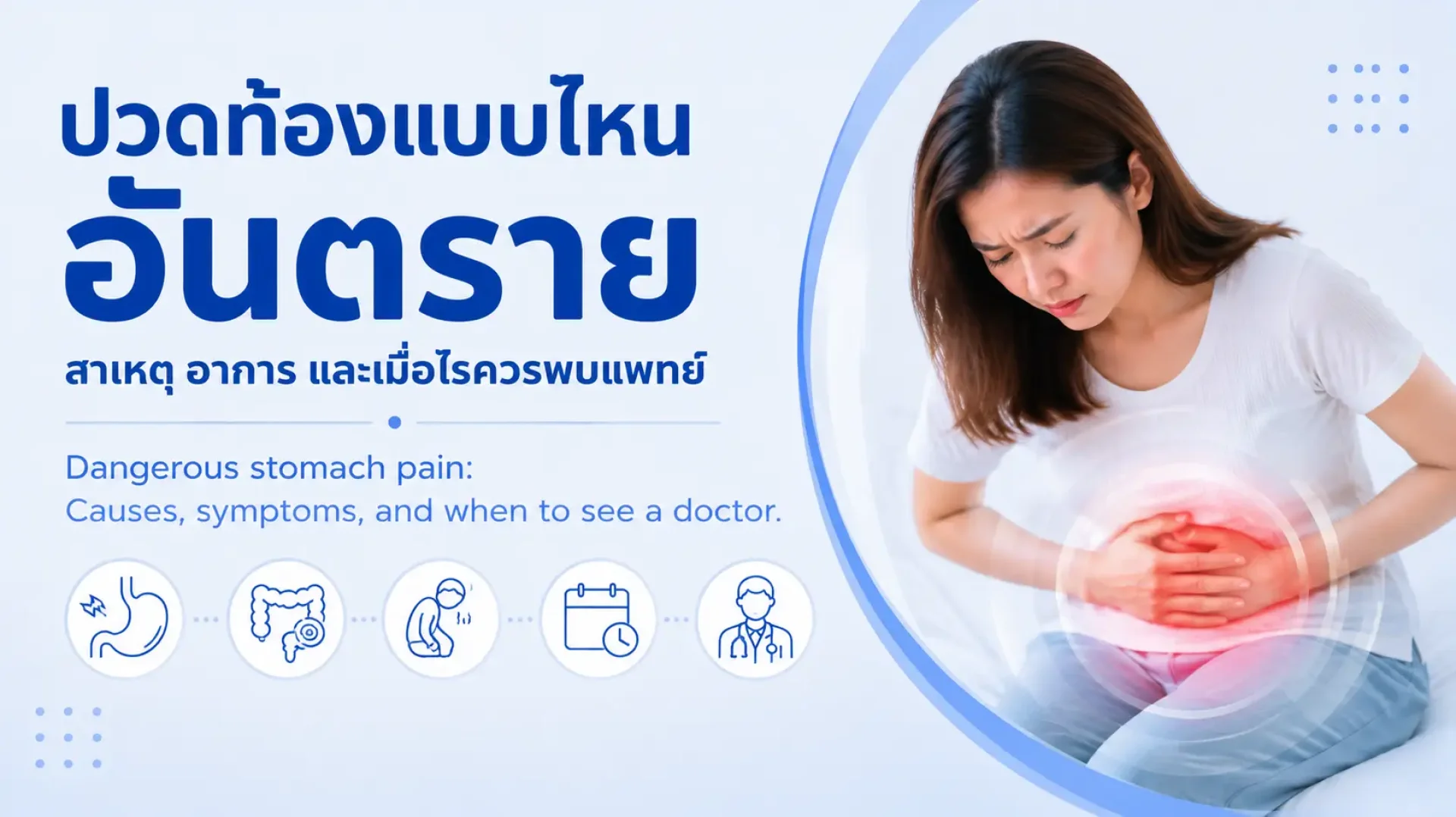
Dangerous Abdominal Pain: Causes, Symptoms, and When to See a Doctor
Abdominal pain is something almost everyone experiences at some point. Sometimes, it is simply caused by indigestion, bloating, or food intolerances and resolves on its own within a short period.
However, abdominal pain can also be a warning sign of conditions that require immediate medical evaluation and treatment. These include appendicitis, cholecystitis (gallbladder inflammation), pancreatitis, bowel obstruction, kidney stones, abdominal infections, or certain gynecological conditions in women.
What makes abdominal pain complex is that pain in the "same location" can be caused by various diseases, and the "same disease" can cause pain in different locations. For example, one patient may experience epigastric (upper middle) pain due to acid reflux, while another might feel the same pain due to a gallbladder, pancreas, or even a heart issue. Similarly, pain in the lower right abdomen could be intestinal inflammation for one person, but appendicitis or an ovarian issue for another.
Therefore, proper management of abdominal pain is not about guessing that it is "probably gastritis" and buying over-the-counter medications every time. You should observe the pain's location, characteristics, accompanying symptoms, severity, and duration—because while some types of abdominal pain can wait, others should not.
What Causes Abdominal Pain?
Abdominal pain can originate from multiple systems, not just the stomach or intestines. In clinical practice, doctors evaluate abdominal pain by considering the gastrointestinal tract, urinary tract, liver, gallbladder, pancreas, reproductive system, abdominal wall muscles, and even certain conditions outside the abdomen.
According to the American Family Physician, acute abdominal pain in adults has diverse causes. Common culprits include gastroenteritis, nonspecific abdominal pain, gallstones, urinary tract stones, diverticulitis, and appendicitis.
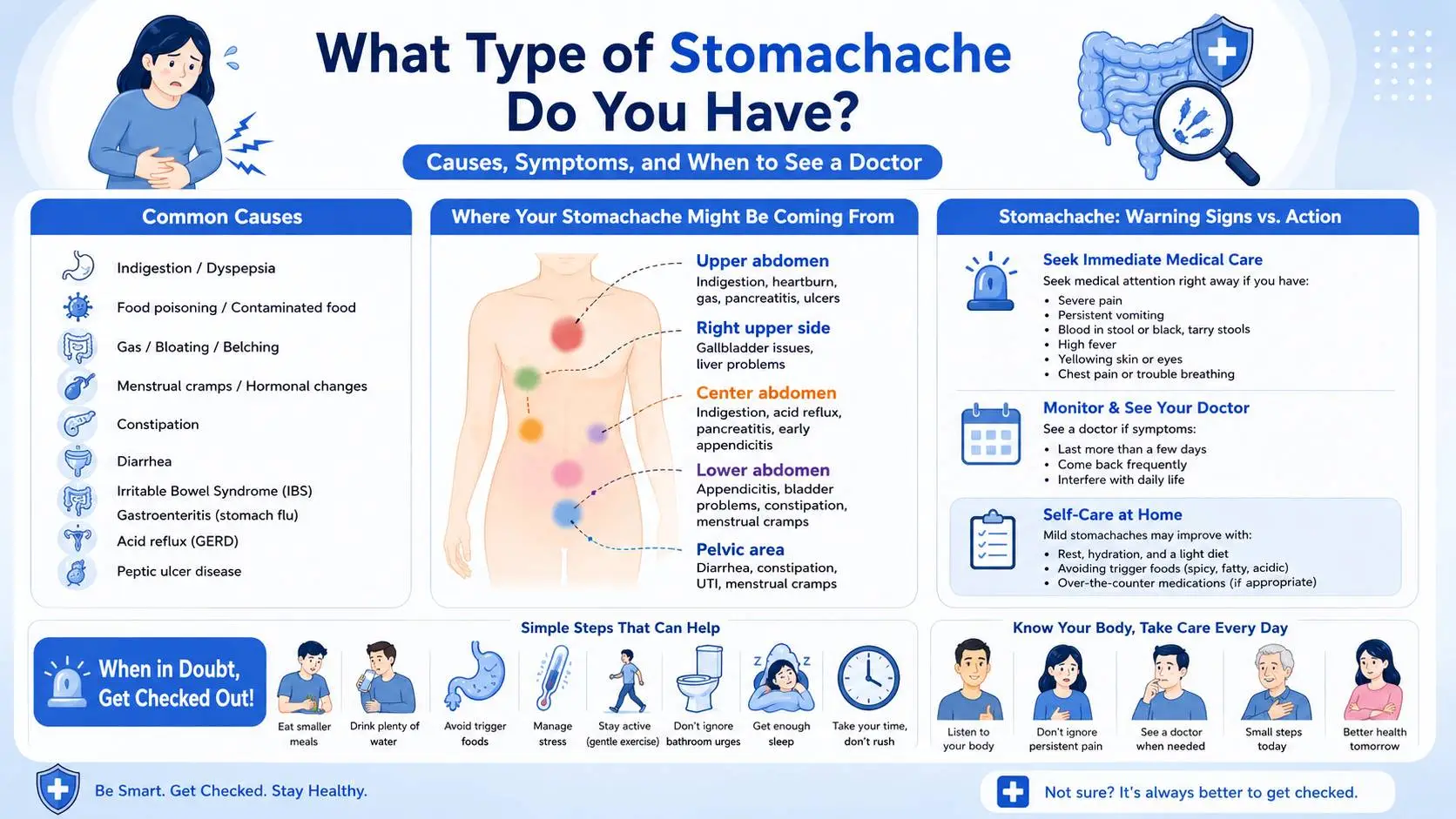
Common causes include:
What Does the Location of the Pain Tell Us?
While the location helps doctors determine the direction of the diagnosis, it is not the final answer.
1. Epigastric Pain (Upper Middle Abdomen)
This can be caused by acid reflux, gastritis, stomach ulcers, gallstones, or pancreatitis. In some cases, it can be a symptom of heart disease—especially if accompanied by chest tightness, cold sweats, shortness of breath, or pain radiating to the arm, neck, jaw, or back.
Pain here may involve the liver, gallbladder, bile ducts, or rib cage muscles. If accompanied by fever, nausea, jaundice (yellowing of the skin or eyes), or dark urine, you should see a doctor immediately, as it could indicate a bile duct obstruction or infection.
3. Right Lower Quadrant Pain
This location often brings appendicitis to mind, which is a critical condition to rule out—especially if the pain started around the belly button and migrated to the lower right side, accompanied by fever, loss of appetite, nausea, or worsened pain when walking, coughing, or moving. However, it could also be caused by enteritis, kidney stones, right-sided diverticulitis, or gynecological issues.
4. Left Lower Quadrant Pain
This can be caused by constipation, enteritis, diverticulitis, urinary tract issues, or gynecological problems. If you experience fever, changes in bowel habits, progressively worsening pain, or blood in your stool, you should consult a doctor.
5. Lower Abdomen / Pelvic Pain
Pain here may relate to the intestines, bladder, uterus, ovaries, prostate, or pelvic floor muscles. For women, if lower abdominal pain is accompanied by a missed period, abnormal bleeding, unusual discharge, or severe pain on one side, a proper gynecological evaluation is required.
6. Generalized Abdominal Pain
Pain all over the abdomen can result from food poisoning, gastroenteritis, trapped gas, or constipation. However, if the pain is severe, the abdomen feels rigid, or you have a high fever, severe vomiting, or faintness, go to the hospital immediately, as it could indicate a severe intra-abdominal condition.
Acute vs. Chronic Abdominal Pain
Seek immediate medical attention if you experience any of the following:
What Will the Doctor Do?
Medical evaluations are tailored to the patient's symptoms and risk factors. Not everyone needs the same tests.
Abdominal Pain in Women Gynecological conditions must always be considered. Lower abdominal or one-sided pain might involve the uterus, ovaries, fallopian tubes, or pregnancy. Watch out for conditions like ruptured ovarian cysts, ovarian torsion, pelvic inflammatory disease, endometriosis, severe menstrual cramps, fibroids, or ectopic pregnancy.
Abdominal Pain in the Elderly
Older adults require extra caution. Symptoms may be atypical (e.g., no high fever, mild pain, or inability to pinpoint the location), but the underlying condition could be severe (e.g., bowel obstruction, mesenteric ischemia, diverticulitis, or an abdominal aortic aneurysm). Do not wait long if an elderly person experiences new abdominal pain, especially with drowsiness, loss of appetite, vomiting, fever, or a drop in blood pressure.
Home Care for Mild Abdominal Pain
If the pain is mild, without fever, severe vomiting, bloody/black stools, or severe localized tenderness, and you can still eat and drink, you may try brief home care:
Frequently Asked Questions (FAQs)
1. What kind of abdominal pain is dangerous? Dangerous pain usually comes with red flags: progressively worsening severe pain, rigid abdomen, high fever, severe vomiting, black/bloody stools, jaundice, fainting, shortness of breath, or pain after trauma.
2. Is right lower quadrant pain always appendicitis? Not always, but appendicitis is a critical condition to rule out. Other possibilities include intestinal infections, kidney stones, or gynecological issues. A doctor may use blood tests, ultrasounds, or CT scans to confirm.
3. Is epigastric pain always gastritis? No. It can be acid reflux, stomach ulcers, gallstones, pancreatitis, or even heart disease. If you have chest tightness, cold sweats, or pain radiating to your arm or jaw, seek immediate help.
4. Should I take anti-diarrhea pills if I have stomach pain and loose stools? You should not take them blindly, especially if you have a high fever, bloody stools, severe pain, or a suspected severe infection. The best initial care is staying hydrated with ORS.
5. Does chronic abdominal pain require an endoscopy? Not always. A doctor will evaluate based on age, symptoms, pain location, weight loss, anemia, bleeding, or family history. Endoscopies are typically reserved for those with warning signs.
6. Does everyone with abdominal pain need a CT scan? No. Blood tests and an ultrasound are often sufficient. CT scans are used when symptoms are unclear or a complex intra-abdominal disease is suspected.
7. Can I just buy over-the-counter medicine for stomach pain? For very mild symptoms without red flags, brief home care is fine. However, do not blindly take antibiotics, strong painkillers, laxatives, or anti-diarrhea pills. If symptoms worsen, consult a doctor.
Abdominal pain is common, but it should never be dismissed as "just another stomachache." The causes range from mild indigestion to life-threatening emergencies. While observing your symptoms helps assess risk, it cannot replace a proper medical evaluation. Early diagnosis leads to prompt treatment and prevents dangerous complications.
For inquiries and appointments: Sapience Hospital | Move Better : Live Better Tel. 02-111-3703
Academic References:
Yew KS, George MK, Allred HB. Acute Abdominal Pain in Adults: Evaluation and Diagnosis. American Family Physician. 2023;107(6):585–596.
National Institute for Health and Care Excellence. Abdominal pain - acute: Red flags. NICE Clinical Knowledge Summary.
Scheirey CD, Fowler KJ, Therrien JA, et al. ACR Appropriateness Criteria® Acute Nonlocalized Abdominal Pain. Journal of the American College of Radiology. 2018.
Kambadakone AR, et al. ACR Appropriateness Criteria® Right Lower Quadrant Pain. Journal of the American College of Radiology. 2022.
Merck Manual Professional Edition. Acute Abdominal Pain.
Merck Manual Professional Edition. Chronic Abdominal Pain and Recurrent Abdominal Pain.
Abdominal pain is something almost everyone experiences at some point. Sometimes, it is simply caused by indigestion, bloating, or food intolerances and resolves on its own within a short period.
However, abdominal pain can also be a warning sign of conditions that require immediate medical evaluation and treatment. These include appendicitis, cholecystitis (gallbladder inflammation), pancreatitis, bowel obstruction, kidney stones, abdominal infections, or certain gynecological conditions in women.
What makes abdominal pain complex is that pain in the "same location" can be caused by various diseases, and the "same disease" can cause pain in different locations. For example, one patient may experience epigastric (upper middle) pain due to acid reflux, while another might feel the same pain due to a gallbladder, pancreas, or even a heart issue. Similarly, pain in the lower right abdomen could be intestinal inflammation for one person, but appendicitis or an ovarian issue for another.
Therefore, proper management of abdominal pain is not about guessing that it is "probably gastritis" and buying over-the-counter medications every time. You should observe the pain's location, characteristics, accompanying symptoms, severity, and duration—because while some types of abdominal pain can wait, others should not.
What Causes Abdominal Pain?
Abdominal pain can originate from multiple systems, not just the stomach or intestines. In clinical practice, doctors evaluate abdominal pain by considering the gastrointestinal tract, urinary tract, liver, gallbladder, pancreas, reproductive system, abdominal wall muscles, and even certain conditions outside the abdomen.
According to the American Family Physician, acute abdominal pain in adults has diverse causes. Common culprits include gastroenteritis, nonspecific abdominal pain, gallstones, urinary tract stones, diverticulitis, and appendicitis.
Common causes include:
- Acid reflux (GERD), gastritis, or peptic ulcers
- Food poisoning or gastroenteritis
- Constipation, bloating, or trapped gas
- Gallstones or gallbladder inflammation (cholecystitis)
- Pancreatitis
- Appendicitis
- Kidney stones or cystitis (urinary tract infection)
- Bowel obstruction
- Chronic inflammatory bowel disease (IBD)
- Gynecological conditions (e.g., ruptured ovarian cyst, ovarian torsion, pelvic inflammatory disease, or ectopic pregnancy)
- Abdominal wall muscle strain
- Certain heart conditions (which can mimic epigastric pain or indigestion)
What Does the Location of the Pain Tell Us?
While the location helps doctors determine the direction of the diagnosis, it is not the final answer.
1. Epigastric Pain (Upper Middle Abdomen)
This can be caused by acid reflux, gastritis, stomach ulcers, gallstones, or pancreatitis. In some cases, it can be a symptom of heart disease—especially if accompanied by chest tightness, cold sweats, shortness of breath, or pain radiating to the arm, neck, jaw, or back.
- If the pain occurs after a fatty meal, involves nausea, and radiates to the back or right shoulder blade, it may point to the gallbladder.
- If it is severe, radiates to the back, and involves heavy vomiting, pancreatitis is a concern.
- If there is a burning sensation in the chest, sour burps, and it worsens when lying down, it is likely acid reflux.
Pain here may involve the liver, gallbladder, bile ducts, or rib cage muscles. If accompanied by fever, nausea, jaundice (yellowing of the skin or eyes), or dark urine, you should see a doctor immediately, as it could indicate a bile duct obstruction or infection.
3. Right Lower Quadrant Pain
This location often brings appendicitis to mind, which is a critical condition to rule out—especially if the pain started around the belly button and migrated to the lower right side, accompanied by fever, loss of appetite, nausea, or worsened pain when walking, coughing, or moving. However, it could also be caused by enteritis, kidney stones, right-sided diverticulitis, or gynecological issues.
4. Left Lower Quadrant Pain
This can be caused by constipation, enteritis, diverticulitis, urinary tract issues, or gynecological problems. If you experience fever, changes in bowel habits, progressively worsening pain, or blood in your stool, you should consult a doctor.
5. Lower Abdomen / Pelvic Pain
Pain here may relate to the intestines, bladder, uterus, ovaries, prostate, or pelvic floor muscles. For women, if lower abdominal pain is accompanied by a missed period, abnormal bleeding, unusual discharge, or severe pain on one side, a proper gynecological evaluation is required.
6. Generalized Abdominal Pain
Pain all over the abdomen can result from food poisoning, gastroenteritis, trapped gas, or constipation. However, if the pain is severe, the abdomen feels rigid, or you have a high fever, severe vomiting, or faintness, go to the hospital immediately, as it could indicate a severe intra-abdominal condition.
Acute vs. Chronic Abdominal Pain
- Acute Abdominal Pain: Refers to new, sudden-onset pain. It is often caused by conditions requiring urgent treatment, such as appendicitis, cholecystitis, bowel obstruction, or intra-abdominal infections. Severe, acute pain is often a red flag for intra-abdominal disease and sometimes the only sign of a condition requiring surgery.
- Chronic or Recurrent Abdominal Pain: This may be related to acid reflux, gastritis, irritable bowel syndrome (IBS), chronic constipation, gallstones, gynecological issues, or chronic IBD. Evaluation involves looking at patterns: is the pain related to food, bowel movements, menstrual cycles, or stress?
- Caution: Chronic pain does not mean it is harmless. If accompanied by unexplained weight loss, anemia, black or bloody stools, difficulty swallowing, chronic vomiting, or pain that wakes you up at night, further investigation is needed.
Seek immediate medical attention if you experience any of the following:
- Extremely severe pain, or pain that progressively worsens
- Pain so severe that you cannot walk, have to bend over, or it hurts to move
- A rigid abdomen, severe tenderness to the touch, or "rebound tenderness" (pain upon releasing pressure)
- High fever and chills
- Severe vomiting to the point of being unable to keep fluids down
- Vomiting blood, or passing black/bloody stools in large amounts
- Jaundice (yellow skin/eyes) or very dark urine
- Fainting, dizziness, palpitations, or cold sweats
- Shortness of breath or chest tightness accompanying the pain
- Severe bloating, inability to pass gas or have a bowel movement
- Abdominal pain following trauma or an accident
- Pain in the elderly, diabetics, immunocompromised patients, or those on blood thinners
- Lower abdominal pain in women of reproductive age, especially with a missed period or abnormal bleeding
What Will the Doctor Do?
Medical evaluations are tailored to the patient's symptoms and risk factors. Not everyone needs the same tests.
- Detailed History Taking: The doctor will ask when the pain started, its exact location, character (cramping, burning, dull, sharp), radiation, and relationship to food, bowel movements, urination, or menstrual cycles.
- Physical Examination: Pressing on the abdomen helps identify tenderness, rigidity, peritoneal irritation, masses, or hernias. Vital signs (like fever and heart rate) and signs like jaundice or swelling are also checked.
- Blood Tests: To check white blood cell counts, inflammatory markers, liver and kidney function, electrolytes, blood sugar, pancreatic enzymes, or signs of infection.
- Urine Tests: To check for urinary tract infections, kidney stones, or blood in the urine. A pregnancy test may be done for women of reproductive age.
- Abdominal Ultrasound: Ideal for evaluating the gallbladder, liver, bile ducts, kidneys, urinary tract, and certain gynecological organs. It involves no radiation and is highly safe.
- CT Scan of the Abdomen: Highly effective for unclear acute abdominal pain, suspected appendicitis, diverticulitis, bowel obstruction, or when detailed views of multiple organs are needed.
- Specialized Tests: Endoscopy, colonoscopy, pelvic exams, or cardiac evaluations may be ordered based on the suspected cause.
Abdominal Pain in Women Gynecological conditions must always be considered. Lower abdominal or one-sided pain might involve the uterus, ovaries, fallopian tubes, or pregnancy. Watch out for conditions like ruptured ovarian cysts, ovarian torsion, pelvic inflammatory disease, endometriosis, severe menstrual cramps, fibroids, or ectopic pregnancy.
Abdominal Pain in the Elderly
Older adults require extra caution. Symptoms may be atypical (e.g., no high fever, mild pain, or inability to pinpoint the location), but the underlying condition could be severe (e.g., bowel obstruction, mesenteric ischemia, diverticulitis, or an abdominal aortic aneurysm). Do not wait long if an elderly person experiences new abdominal pain, especially with drowsiness, loss of appetite, vomiting, fever, or a drop in blood pressure.
Home Care for Mild Abdominal Pain
If the pain is mild, without fever, severe vomiting, bloody/black stools, or severe localized tenderness, and you can still eat and drink, you may try brief home care:
- Eat soft, easily digestible foods.
- Stay well hydrated.
- Avoid fatty, spicy foods, alcohol, caffeine, and other triggers.
- Get plenty of rest.
- Monitor the location and severity of the pain.
- For diarrhea, sip oral rehydration salts (ORS) as needed.
Frequently Asked Questions (FAQs)
1. What kind of abdominal pain is dangerous? Dangerous pain usually comes with red flags: progressively worsening severe pain, rigid abdomen, high fever, severe vomiting, black/bloody stools, jaundice, fainting, shortness of breath, or pain after trauma.
2. Is right lower quadrant pain always appendicitis? Not always, but appendicitis is a critical condition to rule out. Other possibilities include intestinal infections, kidney stones, or gynecological issues. A doctor may use blood tests, ultrasounds, or CT scans to confirm.
3. Is epigastric pain always gastritis? No. It can be acid reflux, stomach ulcers, gallstones, pancreatitis, or even heart disease. If you have chest tightness, cold sweats, or pain radiating to your arm or jaw, seek immediate help.
4. Should I take anti-diarrhea pills if I have stomach pain and loose stools? You should not take them blindly, especially if you have a high fever, bloody stools, severe pain, or a suspected severe infection. The best initial care is staying hydrated with ORS.
5. Does chronic abdominal pain require an endoscopy? Not always. A doctor will evaluate based on age, symptoms, pain location, weight loss, anemia, bleeding, or family history. Endoscopies are typically reserved for those with warning signs.
6. Does everyone with abdominal pain need a CT scan? No. Blood tests and an ultrasound are often sufficient. CT scans are used when symptoms are unclear or a complex intra-abdominal disease is suspected.
7. Can I just buy over-the-counter medicine for stomach pain? For very mild symptoms without red flags, brief home care is fine. However, do not blindly take antibiotics, strong painkillers, laxatives, or anti-diarrhea pills. If symptoms worsen, consult a doctor.
Abdominal pain is common, but it should never be dismissed as "just another stomachache." The causes range from mild indigestion to life-threatening emergencies. While observing your symptoms helps assess risk, it cannot replace a proper medical evaluation. Early diagnosis leads to prompt treatment and prevents dangerous complications.
For inquiries and appointments: Sapience Hospital | Move Better : Live Better Tel. 02-111-3703
Academic References:
Yew KS, George MK, Allred HB. Acute Abdominal Pain in Adults: Evaluation and Diagnosis. American Family Physician. 2023;107(6):585–596.
National Institute for Health and Care Excellence. Abdominal pain - acute: Red flags. NICE Clinical Knowledge Summary.
Scheirey CD, Fowler KJ, Therrien JA, et al. ACR Appropriateness Criteria® Acute Nonlocalized Abdominal Pain. Journal of the American College of Radiology. 2018.
Kambadakone AR, et al. ACR Appropriateness Criteria® Right Lower Quadrant Pain. Journal of the American College of Radiology. 2022.
Merck Manual Professional Edition. Acute Abdominal Pain.
Merck Manual Professional Edition. Chronic Abdominal Pain and Recurrent Abdominal Pain.
Related Content

The Pap smear and HPV test are important cervical cancer screening methods. A Pap smear checks for abnormal cervical cells, while an HPV test looks for high-risk HPV, the primary cause of cervical cancer. Learn about the differences, the recommended age to start screening, and how often you should get tested.
10 Jul 2026

Heavy menstrual bleeding, passing blood clots, the need for frequent pad changes, paleness, easy fatigue, or other forms of abnormal bleeding can be caused by hormonal imbalances, uterine fibroids, polyps, endometrial hyperplasia (a thickened uterine lining), or other underlying conditions. A proper medical evaluation is highly recommended to determine the exact cause.
10 Jul 2026

อาการปวดท้องน้อยเรื้อรัง: อาการปวดจาก Chocolate Cyst
13 Jul 2025
