Cervical Cancer Screening: What is the difference between a Pap smear and an HPV test?

Why is Cervical Cancer Screening Important?
While cervical cancer is a frightening diagnosis for many women, it is also one of the most preventable and highly curable cancers when abnormalities are detected in their precancerous stages through appropriate screening.
The importance of cervical cancer screening lies in the fact that the disease rarely develops overnight. It generally begins with a "high-risk HPV" (Human Papillomavirus) infection that gradually causes abnormal changes in cervical cells. If left unchecked, unmonitored, and untreated, these abnormalities can develop into cervical cancer over time.
Therefore, screening does not aim solely to "find cancer." Its primary goal is to detect precancerous changes so they can be treated early—the exact point where modern medicine is most effective at preventing the disease.
The World Health Organization (WHO) emphasizes HPV DNA testing for cervical cancer screening because HPV is the leading cause of the disease. Detecting the virus helps identify at-risk individuals before obvious cellular abnormalities occur.
What is a Pap Smear?
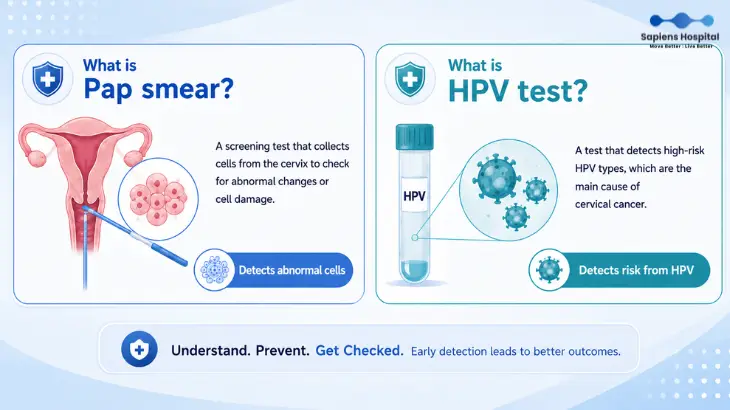
A "Pap smear" (or Pap test) is a procedure to check the cells of the cervix. A doctor or healthcare provider uses a small brush or spatula to collect a cell sample from the cervix, which is then sent to a laboratory to check for abnormalities.
In simple terms, a Pap smear looks at the "appearance of the cells" to see if they have started to change abnormally or show signs of precancerous lesions.
The Benefits: The Pap smear is a well-established test that has played a crucial role in reducing cervical cancer incidence and mortality worldwide.
Guidelines: The US Preventive Services Task Force (USPSTF) recommends that women aged 21–29 undergo cervical cytology (a Pap test) every 3 years. For women aged 30–65, options include a Pap test every 3 years, an HPV test every 5 years, or co-testing every 5 years, depending on clinical context and physician advice.
What is an HPV Test?
An "HPV test" checks for the presence of high-risk Human Papillomavirus, the virus linked to the development of cervical cancer.
The key difference here is that an HPV test does not look for abnormal cells directly. Instead, it checks "whether the high-risk virus is present," because this virus is the root cause that may trigger cellular changes in the future.
If you test positive for high-risk HPV, it does not mean you have cancer, nor does it mean you will definitely get it. Many HPV infections clear up on their own thanks to the body's immune system, especially in younger people. However, if the infection persists or is found alongside abnormal cells, your doctor will closely monitor you or recommend further testing.
Guidelines: The American Cancer Society (ACS) recommends that average-risk individuals begin screening at age 25. Their preferred method is primary HPV testing every 5 years. A Pap test or co-testing remains an acceptable alternative if primary HPV testing is unavailable.
Pap Smear vs. HPV Test: What’s the Difference?
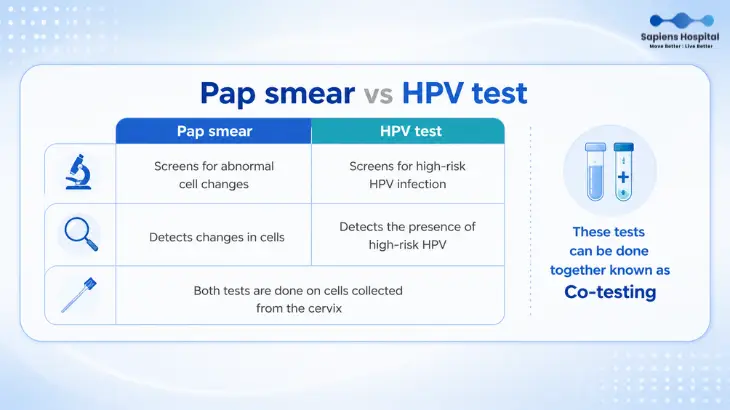
To picture it simply:
- A Pap smear checks if the cells of the cervix have already started to change.
- An HPV test checks if the virus that causes those changes is present.
What is Co-testing?
"Co-testing" simply means doing both a Pap smear and an HPV test at the same time, using the same cervical sample.
- The Advantage: It provides a comprehensive risk assessment. If both tests are negative, the short-term risk of developing severe lesions is incredibly low, allowing you to safely space out your screenings according to medical guidelines.
- The Caveat: More testing isn't always better. Over-screening can lead to false positives, unnecessary anxiety, extra procedures, and over-treatment. It is best to follow standard guidelines and consult your doctor.
Guidelines vary slightly between organizations and countries, but the general consensus is to avoid starting too early (when most abnormalities clear up naturally) and to screen consistently during the ages where it provides the clearest benefits.
- USPSTF recommends starting Pap tests at age 21.
- ACS recommends starting at age 25, preferring primary HPV testing.
How Often Should You Get Screened?
Frequency depends on your age and the type of test:
- Pap smear alone: Usually every 3 years (for appropriate age groups).
- HPV test alone: Usually every 5 years (if results are normal).
- Co-testing: Usually every 5 years (if results are normal).
Frequently Asked Questions (FAQs)
If my HPV test is positive, does it mean I have cancer?
No. An HPV-positive result means you carry the high-risk virus, not that you have cancer. Your doctor will consider the specific HPV strain, your Pap smear results, your age, and your medical history to determine if you need closer monitoring or a colposcopy (a magnified examination of the cervix).
If my Pap smear is abnormal, what should I do?
An abnormal Pap smear does not mean immediate cancer. Cellular changes range from minor abnormalities that may resolve on their own to lesions requiring further investigation. The most important thing is not to skip your follow-up appointments. Many precancerous lesions can be highly effectively treated if monitored correctly.
Does a Pap smear or HPV test hurt?
The procedure is usually quick. The doctor will use a speculum to gently open the vagina and collect a sample. You may feel some pressure or mild discomfort, but it typically shouldn't be severely painful. If you are anxious, have a history of pelvic pain, or fear pelvic exams, please let your doctor know so they can adjust their approach to make you as comfortable as possible. (Note: By 2026, ACOG guidelines support patient-collected HPV sampling in average-risk individuals aged 30-65 under proper clinical protocols).
How should I prepare for the screening?
- Schedule the test when you do not have your period.
- Avoid douching, using vaginal medicines, or using vaginal products for 2 days before the test.
- Inform your doctor if you are pregnant, have had abnormal results in the past, or are experiencing symptoms like bleeding after sex, unusual discharge, or pelvic pain.
Do I still need screening if I’ve had the HPV vaccine?
Yes. While the HPV vaccine significantly reduces the risk of contracting major strains of the virus and developing precancerous lesions, it does not cover all strains. Regular screening is still essential.
Can a routine physical pelvic exam replace these tests?
No. A physical pelvic exam (looking and feeling) cannot replace a laboratory screening. A Pap smear and HPV test are specific laboratory diagnostics.
What symptoms should prompt an immediate doctor visit?
Do not wait for your annual check-up if you experience: bleeding after sex, spotting between periods, post-menopausal bleeding, foul-smelling vaginal discharge, chronic pelvic pain, or pain during intercourse.
Which Test Should You Choose?
There is no one-size-fits-all answer. The best approach depends on your age, prior test results, and personal risk factors.
The most important thing is to not postpone your screening out of confusion over which test to choose. Consult with your doctor to create a screening plan tailored to you. The best test is not always the most expensive one; it is the one performed correctly, at the right time, with accurate interpretation, and proper follow-up.
Cervical cancer is highly preventable. The right screening is your most vital step toward confident women’s health.
Inquiries and Appointments Sapiens Hospital | Move Better : Live Better Tel. 02-111-3703
Academic References:
U.S. Preventive Services Task Force. Cervical Cancer: Screening. 2018 Recommendation Statement.
American Cancer Society. Cervical Cancer Screening Guidelines. Updated guidance.
American College of Obstetricians and Gynecologists. Cervical Cancer Screening. Patient FAQ.
American College of Obstetricians and Gynecologists. Human Papillomavirus HPV: Infection and Vaccination. Patient FAQ.
World Health Organization. New recommendations for screening and treatment to prevent cervical cancer. 2021.
American College of Obstetricians and Gynecologists. Updated Cervical Cancer Screening Guidance. 2026.