The HPV Vaccine: Who Should Get It and When?
Last updated: 26 Jul 2026
Why the HPV Vaccine Should Not Be Overlooked
When we talk about HPV, the first thing that usually comes to mind is cervical cancer. While this is correct, it is only part of the story. The Human Papillomavirus (HPV) is not solely linked to cervical cancer. Certain strains of HPV are also associated with anal, vaginal, vulvar, and penile cancers, as well as oropharyngeal cancer (cancer of the mouth and throat). At the same time, some HPV strains cause genital warts, which, although not cancerous, can significantly impact a person's quality of life, cause anxiety, and require ongoing treatment.
According to the CDC, the HPV vaccine can prevent more than 90% of HPV-attributable cancers if administered before exposure to the virus. It is particularly effective when given at the recommended age, before an individual becomes at risk of sexual transmission.
It is crucial to understand from the outset that the HPV vaccine is designed for prevention, not treatment. If you already have an HPV infection, the vaccine cannot clear the existing virus or treat abnormal cells that have already developed. However, it may still help protect against other strains of HPV you have not yet encountered. The WHO clearly states that the HPV vaccine is not used to treat HPV infections or HPV-related diseases, but rather to prevent future infections and associated cancers.
What is HPV and Why is it Linked to Cancer?
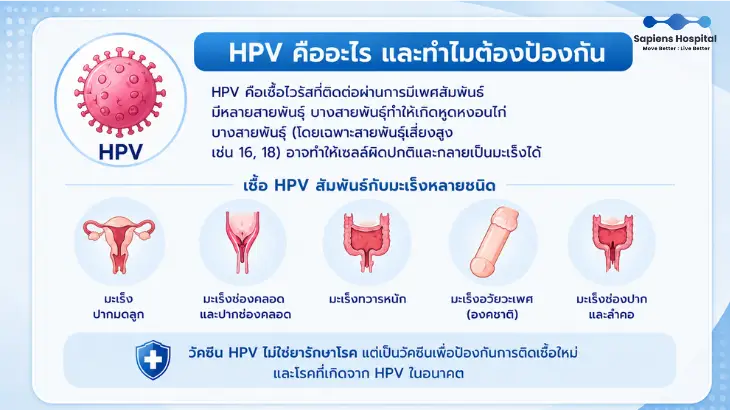
HPV is a very common virus with numerous strains. Some strains are classified as low-risk, such as those associated with genital warts, while others are high-risk. Strains like HPV 16 and HPV 18 are particularly high-risk and are heavily linked to cervical cancer and several other HPV-related cancers.
Most HPV infections clear up on their own thanks to the body's immune system, without causing severe illness. The problem arises when high-risk HPV infections persist over a long period. Chronic infection can cause cells in the cervix or other mucous membranes to gradually change into precancerous lesions. If left undetected or untreated, these can develop into cancer. The CDC notes that long-lasting HPV infections can lead to genital warts, precancerous lesions, and cancers of the cervix, anus, penis, vulva, vagina, as well as the head and neck.
What Does the HPV Vaccine Prevent?
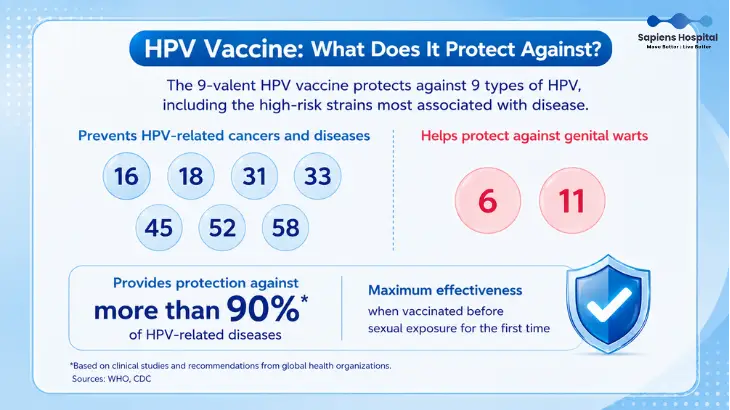
The HPV vaccine protects against the major strains of the virus responsible for cancers and genital warts.
When is the Best Time to Get the HPV Vaccine?
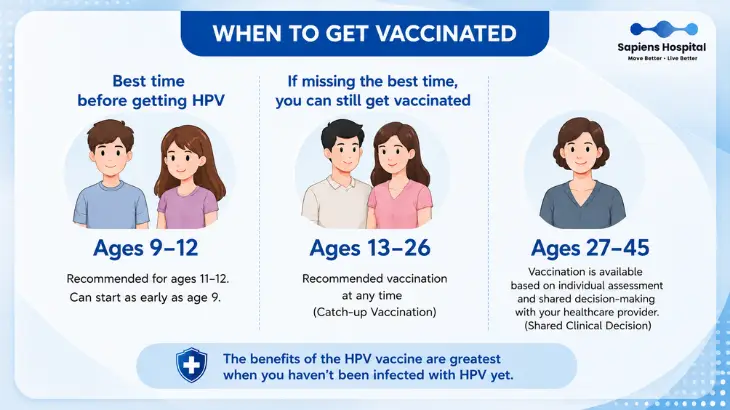
The ideal time to get the HPV vaccine is before any potential first exposure to the virus, as the vaccine works best when the body has not yet encountered the specific strains it protects against.
The CDC recommends routine HPV vaccination for children aged 11–12 years, and it can be started as early as age 9. At this age, the immune system responds robustly to the vaccine, often requiring fewer doses than if administered later in life.
The American College of Obstetricians and Gynecologists (ACOG) provides consistent guidelines, stating that the vaccine is most suitable during early adolescence due to its peak efficacy before sexual exposure. Physicians are encouraged to strongly recommend this vaccine to eligible individuals.
How Many Doses Are Required?
The number of doses depends on the age at which the vaccination series begins and the individual's immune system status.
Note: In some countries or under specific WHO guidelines, 1- or 2-dose schedules are recommended for certain demographics and public health contexts. However, the actual schedule should follow national guidelines, the specific vaccine brand used, and your healthcare provider's advice.
Vaccination Guidelines by Demographic
Should All Women Get the HPV Vaccine?
Yes, eligible women should be strongly advised to get vaccinated. High-risk HPV is the leading cause of cervical cancer, which is highly preventable through a combination of vaccination and proper screening.
Yes. HPV is not exclusively a woman's disease. Men can contract, transmit, and develop HPV-related illnesses. Vaccinating boys and young men provides direct personal protection and helps curb community transmission.
Can I Still Get Vaccinated if I’m Already Sexually Active?
Yes, as long as you are within the eligible age range or your doctor determines it would be beneficial. Even if you have been sexually active, it is unlikely you have been exposed to all the strains covered by the vaccine. You do not need an HPV test before getting vaccinated.
Can I Get Vaccinated if I’m Over 26?
Adults aged 27–45 can discuss vaccination with their doctor, but it is not universally required. Since many in this age group have already been exposed to HPV, the population-level benefit decreases. For those over 45, the HPV vaccine is generally not part of standard recommendations.
Pregnancy and Breastfeeding
Do I Still Need a Pap Smear or HPV Test After Vaccination?
Yes. The vaccine significantly reduces risk but does not cover every single HPV strain, and you may have been exposed to certain strains before vaccination. The best defense against cervical cancer is a dual approach: utilizing the vaccine to reduce initial risk, alongside routine Pap smears and HPV tests to detect any abnormalities.
How is the Vaccine Different from Screening?
The HPV vaccine has been used globally for many years and is backed by extensive safety data. Common side effects are mild and include pain, swelling, or redness at the injection site, fatigue, headache, or a low-grade fever. Some may experience dizziness or fainting, which is why a short rest and observation period post-injection is often recommended.
The vaccine contains no live virus and no viral DNA, meaning it cannot cause an HPV infection or HPV-related cancers.
Who Should Consult a Doctor Before Vaccination?
You should speak with a healthcare provider if you:
If you miss a scheduled dose or the gap is longer than recommended, you do not need to restart the series. Simply return to your healthcare provider to receive the remaining doses based on your original start date and age.
Frequently Asked Questions (FAQs) Summary
For Inquiries and Appointments: Sapiens Hospital | Move Better : Live Better Tel: 02-111-3703
Academic References:
Centers for Disease Control and Prevention. HPV Vaccination Recommendations. Updated 2024.
Meites E, Szilagyi PG, Chesson HW, et al. Human Papillomavirus Vaccination for Adults: Updated Recommendations of the Advisory Committee on Immunization Practices. MMWR Morbidity and Mortality Weekly Report. 2019.
World Health Organization. Human papillomavirus vaccines: WHO position paper. 2022.
American College of Obstetricians and Gynecologists. Human Papillomavirus Vaccination. ACOG Committee Opinion. 2020.
World Health Organization. Human papillomavirus and cancer. Updated 2024.
Centers for Disease Control and Prevention. Cancers Caused by HPV. Updated 2025.
When we talk about HPV, the first thing that usually comes to mind is cervical cancer. While this is correct, it is only part of the story. The Human Papillomavirus (HPV) is not solely linked to cervical cancer. Certain strains of HPV are also associated with anal, vaginal, vulvar, and penile cancers, as well as oropharyngeal cancer (cancer of the mouth and throat). At the same time, some HPV strains cause genital warts, which, although not cancerous, can significantly impact a person's quality of life, cause anxiety, and require ongoing treatment.
According to the CDC, the HPV vaccine can prevent more than 90% of HPV-attributable cancers if administered before exposure to the virus. It is particularly effective when given at the recommended age, before an individual becomes at risk of sexual transmission.
It is crucial to understand from the outset that the HPV vaccine is designed for prevention, not treatment. If you already have an HPV infection, the vaccine cannot clear the existing virus or treat abnormal cells that have already developed. However, it may still help protect against other strains of HPV you have not yet encountered. The WHO clearly states that the HPV vaccine is not used to treat HPV infections or HPV-related diseases, but rather to prevent future infections and associated cancers.
What is HPV and Why is it Linked to Cancer?
HPV is a very common virus with numerous strains. Some strains are classified as low-risk, such as those associated with genital warts, while others are high-risk. Strains like HPV 16 and HPV 18 are particularly high-risk and are heavily linked to cervical cancer and several other HPV-related cancers.
Most HPV infections clear up on their own thanks to the body's immune system, without causing severe illness. The problem arises when high-risk HPV infections persist over a long period. Chronic infection can cause cells in the cervix or other mucous membranes to gradually change into precancerous lesions. If left undetected or untreated, these can develop into cancer. The CDC notes that long-lasting HPV infections can lead to genital warts, precancerous lesions, and cancers of the cervix, anus, penis, vulva, vagina, as well as the head and neck.
What Does the HPV Vaccine Prevent?
The HPV vaccine protects against the major strains of the virus responsible for cancers and genital warts.
- The 9-valent HPV vaccine covers strains 6, 11, 16, 18, 31, 33, 45, 52, and 58.
- HPV 16 and 18 are the primary strains associated with cervical cancer.
- HPV 6 and 11 are the main strains linked to genital warts.
When is the Best Time to Get the HPV Vaccine?
The ideal time to get the HPV vaccine is before any potential first exposure to the virus, as the vaccine works best when the body has not yet encountered the specific strains it protects against.
The CDC recommends routine HPV vaccination for children aged 11–12 years, and it can be started as early as age 9. At this age, the immune system responds robustly to the vaccine, often requiring fewer doses than if administered later in life.
The American College of Obstetricians and Gynecologists (ACOG) provides consistent guidelines, stating that the vaccine is most suitable during early adolescence due to its peak efficacy before sexual exposure. Physicians are encouraged to strongly recommend this vaccine to eligible individuals.
How Many Doses Are Required?
The number of doses depends on the age at which the vaccination series begins and the individual's immune system status.
| Age / Condition at First Dose | Recommended Doses | Schedule Overview |
| Under 15 years old | 2 Doses | The second dose is given 6–12 months after the first. |
| 15 years and older | 3 Doses | Administered at 0, 1–2, and 6 months. |
| Immunocompromised | 3 Doses | Recommended regardless of age (up to 26 years). |
Note: In some countries or under specific WHO guidelines, 1- or 2-dose schedules are recommended for certain demographics and public health contexts. However, the actual schedule should follow national guidelines, the specific vaccine brand used, and your healthcare provider's advice.
Vaccination Guidelines by Demographic
Should All Women Get the HPV Vaccine?
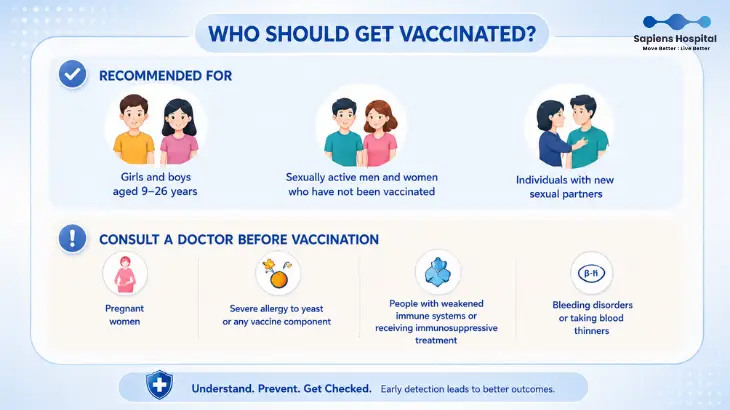
Yes, eligible women should be strongly advised to get vaccinated. High-risk HPV is the leading cause of cervical cancer, which is highly preventable through a combination of vaccination and proper screening.
- Girls and teenagers should follow standard routine recommendations.
- Women up to age 26 who are unvaccinated or incompletely vaccinated should receive catch-up vaccinations.
- Women aged 27–45 are not recommended for routine vaccination. However, a shared clinical decision-making approach with a doctor is advised, especially for those with potential future exposure to new partners or new HPV strains.
Yes. HPV is not exclusively a woman's disease. Men can contract, transmit, and develop HPV-related illnesses. Vaccinating boys and young men provides direct personal protection and helps curb community transmission.
Can I Still Get Vaccinated if I’m Already Sexually Active?
Yes, as long as you are within the eligible age range or your doctor determines it would be beneficial. Even if you have been sexually active, it is unlikely you have been exposed to all the strains covered by the vaccine. You do not need an HPV test before getting vaccinated.
Can I Get Vaccinated if I’m Over 26?
Adults aged 27–45 can discuss vaccination with their doctor, but it is not universally required. Since many in this age group have already been exposed to HPV, the population-level benefit decreases. For those over 45, the HPV vaccine is generally not part of standard recommendations.
Pregnancy and Breastfeeding
- Pregnancy: The vaccine is generally not recommended during pregnancy. If you become pregnant after starting the series, delay the remaining doses until after childbirth. You do not need to restart the series.
- Breastfeeding: Breastfeeding is not a primary contraindication, but you should consult your doctor to evaluate your overall health and timing.
Do I Still Need a Pap Smear or HPV Test After Vaccination?
Yes. The vaccine significantly reduces risk but does not cover every single HPV strain, and you may have been exposed to certain strains before vaccination. The best defense against cervical cancer is a dual approach: utilizing the vaccine to reduce initial risk, alongside routine Pap smears and HPV tests to detect any abnormalities.
How is the Vaccine Different from Screening?
- The HPV Vaccine is proactive prevention against future infections and diseases.
- Pap Smears and HPV Tests are screening tools used to detect current cervical abnormalities or the presence of high-risk HPV strains.
The HPV vaccine has been used globally for many years and is backed by extensive safety data. Common side effects are mild and include pain, swelling, or redness at the injection site, fatigue, headache, or a low-grade fever. Some may experience dizziness or fainting, which is why a short rest and observation period post-injection is often recommended.
The vaccine contains no live virus and no viral DNA, meaning it cannot cause an HPV infection or HPV-related cancers.
Who Should Consult a Doctor Before Vaccination?
You should speak with a healthcare provider if you:
- Have a history of severe allergic reactions to vaccines or vaccine components.
- Have a compromised immune system or are taking immunosuppressive medications.
- Are pregnant.
- Have previously tested positive for HPV or had an abnormal Pap smear (vaccination does not replace colposcopies, biopsies, or lesion monitoring).
If you miss a scheduled dose or the gap is longer than recommended, you do not need to restart the series. Simply return to your healthcare provider to receive the remaining doses based on your original start date and age.
Frequently Asked Questions (FAQs) Summary
- What is the best age to get the vaccine? 11–12 years old (can start at 9).
- Do men need it? Yes, to prevent cancers, genital warts, and reduce transmission.
- Is it effective if I've had sex? Yes, it can protect against strains you haven't encountered yet.
- Do I need an HPV test first? No.
- Does the vaccine cure existing warts or HPV? No, it is purely preventive.
- Can I get it while pregnant? No, delay remaining doses until after childbirth.
For Inquiries and Appointments: Sapiens Hospital | Move Better : Live Better Tel: 02-111-3703
Academic References:
Centers for Disease Control and Prevention. HPV Vaccination Recommendations. Updated 2024.
Meites E, Szilagyi PG, Chesson HW, et al. Human Papillomavirus Vaccination for Adults: Updated Recommendations of the Advisory Committee on Immunization Practices. MMWR Morbidity and Mortality Weekly Report. 2019.
World Health Organization. Human papillomavirus vaccines: WHO position paper. 2022.
American College of Obstetricians and Gynecologists. Human Papillomavirus Vaccination. ACOG Committee Opinion. 2020.
World Health Organization. Human papillomavirus and cancer. Updated 2024.
Centers for Disease Control and Prevention. Cancers Caused by HPV. Updated 2025.
Related Content
Hepatitis is a silent killer with no early symptoms, leading to chronic liver cirrhosis and liver cancer. Discover the core causes, key hepatitis symptoms, and essential liver screening methods to protect your health.
29 Jun 2026

ถ้าคุณ ปวดคอ บ่า ไหล่ รักษาเองแล้วไม่ดีขึ้น อาจเป็นมากกว่าความเมื่อยล้า รีบปรึกษาแพทย์เพื่อหาทางแก้ไขที่ตรงจุด
26 May 2025

ความเจ็บปวดจากมะเร็งอาจเกิดขึ้นจากตัวเนื้องอกเอง การรักษา เช่น การผ่าตัดหรือการฉายรังสีหรือภาวะแทรกซ้อนที่เกี่ยวข้อง
5 Nov 2024
