Heavy Menstrual Bleeding: A Signal You Shouldn't Ignore
Last updated: 30 Jul 2026
.Heavy Menstrual Bleeding: A Signal You Shouldn't Ignore
Heavy menstrual bleeding, passing large blood clots, frequent pad changes, paleness, fatigue, or abnormal bleeding can be caused by hormonal imbalances, uterine fibroids, polyps, a thickened uterine lining, or other medical conditions. Proper evaluation is essential to determine the exact cause.
Many women are accustomed to the discomforts that come with menstruation—mild pelvic pain, fatigue, irritability, or simply feeling unwell on certain days. However, if your period is "heavier than normal" to the point where you must change your sanitary pad very frequently, pass large blood clots, bleed for many days, or experience disruptions to your daily life, it is not something to brush off. Symptoms such as paleness, easy fatigue, dizziness, or palpitations should not be dismissed as a "normal woman's issue."
While heavy periods can occasionally stem from temporary hormonal fluctuations, in some cases, they are signs of conditions that require further medical investigation. These include uterine fibroids, endometrial polyps, thickened uterine lining (endometrial hyperplasia), irregular ovulation, blood disorders, medication side effects, or other uterine abnormalities that should not be left untreated.
The NICE guidelines define heavy menstrual bleeding (HMB) as excessive menstrual blood loss that interferes with a woman's physical, social, emotional, and/or material quality of life. Evaluation and treatment should take into account the underlying causes, the patient's needs, and the impact on daily life—not just the volume of blood lost.
Simply put, if your period changes your life more than it should—whether you frequently take time off work, lose sleep because you have to wake up to change pads, constantly fear leaking through your clothes, or feel unusually exhausted from blood loss—it is a clear signal that you need a comprehensive medical evaluation.
How Heavy is "Abnormal"?
Every woman's menstrual cycle is different. Some may experience heavy flow on the first 1–2 days before it lightens, some have light bleeding for several days, and others have slightly shorter or longer cycles. The key things to observe are "Has your normal pattern changed?" and "How much does it affect your life?"
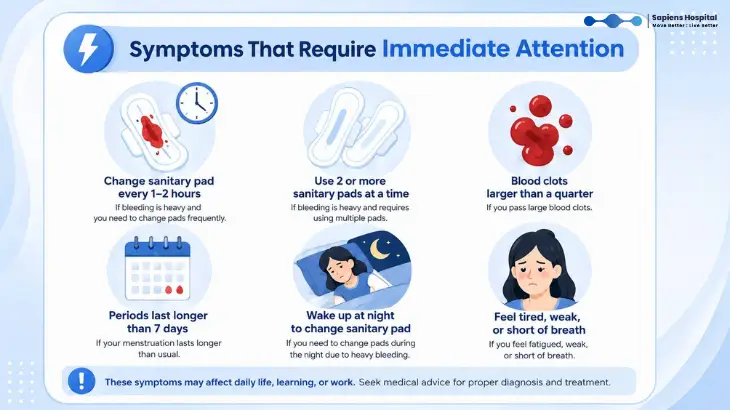
Symptoms indicating abnormal heavy menstrual bleeding include:
What Causes Heavy Menstrual Bleeding?
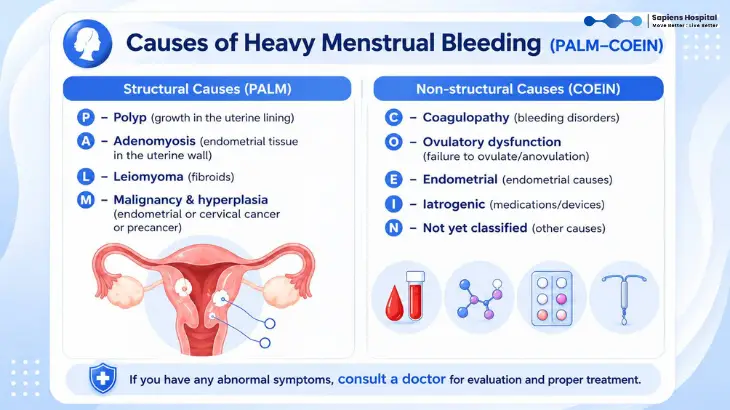
Medically, abnormal uterine bleeding is often evaluated using the FIGO "PALM-COEIN" classification system. This system divides causes into structural abnormalities and non-structural issues, helping doctors investigate systematically rather than assuming every case is simply hormonal.
While some cases of heavy bleeding can wait for a scheduled appointment, certain situations require emergency care. Go to the hospital immediately if you experience:
What Will the Doctor Check?
Medical evaluations are personalized based on age, symptoms, risks, pregnancy history, and physical examination results. Common steps include:
Treatment depends on the underlying cause, severity, patient's age, desire for future fertility, and personal preferences.
If you experience heavy periods, start keeping a detailed symptom diary:
Frequently Asked Questions (FAQs)
1. What causes heavy menstrual bleeding? It can be caused by hormonal imbalances, irregular ovulation, uterine fibroids, endometrial polyps, a thickened uterine lining, bleeding disorders, certain medications, or pregnancy complications. If it occurs repeatedly or impacts your life, you should be evaluated.
2. Are blood clots during my period dangerous? Small blood clots can be normal on heavy flow days. However, if you are passing large, frequent clots alongside bleeding heavy enough to require frequent pad changes, or if you feel dizzy and fatigued, you should see a doctor.
3. What should I do if my heavy period makes me pale and weak? You should see a doctor for a blood test to evaluate for anemia and iron deficiency, and to investigate the root cause of the bleeding. If you are extremely pale, dizzy, or exhausted, go to the hospital immediately.
4. Does everyone need a uterine ultrasound? Not everyone, but it is highly recommended for those with recurrent abnormal bleeding, pelvic pain, a palpable mass, suspected fibroids/polyps, or those who haven't improved with initial treatments. A transvaginal ultrasound is the most common imaging tool used to evaluate abnormal uterine bleeding (AUB).
5. Do I need a biopsy if I am over 45 and have heavy periods? Many medical guidelines recommend considering endometrial sampling for women aged 45 and older with abnormal bleeding, as age is a risk factor for endometrial abnormalities. Your doctor will assess this based on your specific symptoms and risks.
6. Does heavy menstrual bleeding always require surgery? No. Treatments range from iron supplements, blood-reducing medications, and hormonal therapies (like pills or IUDs) to minor procedures and surgery. The choice depends on the cause, severity, and your family planning goals.
7. What should I do if I bleed after menopause? You should always consult a doctor. Never adopt a "wait and see" approach, as postmenopausal bleeding requires prompt evaluation to identify the cause and thoroughly assess the uterine lining.
Heavy menstrual bleeding is not a symptom you should endure in silence—especially if you have to change pads constantly, pass large clots, bleed for many days, or experience fatigue, palpitations, and dizziness.
The cause might be as simple as a temporary hormonal fluctuation, or it could be fibroids, polyps, or an underlying medical condition. Do not let heavy periods become your "normal." Your body is sending a signal. Early screening leads to early diagnosis and targeted treatment, helping you get your life and confidence back.
For Inquiries and Appointments: Sapiens Hospital | Move Better : Live Better Tel. 02-111-3703
Academic References:
National Institute for Health and Care Excellence. Heavy menstrual bleeding: assessment and management. NICE Guideline NG88. Published 2018, updated 2021; reviewed 2024.
American College of Obstetricians and Gynecologists. Diagnosis of Abnormal Uterine Bleeding in Reproductive-Aged Women. ACOG Practice Bulletin.
American College of Obstetricians and Gynecologists. Management of Acute Abnormal Uterine Bleeding in Nonpregnant Reproductive-Aged Women. Committee Opinion No. 557. Obstetrics & Gynecology. 2013.
Munro MG, Critchley HOD, Fraser IS; FIGO Menstrual Disorders Committee. The two FIGO systems for normal and abnormal uterine bleeding symptoms and classification of causes of abnormal uterine bleeding in the reproductive years: 2018 revisions. International Journal of Gynecology & Obstetrics. 2018;143(3):393–408.
Wouk N, Helton M. Abnormal Uterine Bleeding in Premenopausal Women. American Family Physician. 2019;99(7):435–443.
Williams PM, Gaddey HL. Endometrial Biopsy: Tips and Pitfalls. American Family Physician. 2020;101(9):551–556.
American College of Obstetricians and Gynecologists. Screening and Management of Bleeding Disorders in Adolescents With Heavy Menstrual Bleeding. Committee Opinion. 2019.
Heavy menstrual bleeding, passing large blood clots, frequent pad changes, paleness, fatigue, or abnormal bleeding can be caused by hormonal imbalances, uterine fibroids, polyps, a thickened uterine lining, or other medical conditions. Proper evaluation is essential to determine the exact cause.
Many women are accustomed to the discomforts that come with menstruation—mild pelvic pain, fatigue, irritability, or simply feeling unwell on certain days. However, if your period is "heavier than normal" to the point where you must change your sanitary pad very frequently, pass large blood clots, bleed for many days, or experience disruptions to your daily life, it is not something to brush off. Symptoms such as paleness, easy fatigue, dizziness, or palpitations should not be dismissed as a "normal woman's issue."
While heavy periods can occasionally stem from temporary hormonal fluctuations, in some cases, they are signs of conditions that require further medical investigation. These include uterine fibroids, endometrial polyps, thickened uterine lining (endometrial hyperplasia), irregular ovulation, blood disorders, medication side effects, or other uterine abnormalities that should not be left untreated.
The NICE guidelines define heavy menstrual bleeding (HMB) as excessive menstrual blood loss that interferes with a woman's physical, social, emotional, and/or material quality of life. Evaluation and treatment should take into account the underlying causes, the patient's needs, and the impact on daily life—not just the volume of blood lost.
Simply put, if your period changes your life more than it should—whether you frequently take time off work, lose sleep because you have to wake up to change pads, constantly fear leaking through your clothes, or feel unusually exhausted from blood loss—it is a clear signal that you need a comprehensive medical evaluation.
How Heavy is "Abnormal"?
Every woman's menstrual cycle is different. Some may experience heavy flow on the first 1–2 days before it lightens, some have light bleeding for several days, and others have slightly shorter or longer cycles. The key things to observe are "Has your normal pattern changed?" and "How much does it affect your life?"
Symptoms indicating abnormal heavy menstrual bleeding include:
- Needing to change a pad or tampon very frequently (e.g., every 1–2 hours).
- Needing to double up on pads or use day and night pads simultaneously.
- Passing large blood clots.
- Periods lasting noticeably longer than usual, or exceeding 7 days.
- Bleeding heavily enough to interfere with work, studies, or daily activities.
- Having to wake up frequently during the night to change pads.
- Experiencing paleness, fatigue, dizziness, palpitations, or weakness.
- Spotting or bleeding between periods.
- Bleeding after sexual intercourse.
- Bleeding after menopause.
What Causes Heavy Menstrual Bleeding?
Medically, abnormal uterine bleeding is often evaluated using the FIGO "PALM-COEIN" classification system. This system divides causes into structural abnormalities and non-structural issues, helping doctors investigate systematically rather than assuming every case is simply hormonal.
- Endometrial Polyps: Polyps can cause irregular spotting, post-coital bleeding (bleeding after sex), or heavy periods. In some cases, they may not be clearly visible on a standard ultrasound and require further uterine evaluation.
- Adenomyosis: This condition, where endometrial tissue grows into the uterine muscle, often causes worsening menstrual cramps, an enlarged uterus, and heavier or prolonged periods. It is most common in women aged 35–50 or those who have had multiple pregnancies, though it can occur at any age.
- Uterine Fibroids (Myoma / Leiomyoma): A very common cause of heavy periods, particularly when the fibroids are located near or bulge into the uterine cavity. Patients may also experience pelvic pain, abdominal fullness, frequent urination, or a palpable mass in the lower abdomen.
- Endometrial Hyperplasia or Malignancy: While less common in women of reproductive age, this requires careful evaluation in women over 45, those who are significantly overweight, have diabetes or PCOS, have a history of prolonged missed periods, or experience postmenopausal bleeding.
- Coagulopathy (Bleeding Disorders): Some individuals experience heavy periods from adolescence or bruise and bleed easily (e.g., frequent nosebleeds, prolonged bleeding after tooth extraction). The American College of Obstetricians and Gynecologists (ACOG) states that adolescents presenting with heavy menstrual bleeding and a suspicious medical history should be screened for underlying bleeding disorders.
- Ovulatory Dysfunction and Hormonal Imbalances: Irregular ovulation is common in adolescents who recently started menstruating, women with PCOS, individuals with rapid weight changes, those undergoing severe stress or extreme exercise, or women entering perimenopause. This can lead to periods that are too far apart, too frequent, or unusually heavy.
- Medications (Iatrogenic) and Contraceptives: Anticoagulants (blood thinners), certain hormonal therapies, specific birth control methods, or copper IUDs can increase menstrual bleeding or cause spotting. Always inform your doctor about all medications you are taking.
- Pregnancy or Complications: In women of reproductive age, abnormal bleeding should always prompt consideration of pregnancy. Bleeding could be related to a threatened miscarriage, incomplete miscarriage, or an ectopic pregnancy, all of which require urgent medical attention.
While some cases of heavy bleeding can wait for a scheduled appointment, certain situations require emergency care. Go to the hospital immediately if you experience:
- Bleeding so heavy that it soaks through a pad every hour for several consecutive hours.
- Dizziness, fainting, palpitations, severe fatigue, or extreme weakness.
- Unusually severe pelvic pain.
- Suspected pregnancy or bleeding after a missed period.
- Bleeding after you have already gone through menopause.
- Fever, foul-smelling vaginal discharge, or pelvic pain accompanied by bleeding.
- Repeated bleeding after sexual intercourse.
- A known history of blood disorders, use of blood thinners, or difficulty stopping bleeding.
- Severe paleness, shortness of breath, or chest tightness.
What Will the Doctor Check?
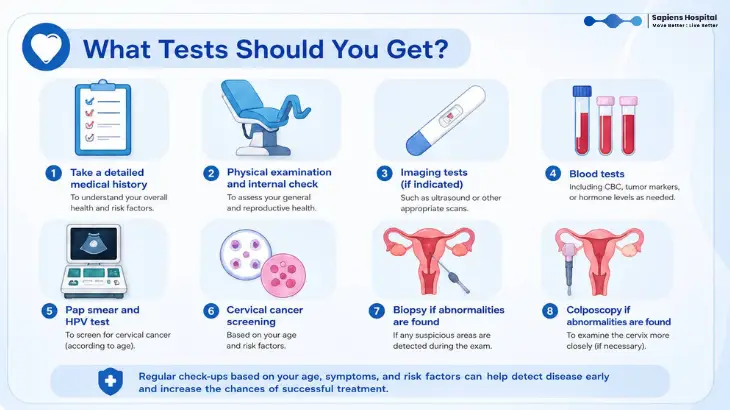
Medical evaluations are personalized based on age, symptoms, risks, pregnancy history, and physical examination results. Common steps include:
- Detailed Medical History: The doctor will ask about your cycle, blood volume, duration, clots, pain, pregnancy history, contraception, medications, and underlying diseases. Describing exactly how often you change pads and how it affects your life helps the doctor make an accurate assessment.
- Physical and Pelvic Examination: To assess the cervix, vagina, uterine size, pelvic masses, or other bleeding sources. For those who have never had sexual intercourse or are uncomfortable with a pelvic exam, the doctor will adjust the examination method to respect the patient's privacy.
- Pregnancy Test: A baseline test for reproductive-aged women with abnormal bleeding to rule out complications like miscarriage or ectopic pregnancy.
- Blood Tests: A CBC (Complete Blood Count) and ferritin levels may be checked to assess for anemia and iron deficiency, which often accompany chronic heavy bleeding.
- Hormone or Co-morbidity Screening: Tests for thyroid function, ovulatory hormones, or coagulation profiles may be necessary, especially if you have weight changes, acne, excess hair growth, or a history of easy bruising.
- Ultrasound (Uterus and Ovaries): The American Academy of Family Physicians (AAFP) recommends transvaginal ultrasonography as the first-line imaging test to evaluate abnormal uterine bleeding. It helps assess uterine size, fibroids, polyps, endometrial thickness, and ovarian abnormalities.
- Cervical Cancer Screening: A Pap smear or HPV test may be performed if you are due for screening, particularly if you experience post-coital bleeding.
- Endometrial Biopsy: This may be necessary for specific high-risk groups. Both ACOG and AAFP state that patients aged 45 and older with abnormal uterine bleeding should be considered for endometrial sampling. It is also considered for younger women with risk factors such as severe obesity, PCOS, diabetes, or prolonged anovulation.
- Hysteroscopy: If a polyp or cavity-distorting mass is suspected, or if a biopsy is inconclusive, the doctor may perform a hysteroscopy to view the inside of the uterus directly and potentially treat the issue simultaneously.
Treatment depends on the underlying cause, severity, patient's age, desire for future fertility, and personal preferences.
- Treating Anemia and Iron Deficiency: Iron supplements may be prescribed. Even if the bleeding stops, untreated iron deficiency will continue to cause fatigue, dizziness, and palpitations.
- Medications to Reduce Bleeding: Non-hormonal options like tranexamic acid or certain NSAIDs can help reduce menstrual blood loss but must be used under medical supervision, keeping contraindications (e.g., kidney disease, history of blood clots) in mind.
- Hormonal Treatments: Combined oral contraceptives, progestin-only pills, or a hormonal IUD can effectively regulate cycles and reduce bleeding for many women, particularly those with ovulatory dysfunction.
- Treating Specific Causes: Polyps may be removed. Fibroids can be managed with medication, procedures, or surgery, depending on their size and location. Coagulation issues require coordination with a hematologist.
- Surgery or Procedures: For patients who do not respond to medical therapy, have structural abnormalities, or no longer wish to have children, interventions such as hysteroscopic polypectomy, myomectomy, endometrial ablation, or a hysterectomy may be considered. As NICE guidelines highlight, management should always align with the underlying cause and the patient's preferences.
- Adolescents: Cycles can be irregular during the first few years as hormones stabilize. However, if bleeding is heavy enough to cause anemia, require school absences, or if there are signs of a bleeding disorder (frequent nosebleeds, easy bruising), medical evaluation is necessary.
- Perimenopause (Approaching Menopause): In your 40s, cycles may change due to irregular ovulation. Do not assume heavy bleeding is just a normal part of approaching menopause. Women aged 45 and older with abnormal bleeding should see a gynecologist to evaluate whether an endometrial biopsy is necessary.
- Postmenopause: If you have stopped having periods and suddenly experience bleeding—even just spotting—you must see a doctor immediately. Postmenopausal bleeding always requires a systematic evaluation to rule out severe conditions, including endometrial cancer, though it can also be caused by vaginal atrophy or polyps.
If you experience heavy periods, start keeping a detailed symptom diary:
- Start and end dates of your period.
- Which days are the heaviest.
- How many pads/tampons you use per day.
- Presence and size of blood clots.
- Severity of pelvic pain.
- Any spotting between cycles.
- Symptoms like paleness, fatigue, palpitations, or dizziness.
- Impact on work, school, or sleep.
Frequently Asked Questions (FAQs)
1. What causes heavy menstrual bleeding? It can be caused by hormonal imbalances, irregular ovulation, uterine fibroids, endometrial polyps, a thickened uterine lining, bleeding disorders, certain medications, or pregnancy complications. If it occurs repeatedly or impacts your life, you should be evaluated.
2. Are blood clots during my period dangerous? Small blood clots can be normal on heavy flow days. However, if you are passing large, frequent clots alongside bleeding heavy enough to require frequent pad changes, or if you feel dizzy and fatigued, you should see a doctor.
3. What should I do if my heavy period makes me pale and weak? You should see a doctor for a blood test to evaluate for anemia and iron deficiency, and to investigate the root cause of the bleeding. If you are extremely pale, dizzy, or exhausted, go to the hospital immediately.
4. Does everyone need a uterine ultrasound? Not everyone, but it is highly recommended for those with recurrent abnormal bleeding, pelvic pain, a palpable mass, suspected fibroids/polyps, or those who haven't improved with initial treatments. A transvaginal ultrasound is the most common imaging tool used to evaluate abnormal uterine bleeding (AUB).
5. Do I need a biopsy if I am over 45 and have heavy periods? Many medical guidelines recommend considering endometrial sampling for women aged 45 and older with abnormal bleeding, as age is a risk factor for endometrial abnormalities. Your doctor will assess this based on your specific symptoms and risks.
6. Does heavy menstrual bleeding always require surgery? No. Treatments range from iron supplements, blood-reducing medications, and hormonal therapies (like pills or IUDs) to minor procedures and surgery. The choice depends on the cause, severity, and your family planning goals.
7. What should I do if I bleed after menopause? You should always consult a doctor. Never adopt a "wait and see" approach, as postmenopausal bleeding requires prompt evaluation to identify the cause and thoroughly assess the uterine lining.
Heavy menstrual bleeding is not a symptom you should endure in silence—especially if you have to change pads constantly, pass large clots, bleed for many days, or experience fatigue, palpitations, and dizziness.
The cause might be as simple as a temporary hormonal fluctuation, or it could be fibroids, polyps, or an underlying medical condition. Do not let heavy periods become your "normal." Your body is sending a signal. Early screening leads to early diagnosis and targeted treatment, helping you get your life and confidence back.
For Inquiries and Appointments: Sapiens Hospital | Move Better : Live Better Tel. 02-111-3703
Academic References:
National Institute for Health and Care Excellence. Heavy menstrual bleeding: assessment and management. NICE Guideline NG88. Published 2018, updated 2021; reviewed 2024.
American College of Obstetricians and Gynecologists. Diagnosis of Abnormal Uterine Bleeding in Reproductive-Aged Women. ACOG Practice Bulletin.
American College of Obstetricians and Gynecologists. Management of Acute Abnormal Uterine Bleeding in Nonpregnant Reproductive-Aged Women. Committee Opinion No. 557. Obstetrics & Gynecology. 2013.
Munro MG, Critchley HOD, Fraser IS; FIGO Menstrual Disorders Committee. The two FIGO systems for normal and abnormal uterine bleeding symptoms and classification of causes of abnormal uterine bleeding in the reproductive years: 2018 revisions. International Journal of Gynecology & Obstetrics. 2018;143(3):393–408.
Wouk N, Helton M. Abnormal Uterine Bleeding in Premenopausal Women. American Family Physician. 2019;99(7):435–443.
Williams PM, Gaddey HL. Endometrial Biopsy: Tips and Pitfalls. American Family Physician. 2020;101(9):551–556.
American College of Obstetricians and Gynecologists. Screening and Management of Bleeding Disorders in Adolescents With Heavy Menstrual Bleeding. Committee Opinion. 2019.
Related Content
Postmenstrual bleeding, irregular spotting, or postmenopausal bleeding can be caused by endometrial thickening, uterine polyps, hormonal imbalances, or other conditions requiring further investigation. Learn about the warning signs, diagnostic methods, and treatment options.
10 Jul 2026

Chronic pelvic pain in women can be caused by the uterus, ovaries, endometriosis, bladder, bowels, pelvic floor muscles, nerves, or spine. Learn about the causes, warning signs, and what medical tests are needed.
10 Jul 2026

This condition occurs when endometrial-like tissue grows outside the uterus, such as on the ovaries, fallopian tubes, pelvic tissue, or even the bowel or bladder.
31 Aug 2025
