Endometrial thickening, polyps, and postmenstrual bleeding | What tests are recommended?
Last updated: 26 Jul 2026
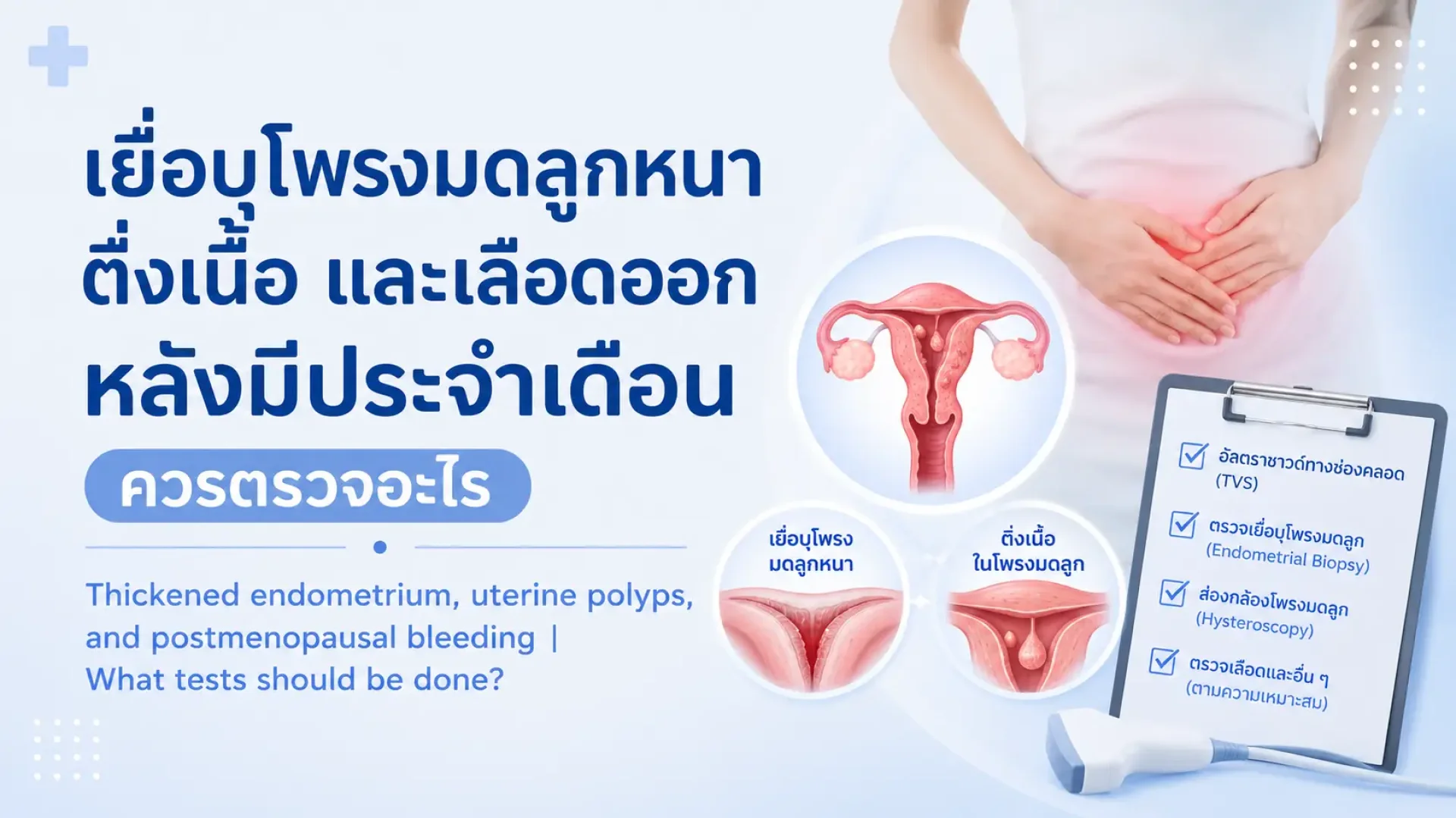
Thickened Endometrium, Endometrial Polyps, and Post-Menstrual Bleeding | What Tests Are Needed?
Vaginal bleeding a few days after your period ends, spotting between cycles, prolonged menstruation, postcoital bleeding, or bleeding after entering menopause—these are symptoms many women experience. While sometimes caused by temporary hormonal fluctuations, in many cases, they can be signs of abnormalities within the uterine cavity. Conditions such as a thickened endometrium, endometrial polyps, submucosal fibroids, infections, or other endometrial irregularities often require further medical investigation.
In the medical field, Abnormal Uterine Bleeding (AUB) should not be automatically dismissed as a simple "hormonal imbalance," especially if the bleeding is recurrent, prolonged, heavy, occurs in women over 40, or happens after menopause.
The FIGO PALM-COEIN classification system is used to systematically categorize the causes of abnormal uterine bleeding:
This article will explain what a thickened endometrium is, what endometrial polyps are, which bleeding patterns warrant a doctor’s visit, and what tests physicians typically perform to provide clear answers.
What is the Endometrium?
The endometrium is the inner mucosal lining of the uterus that changes in response to hormones during each menstrual cycle. In the early phase of the cycle, the endometrium gradually thickens to prepare for a potential embryo implantation. If pregnancy does not occur, this lining sheds as menstrual blood, and the body will build a new lining in the following cycle.
Therefore, in menstruating women, endometrial thickness varies depending on the phase of the cycle. Determining whether the lining is abnormally thick requires considering the patient's age, cycle day, bleeding symptoms, and individual risk factors. However, in postmenopausal women, the endometrium should remain thin due to a decrease in estrogen. If postmenopausal bleeding occurs or an abnormally thick endometrium is detected, physicians must evaluate further to rule out abnormal hyperplasia or endometrial cancer.
What is a Thickened Endometrium?
A thickened endometrium refers to a condition where the inner lining of the uterus is thicker than it should be, relative to the patient's age, menstrual cycle phase, and menopausal status.
Common causes include:
What are Endometrial Polyps?
An endometrial polyp is a small growth attached to the inner lining of the uterus. They can be microscopic and asymptomatic, or grow large enough to cause abnormal bleeding.
Symptoms associated with endometrial polyps:
What Causes Post-Menstrual Bleeding?
"Post-menstrual bleeding" can refer to several situations, such as spotting right after a period ends, mid-cycle bleeding, or bleeding months/years after menopause. Each scenario carries different medical implications.
Potential causes include:
If a woman has gone without a period for 12 months or more and experiences bleeding again—no matter how light—she should always see a doctor. Postmenopausal bleeding is a hallmark symptom that requires immediate evaluation of the endometrium.
Factors that expose the endometrium to excess estrogen or insufficient progesterone can increase the risk of abnormal thickening (hyperplasia):
When Should You See a Doctor?
You should consult a gynecologist if you experience any of the following:
What Tests Will the Doctor Perform?
The diagnostic approach depends on age, symptoms, menopausal status, risk factors, and physical examination findings:
How is a Thickened Endometrium Treated?
Treatment depends on the underlying cause, biopsy results, age, symptoms, and fertility desires.
If the polyp is small, asymptomatic, and the patient is low-risk, a doctor might recommend watchful waiting. However, if there is abnormal bleeding, infertility, postmenopausal status, or risk factors for malignancy, removal and biopsy are usually recommended. The standard method is Hysteroscopic Polypectomy (using a camera to locate and precisely cut out the polyp for pathology testing).
Is a D&C (Dilation and Curettage) Necessary?
Historically, D&C was heavily relied upon. Today, less invasive and more precise methods like in-office endometrial biopsies or hysteroscopy-directed biopsies are preferred because they ensure the tissue sample is taken exactly from the suspicious area, rather than blindly scraping the uterus.
Frequently Asked Questions (FAQ)
1. Is a thickened endometrium dangerous?
Not always. In menstruating women, a thicker endometrium is normal during certain phases of the cycle. However, if it is thick at the wrong time, causes abnormal bleeding, or occurs after menopause, it must be investigated.
2. Are endometrial polyps cancerous?
The vast majority are benign. However, because they can cause bleeding and carry a small risk of malignancy (especially in postmenopausal or high-risk women), they are often removed and tested.
3. Is bleeding one week after my period normal?
It could be due to hormonal fluctuations, but if it is recurrent, heavy, accompanied by pain, foul discharge, or you are over 40, you should see a doctor.
4. Do I need tests for postmenopausal bleeding?
Yes, always. It is a critical symptom used to rule out endometrial diseases, particularly cancer. ACOG 2026 guidelines recommend early evaluation with both ultrasound and endometrial sampling for most patients.
5. Does a thick endometrium on an ultrasound always mean I need a biopsy?
Not everyone needs a biopsy. Doctors evaluate age, menopausal status, bleeding symptoms, lining contour, and risk factors. High-risk profiles or persistent bleeding will likely require a biopsy.
6. Is a hysteroscopy painful?
It can be performed in various settings, from an outpatient clinic to an operating room. Depending on the extent of the procedure (e.g., removing a large polyp), doctors will use local anesthesia or appropriate sedation to keep you comfortable.
7. Can polyps or thickened endometrium recur after treatment?
Yes. Conditions driven by hormones (like PCOS, obesity, or hormonal imbalances) can cause recurrence. Routine follow-ups as scheduled by your doctor are highly recommended.
A thickened endometrium, endometrial polyps, and post-menstrual bleeding are not symptoms to be ignored—especially if the bleeding is recurrent, heavy, intermenstrual, postcoital, or postmenopausal.
Many of these conditions are highly treatable. Getting a clear diagnosis early ensures that you receive safe, targeted treatment before a minor issue becomes a major health concern.
For inquiries and appointments: Sapience Hospital | Move Better : Live Better Tel. 02-111-3703
Academic References
American College of Obstetricians and Gynecologists. Updated Guidance Regarding the Role of Transvaginal Ultrasonography in Evaluating the Endometrium of Individuals With Postmenopausal Bleeding. Obstetrics & Gynecology. 2026.
American College of Obstetricians and Gynecologists. ACOG Publishes Updated Guidance on Evaluation of Postmenopausal Bleeding. 2026.
American College of Obstetricians and Gynecologists. The Role of Transvaginal Ultrasonography in Evaluating the Endometrium of Women With Postmenopausal Bleeding. Committee Opinion No. 734. 2018.
American College of Obstetricians and Gynecologists. Management of Acute Abnormal Uterine Bleeding in Nonpregnant Reproductive-Aged Women. Committee Opinion No. 557. 2013.
American Association of Gynecologic Laparoscopists. AAGL Practice Report: Practice Guidelines for the Diagnosis and Management of Endometrial Polyps. Journal of Minimally Invasive Gynecology. 2012;19(1):3–10.
National Institute for Health and Care Excellence. Gynaecological cancers: recognition and referral / Suspected cancer pathway for post-menopausal bleeding.
Merck Manual Professional Edition. Abnormal Uterine Bleeding.
FIGO Menstrual Disorders Committee. PALM-COEIN classification system for abnormal uterine bleeding.
Vaginal bleeding a few days after your period ends, spotting between cycles, prolonged menstruation, postcoital bleeding, or bleeding after entering menopause—these are symptoms many women experience. While sometimes caused by temporary hormonal fluctuations, in many cases, they can be signs of abnormalities within the uterine cavity. Conditions such as a thickened endometrium, endometrial polyps, submucosal fibroids, infections, or other endometrial irregularities often require further medical investigation.
In the medical field, Abnormal Uterine Bleeding (AUB) should not be automatically dismissed as a simple "hormonal imbalance," especially if the bleeding is recurrent, prolonged, heavy, occurs in women over 40, or happens after menopause.
The FIGO PALM-COEIN classification system is used to systematically categorize the causes of abnormal uterine bleeding:
| Category | Description | Examples of Causes |
| PALM | Structural causes | Polyps, Adenomyosis, Leiomyoma (fibroids), Malignancy and hyperplasia |
| COEIN | Non-structural causes | Coagulopathy, Ovulatory dysfunction, Endometrial disorders, Iatrogenic (medication-induced), and Not yet classified |
This article will explain what a thickened endometrium is, what endometrial polyps are, which bleeding patterns warrant a doctor’s visit, and what tests physicians typically perform to provide clear answers.
What is the Endometrium?
The endometrium is the inner mucosal lining of the uterus that changes in response to hormones during each menstrual cycle. In the early phase of the cycle, the endometrium gradually thickens to prepare for a potential embryo implantation. If pregnancy does not occur, this lining sheds as menstrual blood, and the body will build a new lining in the following cycle.
Therefore, in menstruating women, endometrial thickness varies depending on the phase of the cycle. Determining whether the lining is abnormally thick requires considering the patient's age, cycle day, bleeding symptoms, and individual risk factors. However, in postmenopausal women, the endometrium should remain thin due to a decrease in estrogen. If postmenopausal bleeding occurs or an abnormally thick endometrium is detected, physicians must evaluate further to rule out abnormal hyperplasia or endometrial cancer.
What is a Thickened Endometrium?
A thickened endometrium refers to a condition where the inner lining of the uterus is thicker than it should be, relative to the patient's age, menstrual cycle phase, and menopausal status.
Common causes include:
- Excessive estrogen stimulation without adequate progesterone.
- Irregular ovulation, leading to insufficient progesterone to regulate the lining.
- Polycystic Ovary Syndrome (PCOS).
- Overweight or central obesity.
- Diabetes.
- Use of certain hormonal medications.
- Endometrial polyps.
- Endometrial hyperplasia (precancerous abnormal thickening).
- Endometrial cancer (in some cases).
What are Endometrial Polyps?
An endometrial polyp is a small growth attached to the inner lining of the uterus. They can be microscopic and asymptomatic, or grow large enough to cause abnormal bleeding.
Symptoms associated with endometrial polyps:
- Spotting between periods.
- Heavy or prolonged menstrual bleeding.
- Bleeding after sexual intercourse (postcoital bleeding).
- Postmenopausal bleeding.
- Infertility in some individuals.
- Often discovered incidentally during an ultrasound without any symptoms.
What Causes Post-Menstrual Bleeding?
"Post-menstrual bleeding" can refer to several situations, such as spotting right after a period ends, mid-cycle bleeding, or bleeding months/years after menopause. Each scenario carries different medical implications.
Potential causes include:
- Hormonal fluctuations: Common in adolescents, perimenopausal women, highly stressed individuals, rapid weight changes, intense exercisers, or those with irregular ovulation.
- Endometrial polyps: Often cause intermenstrual spotting, post-menstrual bleeding, or postcoital bleeding.
- Thickened endometrium: Can cause irregular, heavy, prolonged, or spotting bleeding, especially in those with risk factors like obesity, diabetes, PCOS, or age over 45.
- Submucosal uterine fibroids: Tumors protruding into the uterine cavity can cause heavy periods or abnormal bleeding.
- Cervicitis or Infections: Sexually transmitted infections (STIs) or cervical inflammation can cause postcoital bleeding, abnormal discharge, pelvic pain, or itching.
- Pregnancy complications: In women of reproductive age, abnormal bleeding requires a pregnancy test to rule out early pregnancy, miscarriage, or ectopic pregnancy.
- Endometrial or Cervical Cancer: Less common but critical to rule out, especially if bleeding occurs after menopause or is unexplained and recurrent.
If a woman has gone without a period for 12 months or more and experiences bleeding again—no matter how light—she should always see a doctor. Postmenopausal bleeding is a hallmark symptom that requires immediate evaluation of the endometrium.
- In 2018, ACOG stated that transvaginal ultrasound could be used as an initial evaluation for postmenopausal bleeding; an endometrial thickness of ≤4 mm has a high negative predictive value for endometrial cancer.
- However, in a 2026 guidance update, ACOG recommended that for most patients with postmenopausal bleeding, both transvaginal ultrasound and endometrial tissue sampling should be considered early in the evaluation process to minimize the risk of missing endometrial abnormalities.
- NICE guidelines also recommend a "suspected cancer pathway" referral for women aged 55 and over presenting with unexplained postmenopausal bleeding.
Factors that expose the endometrium to excess estrogen or insufficient progesterone can increase the risk of abnormal thickening (hyperplasia):
- Age 45 and older with abnormal bleeding.
- Overweight or central obesity.
- Diabetes or hypertension.
- PCOS or a history of chronic irregular periods.
- Nulliparity (never having been pregnant).
- Use of estrogen therapy without progesterone.
- Use of Tamoxifen.
- Family history of certain genetic conditions (e.g., Lynch syndrome).
- Recurrent abnormal bleeding or failure to respond to initial medical treatment.
When Should You See a Doctor?
You should consult a gynecologist if you experience any of the following:
- Bleeding days after your period has entirely ended.
- Spotting between periods.
- Bleeding after sexual intercourse.
- Heavier or significantly longer periods than usual.
- Passing large blood clots.
- Chronic pelvic pain.
- Abnormal vaginal discharge, foul odor, or accompanying fever.
- Any bleeding after entering menopause.
- Over age 40–45 with newly altered bleeding patterns.
- Symptoms of anemia (fatigue, dizziness, palpitations, paleness).
- Having risk factors like diabetes, obesity, PCOS, or taking hormonal medications.
What Tests Will the Doctor Perform?
The diagnostic approach depends on age, symptoms, menopausal status, risk factors, and physical examination findings:
- Medical History: The doctor will ask about your cycle, bleeding patterns, volume, presence of clots, relation to sex, pain, discharge, and signs of anemia.
- Pelvic Examination: Helps identify the source of bleeding (vagina, cervix, or uterus) and checks for masses, tenderness, or infections.
- Pregnancy Test: Essential for women of reproductive age to rule out ectopic pregnancy or miscarriage.
- Blood Tests: A Complete Blood Count (CBC) to check for anemia, iron levels, thyroid function, or coagulation profiles if suspected.
- Transvaginal Ultrasound: The primary imaging tool to evaluate the uterus, ovaries, endometrial thickness, polyps, fibroids, or pelvic masses.
- Saline Infusion Sonography (SIS): Instilling sterile saline into the uterus during an ultrasound to provide a clearer outline of polyps or submucosal fibroids.
- Hysteroscopy: Inserting a tiny camera into the uterus allows direct visualization. The doctor can often remove polyps or take targeted biopsies during this procedure.
- Endometrial Biopsy: Taking a small tissue sample from the uterine lining for pathological examination to check for normal cells, hyperplasia, or cancer.
How is a Thickened Endometrium Treated?
Treatment depends on the underlying cause, biopsy results, age, symptoms, and fertility desires.
- Hormonal Imbalance: Often treated with hormonal therapies (like progesterone) or birth control methods, alongside monitoring of symptoms and endometrial thickness.
- Endometrial Hyperplasia: Treatment varies depending on whether atypical cells are present. Cases without atypia may be treated with progesterone and follow-up biopsies. Cases with atypia (higher cancer risk) require more aggressive management.
- Suspected Endometrial Cancer: Patients are referred to a gynecologic oncologist for comprehensive treatment planning.
If the polyp is small, asymptomatic, and the patient is low-risk, a doctor might recommend watchful waiting. However, if there is abnormal bleeding, infertility, postmenopausal status, or risk factors for malignancy, removal and biopsy are usually recommended. The standard method is Hysteroscopic Polypectomy (using a camera to locate and precisely cut out the polyp for pathology testing).
Is a D&C (Dilation and Curettage) Necessary?
Historically, D&C was heavily relied upon. Today, less invasive and more precise methods like in-office endometrial biopsies or hysteroscopy-directed biopsies are preferred because they ensure the tissue sample is taken exactly from the suspicious area, rather than blindly scraping the uterus.
Frequently Asked Questions (FAQ)
1. Is a thickened endometrium dangerous?
Not always. In menstruating women, a thicker endometrium is normal during certain phases of the cycle. However, if it is thick at the wrong time, causes abnormal bleeding, or occurs after menopause, it must be investigated.
2. Are endometrial polyps cancerous?
The vast majority are benign. However, because they can cause bleeding and carry a small risk of malignancy (especially in postmenopausal or high-risk women), they are often removed and tested.
3. Is bleeding one week after my period normal?
It could be due to hormonal fluctuations, but if it is recurrent, heavy, accompanied by pain, foul discharge, or you are over 40, you should see a doctor.
4. Do I need tests for postmenopausal bleeding?
Yes, always. It is a critical symptom used to rule out endometrial diseases, particularly cancer. ACOG 2026 guidelines recommend early evaluation with both ultrasound and endometrial sampling for most patients.
5. Does a thick endometrium on an ultrasound always mean I need a biopsy?
Not everyone needs a biopsy. Doctors evaluate age, menopausal status, bleeding symptoms, lining contour, and risk factors. High-risk profiles or persistent bleeding will likely require a biopsy.
6. Is a hysteroscopy painful?
It can be performed in various settings, from an outpatient clinic to an operating room. Depending on the extent of the procedure (e.g., removing a large polyp), doctors will use local anesthesia or appropriate sedation to keep you comfortable.
7. Can polyps or thickened endometrium recur after treatment?
Yes. Conditions driven by hormones (like PCOS, obesity, or hormonal imbalances) can cause recurrence. Routine follow-ups as scheduled by your doctor are highly recommended.
A thickened endometrium, endometrial polyps, and post-menstrual bleeding are not symptoms to be ignored—especially if the bleeding is recurrent, heavy, intermenstrual, postcoital, or postmenopausal.
Many of these conditions are highly treatable. Getting a clear diagnosis early ensures that you receive safe, targeted treatment before a minor issue becomes a major health concern.
For inquiries and appointments: Sapience Hospital | Move Better : Live Better Tel. 02-111-3703
Academic References
American College of Obstetricians and Gynecologists. Updated Guidance Regarding the Role of Transvaginal Ultrasonography in Evaluating the Endometrium of Individuals With Postmenopausal Bleeding. Obstetrics & Gynecology. 2026.
American College of Obstetricians and Gynecologists. ACOG Publishes Updated Guidance on Evaluation of Postmenopausal Bleeding. 2026.
American College of Obstetricians and Gynecologists. The Role of Transvaginal Ultrasonography in Evaluating the Endometrium of Women With Postmenopausal Bleeding. Committee Opinion No. 734. 2018.
American College of Obstetricians and Gynecologists. Management of Acute Abnormal Uterine Bleeding in Nonpregnant Reproductive-Aged Women. Committee Opinion No. 557. 2013.
American Association of Gynecologic Laparoscopists. AAGL Practice Report: Practice Guidelines for the Diagnosis and Management of Endometrial Polyps. Journal of Minimally Invasive Gynecology. 2012;19(1):3–10.
National Institute for Health and Care Excellence. Gynaecological cancers: recognition and referral / Suspected cancer pathway for post-menopausal bleeding.
Merck Manual Professional Edition. Abnormal Uterine Bleeding.
FIGO Menstrual Disorders Committee. PALM-COEIN classification system for abnormal uterine bleeding.
Related Content

Breast pain or a lump: Is it breast cancer? Check early symptoms and the right screening methods. Discover which lumps need medical attention, plus clear guidelines for Ultrasounds and Mammograms.
9 Jul 2026

Abdominal pain can stem from various causes, ranging from acid reflux, bloating, food poisoning, gallstones, and appendicitis, to abdominal emergencies. Learn about the locations of abdominal pain, warning signs, and when you should immediately go to the hospital.
10 Jul 2026

The word 'tumor' often causes alarm, as many fear it means cancer. However, most uterine fibroids are benign, non-cancerous, and do not always require surgery.
9 Jul 2026
