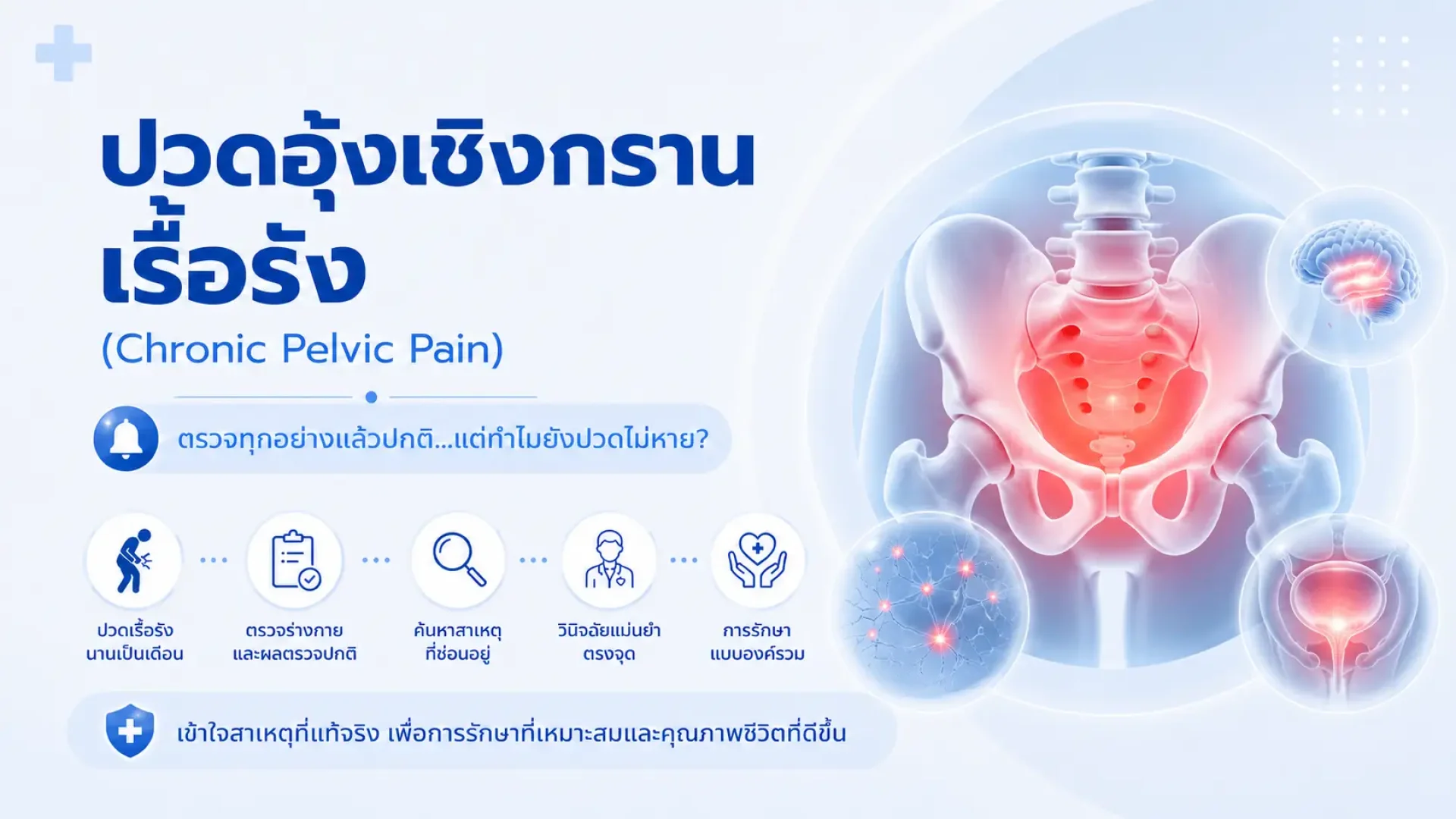
Chronic Pelvic Pain: Why Does the Pain Persist Even When All the Test Results Are Normal?
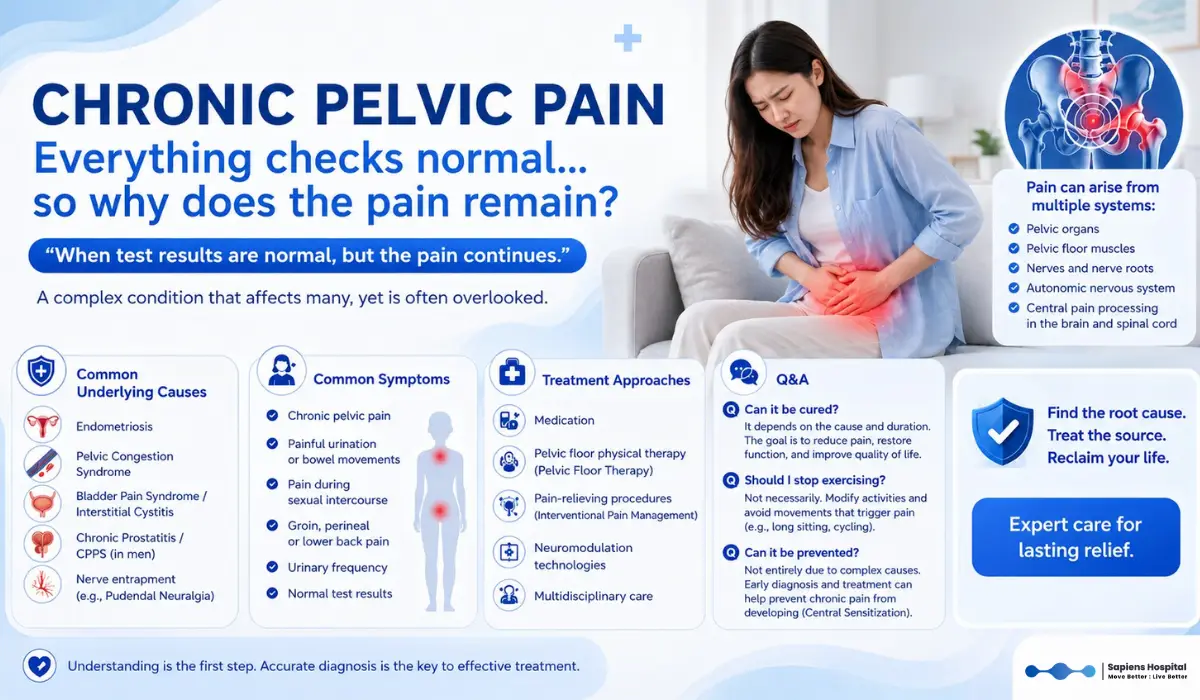
"When medical tests show everything is normal, but the pain persists."
This is a common experience for patients suffering from Chronic Pelvic Pain (CPP). Patients often endure years of suffering while medical imaging and lab tests consistently return "normal" results.
Consider these common scenarios:
- A woman in her 40s: Struggling with pelvic pain for over a decade, experiencing burning sensations in the vaginal area, pain during urination and bowel movements, and inability to stand or walk for long periods without the pain worsening. Despite extensive pelvic exams, ultrasounds, and MRIs, no clear cause was found.
- A middle-aged man: Suffering from pelvic pain and frequent urination, treated for chronic prostatitis for years, yet medical tests frequently show no abnormalities.
A Hidden Public Health Challenge
The World Health Organization (WHO) recognizes Chronic Pelvic Pain as a significant health issue, though it often lacks the public awareness it deserves.
- In Women: Studies indicate that 15–25% of women experience chronic pelvic pain at some point in their lives.
- In Men: Though discussed less frequently, it is common, manifesting as pain in the perineum, testicles, or during ejaculation—often mimicking chronic prostatitis.
These conditions severely impact work, sleep, exercise, relationships, and mental health.
Q&A: If my tests are normal, why do I still feel pain?
Many believe that if an MRI or lab result is normal, there is no significant issue. In reality, chronic pelvic pain does not stem from just one organ. Pain can involve a complex interaction between:
- Pelvic organs (bladder, bowel, uterus, prostate)
- Pelvic floor muscles
- Peripheral nerves and nerve roots
- The autonomic nervous system
- The central nervous system (pain processing in the brain and spinal cord)
"Normal" results do not mean the pain isn't real. The answer often lies in the details of the patient's history, physical examination, and the functioning of the nervous system—aspects that standard diagnostic tools may not capture.
The Interconnected Pelvic Network
Pelvic organs are linked by a complex web of nerves. When one organ sends pain signals over a long period, the nervous system becomes hypersensitive, affecting adjacent organs. This is why patients often report multiple symptoms, such as lower abdominal pain, painful urination, discomfort during intercourse, or perineal pain, even if individual organ exams are normal.
Over time, this can lead to Central Sensitization, where the brain and spinal cord respond excessively to stimuli, maintaining the pain even after the original cause has been treated or subsided.
Pelvic Floor Dysfunction
The pelvic floor muscles are a frequently overlooked source of pain. Dysfunction here may not always be the primary cause but often develops as a secondary reaction to chronic pain from other sources (such as Endometriosis, Bladder Pain Syndrome, or Pudendal Neuralgia). Specialized Pelvic Floor Physical Therapy is crucial, but it must be integrated with treatment for the underlying cause.
Different Causes, Similar Symptoms
Chronic Pelvic Pain is a syndrome, not a single disease. Potential causes include:
- Endometriosis: A leading cause in women, often associated with severe menstrual pain or pain during intercourse. The intensity of pain does not always correlate with the size of the lesions.
- Pelvic Congestion Syndrome: Caused by dilated, varicose-like veins in the pelvis, common in women with a history of multiple pregnancies. It causes a dull, aching pain that worsens with standing or after intercourse.
- Bladder Pain Syndrome (Interstitial Cystitis): Characterized by bladder-related pain and frequency, in the absence of infection.
- Chronic Pelvic Pain Syndrome (CPPS) in Men: Previously labeled as "chronic prostatitis," it is now understood to involve pelvic floor muscles and the autonomic nervous system more than simple infection.
- Pudendal Neuralgia: Irritation or compression of the pudendal nerve, leading to burning pain in the perineum, genitals, and anal area, particularly when sitting.
- Peripheral Nerve Issues: Nerves such as the Ilioinguinal, Iliohypogastric, or Genitofemoral nerves can be damaged or compressed (often post-surgery, such as hernia repair or C-section), causing referred pain to the groin, pubic area, or inner thighs.
When medication and physical therapy are insufficient, Interventional Pain Management offers both diagnostic and therapeutic solutions:
- Targeted Nerve Blocks: Using ultrasound guidance to block specific nerves (Pudendal, Ilioinguinal, etc.) to pinpoint the source of pain.
- Autonomic Nerve Blocks: For complex, diffuse pain, procedures like Superior Hypogastric Plexus Blocks or Ganglion Impar Blocks can provide significant relief.
- Neuromodulation: For severe, treatment-resistant cases, we utilize advanced technologies such as Sacral Neuromodulation or Dorsal Root Ganglion (DRG) Stimulation to modulate pain signals electrically without destroying the nerves.
- Is it curable? It depends on the cause and duration. The primary goal is to reduce pain, restore quality of life, and enable daily activities.
- Should I stop exercising? Rather than total inactivity, we recommend modifying activities to avoid triggers, such as long periods of sitting or cycling.
- Can it be prevented? While not all cases can be prevented, early diagnosis and treatment are essential to stop the progression of Central Sensitization.
For a consultation or to learn more, please contact our Pain Management Clinic.