Pain in the lower right stomach. Could it be appendicitis?
Last updated: 2 Aug 2026

Lower Right Abdominal Pain: Is it Appendicitis?
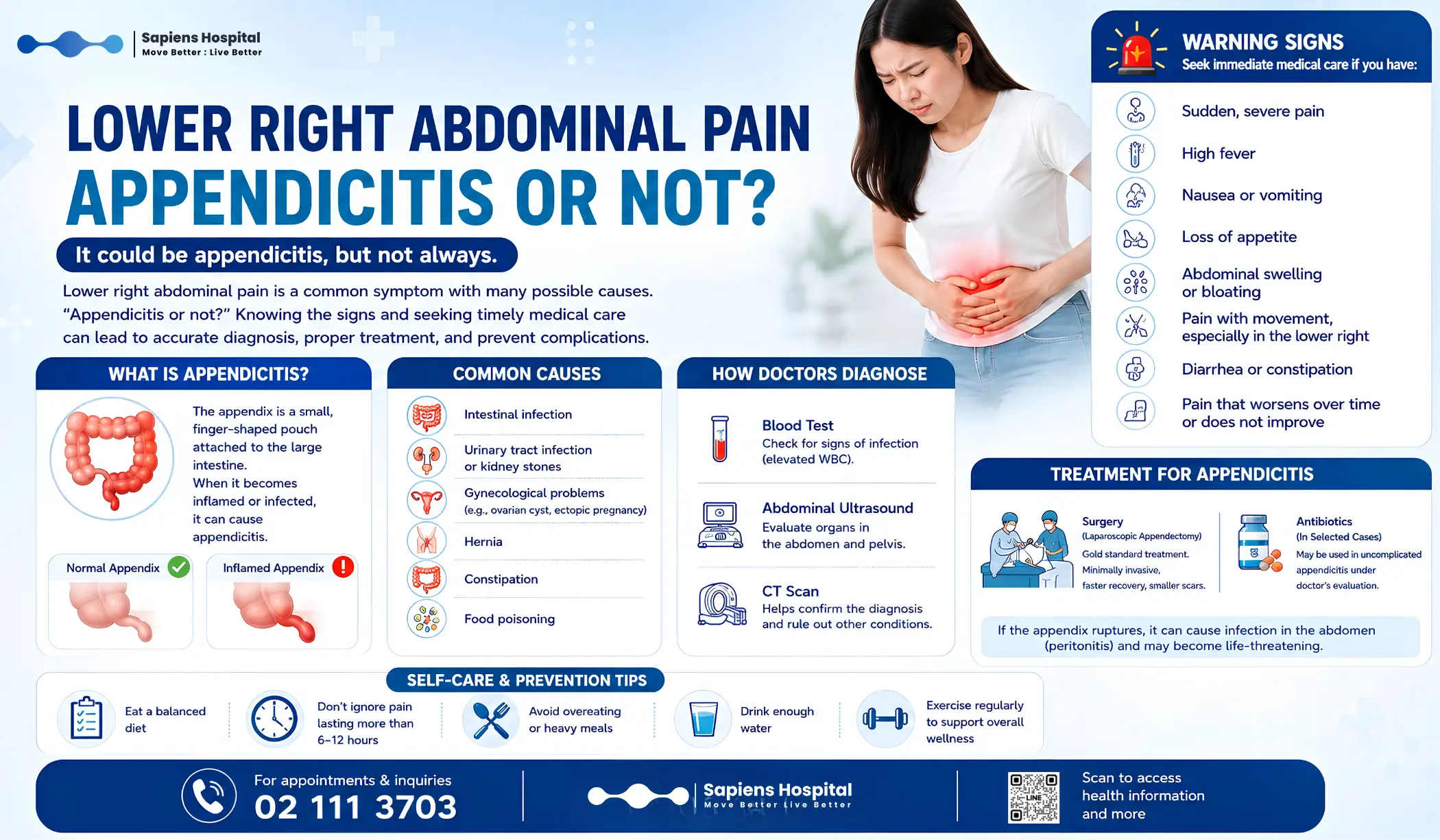
Experiencing pain in the lower right side of the abdomen often immediately triggers the concern: "Could this be appendicitis?" This worry is well-founded, as appendicitis is a common surgical emergency. If diagnosis is delayed, the appendix can rupture, leading to abdominal infections, abscesses, or other severe complications.
However, not every instance of lower right abdominal pain means appendicitis. The lower right abdomen houses several organs in close proximity, including the small intestine, large intestine, ureters, bladder, abdominal lymph nodes, muscles, and, in women, reproductive organs like the ovaries and fallopian tubes.
Therefore, the key is not to guess whether it is appendicitis, but to observe accompanying symptoms, recognize danger signs, and seek appropriate medical evaluation when at risk. This article explains the symptoms of appendicitis, other potential causes for lower right abdominal pain, how doctors diagnose it, and when you should immediately head to the hospital.
What is the Appendix, and Why Does It Become Inflamed?
The appendix is a small, pouch-like or tube-shaped organ projecting from the beginning of the large intestine, located in the lower right abdomen. Appendicitis usually occurs due to a blockage inside the appendix, such as hardened stool (fecalith), food particles, swollen lymph nodes, or other causes that obstruct its opening.
When blocked, bacteria inside the appendix multiply, causing inflammation, swelling, and increasing pain. If left untreated, the pressure inside the appendix builds up, blood flow decreases, and the appendiceal wall may suffer from ischemia and rupture. Once ruptured, bacteria and pus can spread into the abdominal cavity, causing peritonitis or an abdominal abscess, which are much more dangerous and difficult to treat. In simple terms, appendicitis starts as a small issue but can escalate into a major life-threatening condition if ignored.
What Does Appendicitis Pain Feel Like?
The symptoms of appendicitis do not always begin with lower right abdominal pain. In many patients, the pain starts as a dull ache or cramping around the navel or the upper abdomen. Later, as the inflammation becomes more pronounced, the pain gradually shifts to the lower right abdomen and worsens with movement, walking, coughing, sneezing, or pressing on the area. Accompanying symptoms may include:
Watch for pain that progressively worsens, unlike typical stomachaches, accompanied by loss of appetite, nausea, fever, or distinct localized tenderness. However, appendicitis symptoms are not "textbook" for everyone. Young children, the elderly, pregnant women, and individuals with an atypically positioned appendix may experience unclear symptoms or pain in non-classic locations.
What Else Can Cause Lower Right Abdominal Pain?
Besides appendicitis, lower right abdominal pain can be caused by:
Danger Signs: When to Go to the Hospital Immediately
Do not "wait and see" if you experience the following symptoms:
What to Do If You Suspect Appendicitis
If you have lower right abdominal pain and suspect appendicitis, avoid large meals and see a doctor promptly, especially if the pain intensifies or is accompanied by fever, nausea, or vomiting.
Things to avoid:
How Do Doctors Diagnose Appendicitis?
Diagnosing appendicitis relies on multiple components:
Treatment depends on whether it is an uncomplicated appendicitis or if complications like a rupture, abscess, or peritonitis are present.
Generally, for uncomplicated appendicitis treated with laparoscopic surgery, most patients recover relatively quickly and can go home shortly after based on the doctor's assessment. However, if the appendix ruptured or there is an infection, a longer hospital stay, extended antibiotic use, and closer monitoring are required.
Special Precautions for Children, the Elderly, and Pregnant Women
1. Is lower right abdominal pain always appendicitis? Not always. It could be gastroenteritis, kidney stones, cystitis, gynecological issues, or muscle strains. However, appendicitis is a critical condition to rule out.
2. Where exactly does appendicitis pain occur? It typically starts around the navel or upper abdomen and then shifts to the lower right abdomen. But some people may not experience this classic presentation.
3. Does everyone with appendicitis need surgery? Not necessarily. Under current guidelines, some patients with uncomplicated appendicitis may be treated with antibiotics, but this requires a thorough medical evaluation and comes with a risk of recurrence.
4. If painkillers relieve the symptoms, does that mean it's not appendicitis? No. Painkillers can temporarily mask symptoms but don't eliminate the underlying cause.
5. What happens if appendicitis is left untreated? The appendix can rupture, leading to severe abdominal infections, abscesses, peritonitis, and potentially life-threatening systemic infections (sepsis).
6. Can an ultrasound always detect appendicitis? Not always. While useful, the appendix isn't always clearly visible on an ultrasound. Doctors may opt for a CT scan or MRI if needed.
Abdominal pain is not something to guess about—getting a proper medical evaluation from the start is the safest choice.
For Inquiries and Appointments: Sapiens Hospital | Move Better : Live Better Tel. 02-111-3703
Academic References:
Podda M, et al. Diagnosis and Treatment of Acute Appendicitis: 2025 WSES Jerusalem Guidelines. World Journal of Emergency Surgery. 2025.
Di Saverio S, Podda M, De Simone B, et al. Diagnosis and treatment of acute appendicitis: 2020 update of the WSES Jerusalem guidelines. World Journal of Emergency Surgery. 2020;15:27.
Kambadakone AR, et al. ACR Appropriateness Criteria® Right Lower Quadrant Pain. Journal of the American College of Radiology. 2022.
Doleman B, et al. Appendectomy versus antibiotic treatment for acute appendicitis. Cochrane Database of Systematic Reviews. 2024; Issue 4.
Echevarria S, Rauf F, Hussain N, et al. Typical and Atypical Presentations of Appendicitis and Their Implications for Diagnosis and Treatment. Cureus. 2023.
Salö M, et al. Swedish national guidelines for diagnosis and management of acute appendicitis in adults and children. 2025.
Experiencing pain in the lower right side of the abdomen often immediately triggers the concern: "Could this be appendicitis?" This worry is well-founded, as appendicitis is a common surgical emergency. If diagnosis is delayed, the appendix can rupture, leading to abdominal infections, abscesses, or other severe complications.
However, not every instance of lower right abdominal pain means appendicitis. The lower right abdomen houses several organs in close proximity, including the small intestine, large intestine, ureters, bladder, abdominal lymph nodes, muscles, and, in women, reproductive organs like the ovaries and fallopian tubes.
Therefore, the key is not to guess whether it is appendicitis, but to observe accompanying symptoms, recognize danger signs, and seek appropriate medical evaluation when at risk. This article explains the symptoms of appendicitis, other potential causes for lower right abdominal pain, how doctors diagnose it, and when you should immediately head to the hospital.
What is the Appendix, and Why Does It Become Inflamed?
The appendix is a small, pouch-like or tube-shaped organ projecting from the beginning of the large intestine, located in the lower right abdomen. Appendicitis usually occurs due to a blockage inside the appendix, such as hardened stool (fecalith), food particles, swollen lymph nodes, or other causes that obstruct its opening.
When blocked, bacteria inside the appendix multiply, causing inflammation, swelling, and increasing pain. If left untreated, the pressure inside the appendix builds up, blood flow decreases, and the appendiceal wall may suffer from ischemia and rupture. Once ruptured, bacteria and pus can spread into the abdominal cavity, causing peritonitis or an abdominal abscess, which are much more dangerous and difficult to treat. In simple terms, appendicitis starts as a small issue but can escalate into a major life-threatening condition if ignored.
What Does Appendicitis Pain Feel Like?
The symptoms of appendicitis do not always begin with lower right abdominal pain. In many patients, the pain starts as a dull ache or cramping around the navel or the upper abdomen. Later, as the inflammation becomes more pronounced, the pain gradually shifts to the lower right abdomen and worsens with movement, walking, coughing, sneezing, or pressing on the area. Accompanying symptoms may include:
- Loss of appetite
- Nausea or vomiting
- Low-grade or high fever
- Abdominal bloating
- Diarrhea or constipation (in some cases)
- Progressively worsening pain
- Walking hunched over or reluctance to move due to pain
- Tenderness when the lower right abdomen is pressed
Watch for pain that progressively worsens, unlike typical stomachaches, accompanied by loss of appetite, nausea, fever, or distinct localized tenderness. However, appendicitis symptoms are not "textbook" for everyone. Young children, the elderly, pregnant women, and individuals with an atypically positioned appendix may experience unclear symptoms or pain in non-classic locations.
What Else Can Cause Lower Right Abdominal Pain?
Besides appendicitis, lower right abdominal pain can be caused by:
- Intestinal Inflammation or Infection (Gastroenteritis): May present with abdominal pain, diarrhea, nausea, vomiting, fever, or a history of eating contaminated food. Sometimes the pain in the lower right area is severe enough to mimic appendicitis.
- Mesenteric Lymphadenitis: More common in children and adolescents than adults, often following a viral or respiratory infection. It can cause lower right abdominal pain similar to appendicitis, but the treatment approach is different.
- Kidney Stones or Urinary Tract Issues: Severe, crampy pain that comes and goes, radiating to the back or groin, along with painful urination, blood in the urine, or severe nausea, points toward kidney stones or urinary tract infections.
- Chronic Inflammatory Bowel Disease (IBD): Conditions such as Crohn's disease can cause chronic lower right abdominal pain, diarrhea, weight loss, or recurring symptoms.
- Gynecological Conditions in Women: Women with lower right abdominal pain must be evaluated for gynecological causes, such as a ruptured ovarian cyst, ovarian torsion, pelvic inflammatory disease (PID), or ectopic pregnancy—especially if accompanied by a missed period, abnormal bleeding, abnormal discharge, or severe pelvic pain.
- Right-sided Colitis or Diverticulitis: Although diverticulitis is more common on the left side in some populations, it can occur on the right and cause appendicitis-like pain.
- Abdominal Muscle or Wall Strain: Sometimes the pain stems from the muscles or abdominal wall due to physical exertion, heavy lifting, severe coughing, or awkward twisting.
Danger Signs: When to Go to the Hospital Immediately
Do not "wait and see" if you experience the following symptoms:
- Progressively worsening lower right abdominal pain
- Pain that makes walking difficult or causes severe pain upon movement
- Fever with chills
- Nausea, vomiting, and inability to eat or drink
- Rigid abdomen, severe tenderness, or rebound tenderness (pain upon releasing pressure)
- Abdominal pain accompanied by dizziness, fainting, palpitations, or extreme fatigue
- Black or bloody stools, or vomiting blood
- In women: a missed period, abnormal bleeding, or suspected pregnancy
- Unusual abdominal pain in children, the elderly, or those with underlying health conditions
What to Do If You Suspect Appendicitis
If you have lower right abdominal pain and suspect appendicitis, avoid large meals and see a doctor promptly, especially if the pain intensifies or is accompanied by fever, nausea, or vomiting.
Things to avoid:
- Do not take laxatives, as they can stimulate the bowel and worsen the condition.
- Do not perform enemas on yourself.
- Do not apply heat packs to the abdomen if the cause is unknown.
- Do not take multiple painkillers continuously to mask the symptoms without being examined.
- Do not wait too long if the pain continues to increase.
How Do Doctors Diagnose Appendicitis?
Diagnosing appendicitis relies on multiple components:
- Medical History: The doctor will ask about pain location, symptom characteristics, duration, whether the pain migrated from the navel to the lower right abdomen, and the presence of fever, nausea, vomiting, or abnormal bowel, urinary, or menstrual patterns.
- Physical Examination: The doctor will palpate the abdomen to check for localized tenderness, rebound tenderness, abdominal muscle guarding, and signs of peritoneal irritation.
- Blood and Urine Tests: Checking white blood cell counts and inflammatory markers (like CRP), as well as a urine test to rule out urinary tract infections or stones. In women of childbearing age, a pregnancy test should be considered.
- Ultrasound: Highly beneficial, especially for children, women of childbearing age, and pregnant women, as it involves no radiation. However, the appendix may not always be clearly visible in adults or those with excess bowel gas.
- CT Scan of the Abdomen: Increases diagnostic accuracy, especially in adults or cases with unclear symptoms. The use of a CT scan is considered based on the individual patient, weighing factors like radiation and kidney function.
- MRI: In some cases, such as pregnant women with inconclusive ultrasounds, a doctor may consider an MRI to avoid radiation exposure.
Treatment depends on whether it is an uncomplicated appendicitis or if complications like a rupture, abscess, or peritonitis are present.
- Appendectomy (Surgery): Still the most widely used standard treatment. Today, Laparoscopic Appendectomy (minimally invasive surgery) is common, offering smaller incisions, less pain, faster recovery, and a quicker return to normal life.
- Antibiotic Therapy: In certain properly evaluated cases of uncomplicated appendicitis, antibiotic treatment might be considered. However, patients must understand the risk of recurrence or future need for surgery. Antibiotics should never be self-administered without a proper diagnosis.
- In Cases of Rupture or Abscess: Treatment becomes more complex. It may require intravenous antibiotics, dietary restrictions (NPO), pus drainage, or more extensive surgery.
Generally, for uncomplicated appendicitis treated with laparoscopic surgery, most patients recover relatively quickly and can go home shortly after based on the doctor's assessment. However, if the appendix ruptured or there is an infection, a longer hospital stay, extended antibiotic use, and closer monitoring are required.
Special Precautions for Children, the Elderly, and Pregnant Women
- Children: May not articulate their symptoms clearly. Some present with just fever, vomiting, fussiness, or generalized abdominal pain, leading to delayed diagnosis.
- The Elderly: Older adults might have atypical symptoms, such as a low-grade fever or mild pain, even when the disease is severe. New-onset abdominal pain in the elderly should never be overlooked.
- Pregnant Women: The position of the appendix shifts as the uterus grows, meaning the pain might not be in the classic lower right location.
1. Is lower right abdominal pain always appendicitis? Not always. It could be gastroenteritis, kidney stones, cystitis, gynecological issues, or muscle strains. However, appendicitis is a critical condition to rule out.
2. Where exactly does appendicitis pain occur? It typically starts around the navel or upper abdomen and then shifts to the lower right abdomen. But some people may not experience this classic presentation.
3. Does everyone with appendicitis need surgery? Not necessarily. Under current guidelines, some patients with uncomplicated appendicitis may be treated with antibiotics, but this requires a thorough medical evaluation and comes with a risk of recurrence.
4. If painkillers relieve the symptoms, does that mean it's not appendicitis? No. Painkillers can temporarily mask symptoms but don't eliminate the underlying cause.
5. What happens if appendicitis is left untreated? The appendix can rupture, leading to severe abdominal infections, abscesses, peritonitis, and potentially life-threatening systemic infections (sepsis).
6. Can an ultrasound always detect appendicitis? Not always. While useful, the appendix isn't always clearly visible on an ultrasound. Doctors may opt for a CT scan or MRI if needed.
Abdominal pain is not something to guess about—getting a proper medical evaluation from the start is the safest choice.
For Inquiries and Appointments: Sapiens Hospital | Move Better : Live Better Tel. 02-111-3703
Academic References:
Podda M, et al. Diagnosis and Treatment of Acute Appendicitis: 2025 WSES Jerusalem Guidelines. World Journal of Emergency Surgery. 2025.
Di Saverio S, Podda M, De Simone B, et al. Diagnosis and treatment of acute appendicitis: 2020 update of the WSES Jerusalem guidelines. World Journal of Emergency Surgery. 2020;15:27.
Kambadakone AR, et al. ACR Appropriateness Criteria® Right Lower Quadrant Pain. Journal of the American College of Radiology. 2022.
Doleman B, et al. Appendectomy versus antibiotic treatment for acute appendicitis. Cochrane Database of Systematic Reviews. 2024; Issue 4.
Echevarria S, Rauf F, Hussain N, et al. Typical and Atypical Presentations of Appendicitis and Their Implications for Diagnosis and Treatment. Cureus. 2023.
Salö M, et al. Swedish national guidelines for diagnosis and management of acute appendicitis in adults and children. 2025.
Related Content

Sapiens Hospital Services: Genetic testing for disease risk assessment, supported by a multidisciplinary team of Neurology Specialists and Pain Management Specialists to effectively manage associated neurological symptoms.
23 Sept 2025

Chronic abdominal pain is a common problem that can significantly impact a person's quality of life. Many patients experience persistent symptoms for months or even years.
2 Jul 2026

อาการ ปวดคอ ไม่ใช่เรื่องเล็กน้อย! เช็กสาเหตุและวิธีดูแลอย่างถูกต้อง ป้องกันภาวะเรื้อรังก่อนสายเกินไป
24 Mar 2025
