Percutaneous Epidural Adhesiolysis
Last updated: 21 Aug 2026
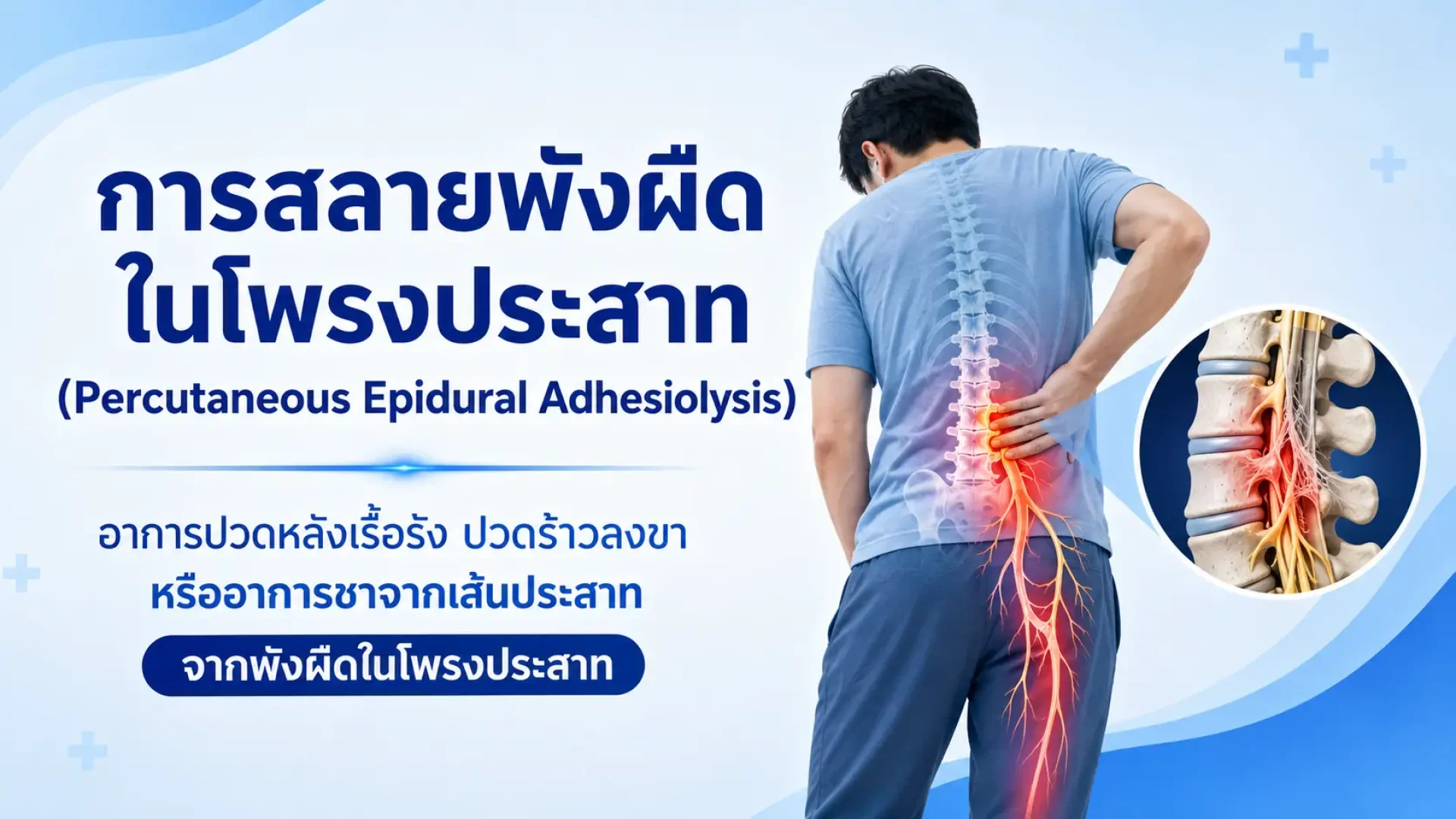
Percutaneous Epidural Adhesiolysis
Minimally Invasive Lysis of Epidural Adhesions
Chronic back pain, radiating leg pain (sciatica), or nerve-related numbness are very common problems, especially in patients who have previously undergone spinal surgery or those who have suffered from prolonged herniated discs compressing their nerves. Many patients, despite receiving treatments such as medication, physical therapy, epidural steroid injections (ESI), or even surgery, continue to experience persistent or recurrent pain.
One of the major and often overlooked causes is "Epidural Fibrosis" (or Epidural Adhesion). This condition causes the nerves to become tethered, lose their flexibility, and become chronically inflamed. As a result, patients continue to suffer from constant pain, even if radiological imaging like an MRI does not show obvious or severe structural compression.
Q&A: How Do Epidural Adhesions Form?
Following surgery, chronic inflammation, or a herniated disc compressing a nerve, the body initiates a natural healing process that ultimately forms scar tissue (adhesions) around the nerves. These adhesions negatively impact the nervous system by:
Techniques for Percutaneous Epidural Adhesiolysis
Percutaneous Epidural Adhesiolysis is a minimally invasive procedure that utilizes a specially designed, microscopic catheter inserted into the epidural space under real-time X-ray guidance (fluoroscopy). The goal is to separate adhesions, reduce tethering, and open up pathways for medications to better reach the inflamed areas. Currently popular techniques include:
Ideal Candidates (Indications)
Recovery and Expected Outcomes
After the procedure, the patient will rest under observation for 1-2 hours (there may be temporary back stiffness, a feeling of heaviness in the legs, or a slight increase in radiating pain initially, which improves within 2-3 days). Patients can usually go home the same day.
Most patients will experience reduced back and leg pain, increased walking endurance, less numbness, and improved sleep quality. Typically, the results last for 3-6 months or even up to a year, depending on the severity of the condition and concurrent physical therapy. The procedure can be repeated if symptoms return, usually spaced 3-6 months apart (not exceeding 3 times a year).
Comparison: Pros and Cons
Advantages:
If symptoms persist, the physician will consider advanced alternatives such as Radiofrequency Ablation (RFA), Spinal Cord Stimulation (SCS) implants, or a referral to a surgeon for surgical evaluation. The doctor will also evaluate other potential pain sources, such as spinal facet joints, sacroiliac joints, or muscles.
References
Helm S 2nd, Benyamin RM, Chopra P, Deer TR, Justiz R. Percutaneous adhesiolysis in the management of chronic low back pain in post lumbar surgery syndrome and spinal stenosis: a systematic review. Pain Physician. 2012;15:E435-E462.
Helm S 2nd, Noe C, Racz GB. Epidural Lysis of Adhesions: What Every Interventional Pain Physician Needs to Know. Pain Physician. 2025;28:249-257.
Kim DH, Shin JW, Choi SS. Percutaneous epidural balloon neuroplasty: a narrative review of current evidence. Anesth Pain Med. 2022;17:361-370.
Cho PG, Ji GY, Yoon YS, Shin DA. Clinical Effectiveness of Percutaneous Epidural Neuroplasty According to the Type of Single-Level Lumbar Disc Herniation: A 12-Month Follow-Up Study. J Korean Neurosurg Soc. 2019;62(6):681-690.
Gerdesmeyer L, Wagenpfeil S, Birkenmaier C, et al. Percutaneous epidural lysis of adhesions in chronic lumbar radicular pain: a randomized, double-blind, placebo-controlled trial. Pain Physician. 2013;16:185-196.
Lee F, Jamison DE, Hurley RW, Cohen SP. Epidural lysis of adhesions. Korean J Pain. 2014;27(1): 3-15.
Manchikanti L, Singh V, Cash KA, Pampati V, Datta S. Assessment of effectiveness of percutaneous adhesiolysis and caudal epidural injections in managing post lumbar surgery syndrome. Pain Physician. 2009;12:361-378.
Oh WS, Hong KH, Lee SC. Comparative Study for Analgesic and Adverse Effects of 8% and 10% Hypertonic Saline in Epidural Adhesiolysis. J Korean Pain Soc. 2000;13(1):74-78.
Minimally Invasive Lysis of Epidural Adhesions
Chronic back pain, radiating leg pain (sciatica), or nerve-related numbness are very common problems, especially in patients who have previously undergone spinal surgery or those who have suffered from prolonged herniated discs compressing their nerves. Many patients, despite receiving treatments such as medication, physical therapy, epidural steroid injections (ESI), or even surgery, continue to experience persistent or recurrent pain.
One of the major and often overlooked causes is "Epidural Fibrosis" (or Epidural Adhesion). This condition causes the nerves to become tethered, lose their flexibility, and become chronically inflamed. As a result, patients continue to suffer from constant pain, even if radiological imaging like an MRI does not show obvious or severe structural compression.
Q&A: How Do Epidural Adhesions Form?
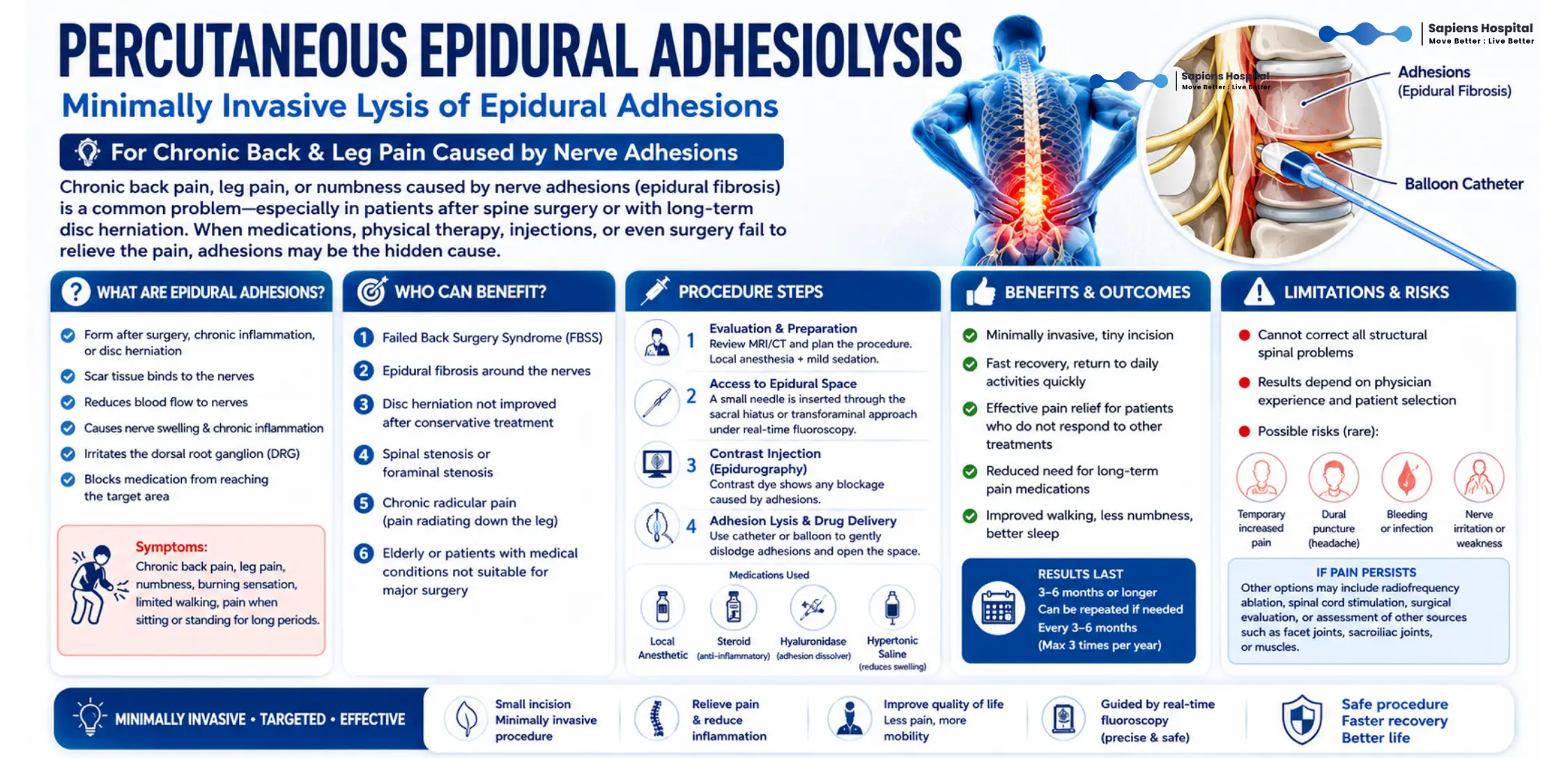
Following surgery, chronic inflammation, or a herniated disc compressing a nerve, the body initiates a natural healing process that ultimately forms scar tissue (adhesions) around the nerves. These adhesions negatively impact the nervous system by:
- Directly tethering and pulling on the nerves.
- Decreasing blood circulation around the nerves.
- Causing continuous nerve swelling and inflammation.
- Irritating the Dorsal Root Ganglion (DRG), the primary sensory nerve center.
- Reducing the effectiveness of medication delivery within the epidural space (medications fail to reach the targeted lesion).
Techniques for Percutaneous Epidural Adhesiolysis
Percutaneous Epidural Adhesiolysis is a minimally invasive procedure that utilizes a specially designed, microscopic catheter inserted into the epidural space under real-time X-ray guidance (fluoroscopy). The goal is to separate adhesions, reduce tethering, and open up pathways for medications to better reach the inflamed areas. Currently popular techniques include:
- Racz Catheter: A traditional, highly flexible specialized catheter.
- Steerable Catheter: A catheter with a navigable tip that the physician can control and direct.
- Balloon Epidural Adhesiolysis: A modern technique where the tip of the catheter features a "micro-balloon" that can be inflated and deflated. When the catheter reaches the adhesions or a narrowed nerve canal, the physician gently inflates the balloon for short intervals to help create space around the nerve, reduce tethering, relieve pressure, and improve blood flow. It is highly beneficial for conditions like Spinal Stenosis and Foraminal Stenosis.
Ideal Candidates (Indications)
- Failed Back Surgery Syndrome (FBSS): Patients still experiencing back pain or leg pain after spinal surgery.
- Epidural Fibrosis: Clear evidence of thickened adhesions around the nerves.
- Herniated Discs: Cases that have not improved despite maximizing conservative treatments like medication and physical therapy.
- Spinal Stenosis / Foraminal Stenosis: Narrowing of the spinal canal or nerve root canals.
- Chronic Radicular Pain: Chronic nerve root pain radiating down the legs.
- Elderly Patients: Or those with multiple underlying health conditions making them unsuitable for major surgery.
- Preparation and Pain Management: The physician reviews MRI/CT scans to plan the procedure. During the intervention, only local anesthesia combined with mild sedation is used. The patient remains conscious and can communicate with the medical team throughout the process.
- Accessing the Epidural Space: The physician inserts a tiny needle through the sacral hiatus or uses a transforaminal approach to reach the adhesions accurately, guided by real-time fluoroscopy.
- Epidurography (Contrast Evaluation): A contrast dye is injected to observe the spread of the medication. Areas where the dye cannot flow indicate the location of adhesions or narrowing.
- Adhesiolysis and Specific Medication Delivery: The physician carefully maneuvers the catheter or gently inflates the balloon to separate the tissues. Subsequently, a specific mixture of medications is injected, which includes:
- Local Anesthetics: To provide immediate pain relief post-procedure.
- Steroids: To reduce inflammation and swelling of the nerve roots.
- Hyaluronidase: An enzyme that helps break down and reduce the tethering of adhesions.
- Hypertonic Saline: Helps reduce nerve swelling and further separates adhesions. Some centers may administer this slowly over 20-30 minutes to minimize irritation.
Recovery and Expected Outcomes
After the procedure, the patient will rest under observation for 1-2 hours (there may be temporary back stiffness, a feeling of heaviness in the legs, or a slight increase in radiating pain initially, which improves within 2-3 days). Patients can usually go home the same day.
Most patients will experience reduced back and leg pain, increased walking endurance, less numbness, and improved sleep quality. Typically, the results last for 3-6 months or even up to a year, depending on the severity of the condition and concurrent physical therapy. The procedure can be repeated if symptoms return, usually spaced 3-6 months apart (not exceeding 3 times a year).
Comparison: Pros and Cons
Advantages:
- No major surgery required; the incision is as small as a needle puncture.
- Fast recovery; patients can quickly return to their normal daily lives.
- Effectively reduces pain in patients who are resistant to conservative medication.
- Reduces the need for long-term pain medication.
- Helps many patients avoid revision spinal surgery.
- Cannot resolve all underlying severe structural collapse issues.
- Outcomes depend heavily on the physician's experience and appropriate patient selection.
- Complications (rare but possible): Temporary increase in pain, headache from cerebrospinal fluid leak, bleeding, infection, nerve irritation, or temporary numbness/weakness.
If symptoms persist, the physician will consider advanced alternatives such as Radiofrequency Ablation (RFA), Spinal Cord Stimulation (SCS) implants, or a referral to a surgeon for surgical evaluation. The doctor will also evaluate other potential pain sources, such as spinal facet joints, sacroiliac joints, or muscles.
References
Helm S 2nd, Benyamin RM, Chopra P, Deer TR, Justiz R. Percutaneous adhesiolysis in the management of chronic low back pain in post lumbar surgery syndrome and spinal stenosis: a systematic review. Pain Physician. 2012;15:E435-E462.
Helm S 2nd, Noe C, Racz GB. Epidural Lysis of Adhesions: What Every Interventional Pain Physician Needs to Know. Pain Physician. 2025;28:249-257.
Kim DH, Shin JW, Choi SS. Percutaneous epidural balloon neuroplasty: a narrative review of current evidence. Anesth Pain Med. 2022;17:361-370.
Cho PG, Ji GY, Yoon YS, Shin DA. Clinical Effectiveness of Percutaneous Epidural Neuroplasty According to the Type of Single-Level Lumbar Disc Herniation: A 12-Month Follow-Up Study. J Korean Neurosurg Soc. 2019;62(6):681-690.
Gerdesmeyer L, Wagenpfeil S, Birkenmaier C, et al. Percutaneous epidural lysis of adhesions in chronic lumbar radicular pain: a randomized, double-blind, placebo-controlled trial. Pain Physician. 2013;16:185-196.
Lee F, Jamison DE, Hurley RW, Cohen SP. Epidural lysis of adhesions. Korean J Pain. 2014;27(1): 3-15.
Manchikanti L, Singh V, Cash KA, Pampati V, Datta S. Assessment of effectiveness of percutaneous adhesiolysis and caudal epidural injections in managing post lumbar surgery syndrome. Pain Physician. 2009;12:361-378.
Oh WS, Hong KH, Lee SC. Comparative Study for Analgesic and Adverse Effects of 8% and 10% Hypertonic Saline in Epidural Adhesiolysis. J Korean Pain Soc. 2000;13(1):74-78.
Related Content

One of the very first cases of Sapiens Hospital. Narong suffered back pain radiating to legs cannot walk more than 5 steps. Surprisingly and miraculously, he can now walks normally and becomes an active grandpa with his family
1 May 2026

Primary dysmenorrhea (lower abdominal pain during menstruation) is caused by an overproduction of prostaglandins. This leads to severe contractions of the uterine muscles, resulting in cramping, diarrhea, or nausea.
21 Aug 2025
If you've been experiencing neck, shoulder, and back pain for a long time that won't go away no matter what you do, it might not be Office Syndrome.
20 Apr 2026
