Pediatric Diarrhea: Recognizing the Signs and Risks of Dehydration
Last updated: 15 Jul 2026
Pediatric Diarrhea: Recognizing the Signs and Risks of Dehydration
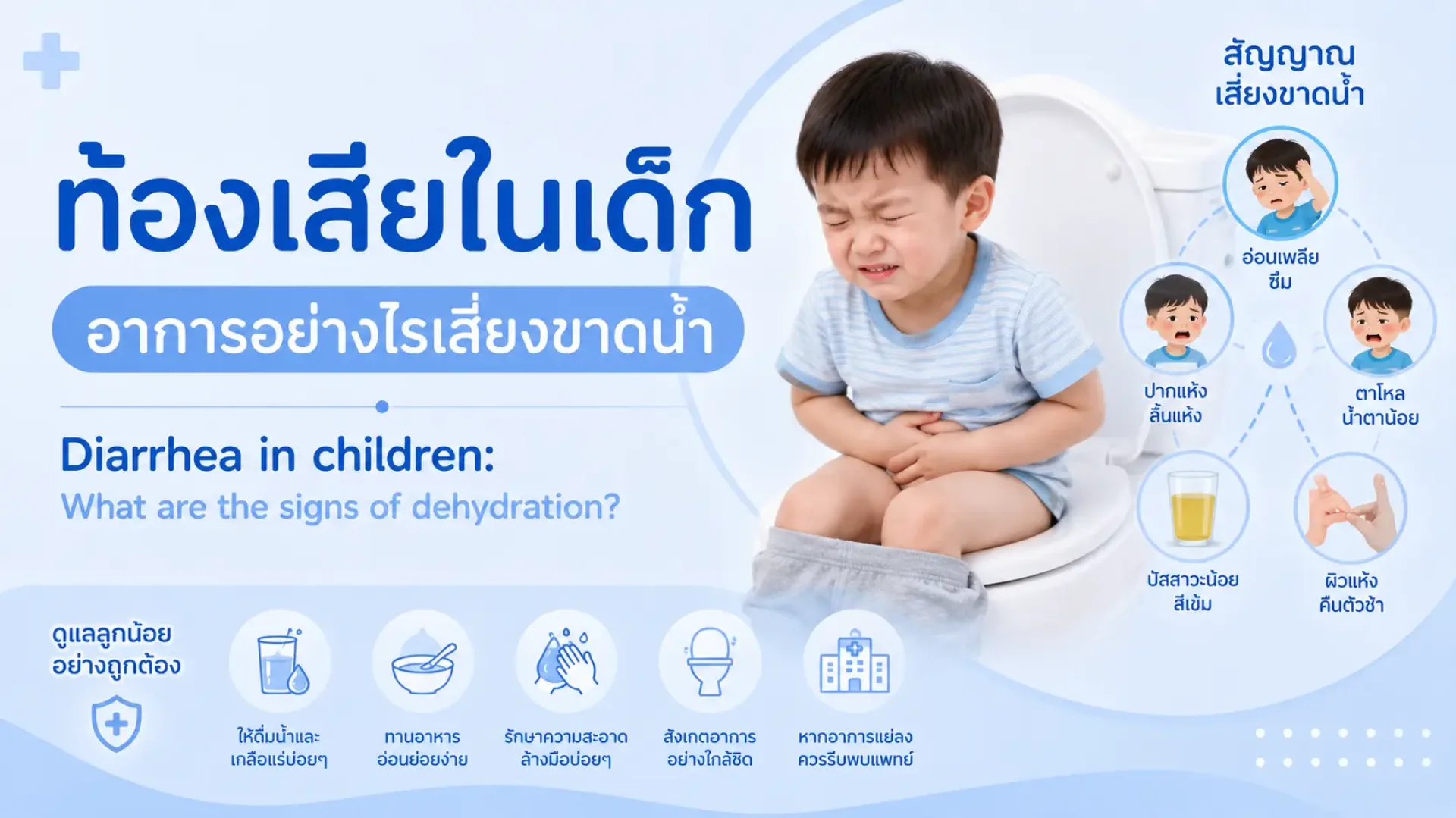
When a child suffers from diarrhea, passes watery stools multiple times, or vomits, parents immediately experience a wave of anxiety, wondering: "Will my child become dehydrated?" and "Is it time to rush to the hospital?"
Young children differ significantly from adults. Their bodies contain a higher percentage of water, causing them to lose fluids much faster. Consequently, a child’s condition can rapidly deteriorate from appearing "stable" to becoming severely exhausted within a remarkably short period.
Most cases of childhood diarrhea result from gastrointestinal tract infections, particularly viral infections like rotavirus, norovirus, or other viral strains. Children may experience watery stools, vomiting, fever, abdominal pain, loss of appetite, or general irritability. While many recover naturally within a few days, the primary concern for monitoring is not merely the frequency of bowel movements, but rather "dehydration" and "warning signs that suggest it might not be typical diarrhea."
According to the NICE guidelines (UK), gastroenteritis in young children typically causes diarrhea for about 5–7 days (usually stopping within 2 weeks), while vomiting generally lasts for 1–2 days (mostly stopping within 3 days). However, if there are signs of dehydration, severe symptoms, or clinical indications pointing toward other conditions, a prompt medical evaluation is required. Parents should never wait out the symptoms assuming the illness will simply resolve on its own.
What is Childhood Diarrhea and Why is Dehydration Common?
Diarrhea generally refers to stools that are looser or more watery than usual. It may be accompanied by increased frequency, a sour odor, abdominal cramps, or vomiting. In infants, determining whether stool consistency is abnormal requires comparison with their usual bowel habits. For instance, exclusively breastfed infants naturally pass softer or more frequent stools without being ill.
The critical danger of diarrhea in children is that fluid loss is accompanied by the depletion of essential electrolytes such as sodium, potassium, and bicarbonate. If fluid or milk intake decreases while diarrhea increases, dehydration quickly sets in. Initial symptoms include dry mouth, reduced urination, sunken eyes, and lethargy. In severe cases, it can progress to cold extremities, a rapid pulse, rapid breathing, and low blood pressure.
The Royal Children’s Hospital Melbourne classifies pediatric dehydration into mild, moderate, and severe stages. Severe dehydration may present with an altered state of consciousness, tachycardia (rapid heart rate), tachypnea (rapid breathing) or abnormally deep breathing, pale or mottled skin, cold extremities, and hypotension (low blood pressure)—a critical medical emergency requiring immediate hospitalization.
Spotting the Early Signs of Dehydration Risk
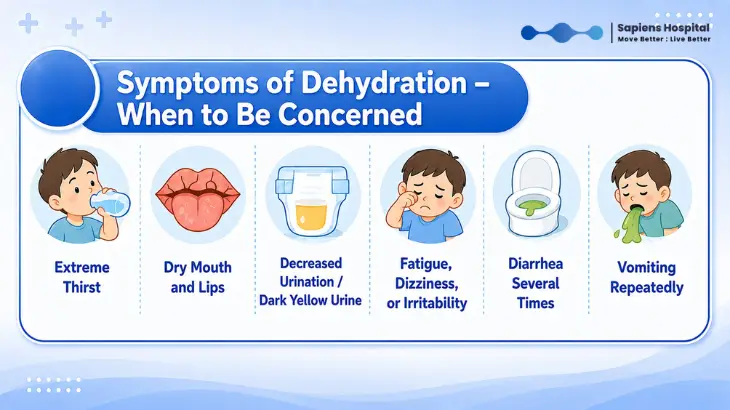
Initial warning signs that parents can easily observe include:
The NICE guidelines recommend asking and observing whether the child looks increasingly unwell, shows changes in responsiveness (such as extreme irritability or lethargy), has decreased urine output, displays pale or mottled skin, or has cold extremities. These are critical markers of dehydration that can rapidly progress to shock if left unmanaged.
Severe Dehydration: When to Seek Immediate Medical Attention
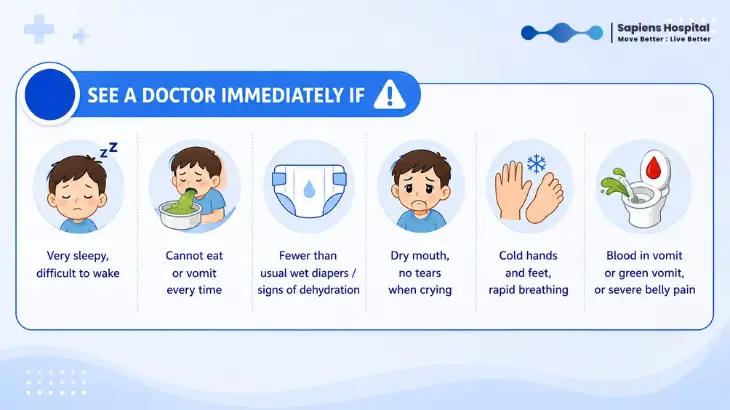
Parents must rush their child to the hospital immediately if any of the following severe symptoms occur:
Key Takeaway: Pediatric dehydration cannot be judged solely by the frequency of diarrhea. A child who passes stools only a few times but vomits continuously and cannot tolerate fluids can quickly become severely dehydrated. Conversely, a child who has frequent stools but drinks Oral Rehydration Salts (ORS) well, urinates normally, and remains active may not be severely dehydrated. Always evaluate the overall clinical picture of the child.
High-Risk Groups Requiring Special Vigilance
Certain pediatric populations face a much higher risk of rapid fluid loss and require extra caution:
The Crucial Role of ORS: Avoid Sweetened Drinks and Juice
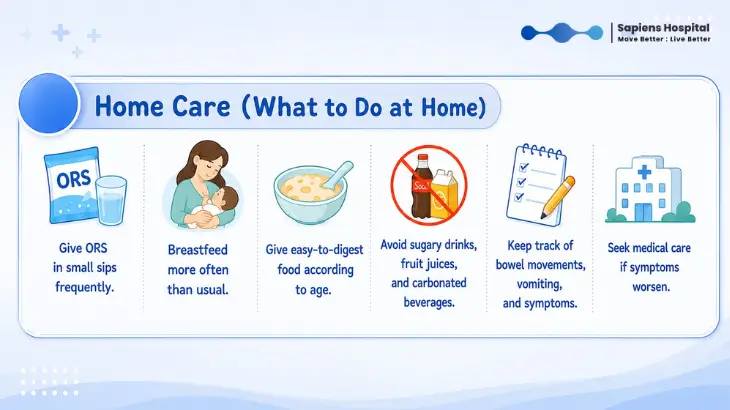
When a child has diarrhea, well-meaning parents often try to push plain water. However, relying solely on plain water when a child has lost a significant amount of electrolytes is insufficient. The gold standard for preventing and treating mild-to-moderate dehydration is an Oral Rehydration Salts (ORS) solution. ORS contains a precise balance of water, glucose, and essential salts that optimizes the intestines' ability to absorb fluids back into the body.
The CDC notes that children without clear signs of dehydration should simply receive extra fluids alongside their age-appropriate regular diet. For those with mild-to-moderate dehydration, ORS should be administered to replace lost fluids. Give small volumes frequently—such as 5 mL or one teaspoon every 1–2 minutes—gradually increasing the amount as tolerated, especially if the child is prone to vomiting.
Avoid fruit juices, carbonated beverages, sugary drinks, or sports drinks. These beverages contain high sugar concentrations and improper electrolyte balances for treating pediatric diarrhea. Excess sugar can actually worsen diarrhea by drawing more water into the bowel lumens. The NICE guidelines explicitly advise against fruit juices and carbonated drinks for children with gastroenteritis, particularly those at risk of dehydration.
Administering ORS When Vomiting is Present
If your child is vomiting, do not force large amounts of fluids all at once, as an irritated stomach will reject it, triggering further vomiting. A better approach is to pause briefly, then resume by giving ORS in very small, frequent increments using a spoon, a syringe, or a small cup—offering a tiny sip every 1–2 minutes. Increase the volume gradually as the child's tolerance improves.
The CDC guidelines suggest that for mild-to-moderate dehydration, replacing fluid deficits with 50–100 mL of ORS per kilogram of body weight over the first 2–4 hours is highly effective. Additional fluids should also be given to continuously compensate for ongoing diarrhea or vomiting episodes.
If a child vomits occasionally but can still sip ORS bit by bit, close monitoring at home is acceptable. However, if the child vomits every single time they drink, cannot tolerate any oral fluids, becomes lethargic, urinates poorly, or develops cold hands and feet, immediate medical care is necessary. Medical professionals may need to administer fluids via a nasogastric tube or intravenous (IV) therapy depending on the severity.
Dietary Guidance: Should You Stop Milk or Food Intake?
Generally, prolonged fasting is unnecessary and counterproductive. Once vomiting subsides, children should receive adequate fluids and return to their normal age-appropriate diet as soon as possible.
Ideal recovery meals include easily digestible, soft foods such as rice porridge, congee, bananas, bread, or clear soups. There is no need to severely restrict the child to a bland diet for an extended period, as returning to normal meals helps the intestinal lining heal faster and prevents unnecessary weight loss.
Recognizing When It Is "Not Just a Typical Stomach Bug"
Pediatric diarrhea is not always caused by a simple virus. It can stem from bacterial infections, parasites, food poisoning, acute appendicitis, intussusception (a serious bowel condition), or other systemic illnesses requiring targeted medical treatments.
Parents should seek immediate medical evaluation if the child exhibits any of the following:
Anti-Diarrheal Medications and Antibiotics: Are They Safe?
As a general rule, anti-diarrheal medications are not recommended for children without explicit medical consultation. Diarrhea is a natural defense mechanism that helps the body expel pathogens and toxins from the intestines. Certain anti-diarrheal drugs can reduce intestinal motility, increasing the risk of severe abdominal bloating, lethargy, and dangerous side effects, particularly in infants.
The NICE guidelines state clearly that anti-diarrheal medications should not be used in children with gastroenteritis. Similarly, antibiotics should not be routinely prescribed for typical childhood diarrhea. They are reserved for specific clinical indications diagnosed by a physician, such as suspected septicemia, specific bacterial pathogens, or in certain immunocompromised patients.
Rotavirus and Severe Pediatric Diarrhea
Rotavirus stands out as a leading cause of severe diarrhea in infants and young children worldwide. It frequently triggers severe watery diarrhea, profuse vomiting, high fever, and abdominal pain, causing rapid dehydration. According to the CDC, rotavirus-induced dehydration is a common cause of pediatric hospitalizations.
While vaccinated children can still experience diarrhea from other pathogens, the rotavirus vaccine is highly effective at reducing disease severity, minimizing complications, and drastically lowering hospitalization rates. The primary goal of vaccination is not necessarily a 100% guarantee against mild infection, but rather protection against severe illness, dangerous complications, and life-threatening dehydration.
Guidelines for Safe Home Care
Home care under close parental supervision is appropriate during the early stages if the child:
Hospital Management for Dehydration Risks
Upon arrival, a medical team will comprehensively evaluate the severity of the child's dehydration. The assessment includes reviewing vital signs, weight changes, conscious state, skin color, capillary refill time, urine output, eye appearance, oral mucosa moisture, skin turgor, and any co-existing symptoms.
Mild-to-moderate cases are frequently managed with oral or nasogastric rehydration under close clinical observation. However, if the child presents with severe dehydration, clinical shock, an inability to tolerate oral fluids, or persistent vomiting, intravenous (IV) fluid therapy becomes mandatory.
The Royal Children’s Hospital Melbourne emphasizes that oral rehydration therapy (or nasogastric tube rehydration) remains the preferred first-line treatment for mild-to-moderate dehydration whenever feasible. Intravenous fluid therapy is strictly reserved for cases involving severe dehydration, fluid refusal, or an inability to safely tolerate enteral fluids.
Frequently Asked Questions (FAQs) by Parents
Q: My child has passed loose stools several times but is still playing happily. Do we need to rush to the hospital?
A: If your child is drinking fluids or ORS well, urinating normally, has no high fever, no blood in the stool, no excessive vomiting, and remains responsive, you can safely monitor them at home in the short term. However, if the child is under 6 months old, experiencing massive stool output combined with vomiting, or starting to drink less, a prompt medical evaluation is advised.
Q: My child vomits every single time I give ORS. What should I do?
A: Pause all oral intake briefly (about 10-15 minutes), then restart with an extremely small volume, such as one teaspoon at a time, offered more frequently. If your child continues to vomit every single drop, cannot tolerate any fluids, urinates less, or becomes lethargic, bring them to the hospital immediately for professional medical care.
Q: Is finding blood in the stool dangerous?
A: Yes, bloody or mucoid stools should never be ignored. This symptom can indicate a bacterial infection, severe bowel inflammation, or other serious conditions requiring thorough medical evaluation. You should consult a physician promptly. Do not purchase over-the-counter anti-diarrheal drugs or antibiotics.
Q: Does every child with diarrhea need a stool test?
A: Not necessarily. Children with mild watery diarrhea, no blood in the stool, no signs of dehydration, and whose symptoms are steadily improving typically do not require routine stool testing. However, a doctor may order a stool culture if there is blood or mucus present, if a severe infection or immunodeficiency is suspected, following recent international travel, or if the diarrhea persists for several days without improvement. NICE guidelines recommend stool testing specifically in cases of clinical uncertainty, suspected septicemia, presence of blood/mucus, or immunocompromised states.
Conclusion
Childhood diarrhea is an incredibly common illness, but dehydration is a serious, life-threatening risk that demands active vigilance—particularly in infants under 6 months of age, children with high stool output, or those experiencing severe vomiting.
The Essential Checklist: Remember the core signs of dehydration: dry mouth, lack of tears, sunken eyes, excessive thirst, refusal or inability to drink, lethargy, reduced urination, cold extremities, and abnormal weakness.
Correct management does not focus on stopping the diarrhea as quickly as possible; instead, it centers on preventing and treating fluid loss. Prioritize proper ORS administration, maintain breastfeeding or regular milk intake, and transition back to an age-appropriate diet as the child improves. Strictly avoid sugary juices, sodas, and unprescribed anti-diarrheal or antibiotic medications.
If you are ever uncertain whether it is safe to keep managing your child at home, look closely at their overall behavior and signs of dehydration. Because a dehydrated child's condition can shift rapidly, seeking professional medical advice at the very first warning sign ensures a safer, faster recovery and minimizes the risk of severe complications.
Sapiens Hospital
Move Better : Live Better
Tel. 02-111-3703
References:
When a child suffers from diarrhea, passes watery stools multiple times, or vomits, parents immediately experience a wave of anxiety, wondering: "Will my child become dehydrated?" and "Is it time to rush to the hospital?"
Young children differ significantly from adults. Their bodies contain a higher percentage of water, causing them to lose fluids much faster. Consequently, a child’s condition can rapidly deteriorate from appearing "stable" to becoming severely exhausted within a remarkably short period.
Most cases of childhood diarrhea result from gastrointestinal tract infections, particularly viral infections like rotavirus, norovirus, or other viral strains. Children may experience watery stools, vomiting, fever, abdominal pain, loss of appetite, or general irritability. While many recover naturally within a few days, the primary concern for monitoring is not merely the frequency of bowel movements, but rather "dehydration" and "warning signs that suggest it might not be typical diarrhea."
According to the NICE guidelines (UK), gastroenteritis in young children typically causes diarrhea for about 5–7 days (usually stopping within 2 weeks), while vomiting generally lasts for 1–2 days (mostly stopping within 3 days). However, if there are signs of dehydration, severe symptoms, or clinical indications pointing toward other conditions, a prompt medical evaluation is required. Parents should never wait out the symptoms assuming the illness will simply resolve on its own.
What is Childhood Diarrhea and Why is Dehydration Common?
Diarrhea generally refers to stools that are looser or more watery than usual. It may be accompanied by increased frequency, a sour odor, abdominal cramps, or vomiting. In infants, determining whether stool consistency is abnormal requires comparison with their usual bowel habits. For instance, exclusively breastfed infants naturally pass softer or more frequent stools without being ill.
The critical danger of diarrhea in children is that fluid loss is accompanied by the depletion of essential electrolytes such as sodium, potassium, and bicarbonate. If fluid or milk intake decreases while diarrhea increases, dehydration quickly sets in. Initial symptoms include dry mouth, reduced urination, sunken eyes, and lethargy. In severe cases, it can progress to cold extremities, a rapid pulse, rapid breathing, and low blood pressure.
The Royal Children’s Hospital Melbourne classifies pediatric dehydration into mild, moderate, and severe stages. Severe dehydration may present with an altered state of consciousness, tachycardia (rapid heart rate), tachypnea (rapid breathing) or abnormally deep breathing, pale or mottled skin, cold extremities, and hypotension (low blood pressure)—a critical medical emergency requiring immediate hospitalization.
Spotting the Early Signs of Dehydration Risk
Initial warning signs that parents can easily observe include:
- Increased thirst, with the child demanding water or milk more frequently.
- Dry mouth, dry tongue, and decreased saliva.
- Fewer or no tears when crying.
- Decreased urine output, darker urine color, or a diaper that remains dry longer than usual.
- Increased irritability, fussiness, lethargy, or a lack of interest in playing.
The NICE guidelines recommend asking and observing whether the child looks increasingly unwell, shows changes in responsiveness (such as extreme irritability or lethargy), has decreased urine output, displays pale or mottled skin, or has cold extremities. These are critical markers of dehydration that can rapidly progress to shock if left unmanaged.
Severe Dehydration: When to Seek Immediate Medical Attention
Parents must rush their child to the hospital immediately if any of the following severe symptoms occur:
- Inability to drink fluids or breastfeed, or vomiting every time fluids are taken.
- Massive amounts of watery stools.
- Extremely minimal urine output or no urination for several hours.
- Severely dry mouth, deeply sunken eyes, or a sunken fontanelle (soft spot) in infants.
- Crying with absolutely no tears.
- Abnormal lethargy, weakness, or difficulty waking up.
- Cold extremities, mottled skin, rapid breathing, or severe prostration.
Key Takeaway: Pediatric dehydration cannot be judged solely by the frequency of diarrhea. A child who passes stools only a few times but vomits continuously and cannot tolerate fluids can quickly become severely dehydrated. Conversely, a child who has frequent stools but drinks Oral Rehydration Salts (ORS) well, urinates normally, and remains active may not be severely dehydrated. Always evaluate the overall clinical picture of the child.
High-Risk Groups Requiring Special Vigilance
Certain pediatric populations face a much higher risk of rapid fluid loss and require extra caution:
- Infants under 1 year of age, particularly those under 6 months, due to their small body mass and inability to communicate symptoms.
- Low birth weight infants.
- Children passing more than 5 watery stools within a 24-hour period.
- Children vomiting more than twice within a 24-hour period.
- Children who refuse or cannot tolerate fluids or milk.
- Infants whose breastfeeding has been interrupted during the illness.
- Children with poor nutritional status.
The Crucial Role of ORS: Avoid Sweetened Drinks and Juice
When a child has diarrhea, well-meaning parents often try to push plain water. However, relying solely on plain water when a child has lost a significant amount of electrolytes is insufficient. The gold standard for preventing and treating mild-to-moderate dehydration is an Oral Rehydration Salts (ORS) solution. ORS contains a precise balance of water, glucose, and essential salts that optimizes the intestines' ability to absorb fluids back into the body.
The CDC notes that children without clear signs of dehydration should simply receive extra fluids alongside their age-appropriate regular diet. For those with mild-to-moderate dehydration, ORS should be administered to replace lost fluids. Give small volumes frequently—such as 5 mL or one teaspoon every 1–2 minutes—gradually increasing the amount as tolerated, especially if the child is prone to vomiting.
Avoid fruit juices, carbonated beverages, sugary drinks, or sports drinks. These beverages contain high sugar concentrations and improper electrolyte balances for treating pediatric diarrhea. Excess sugar can actually worsen diarrhea by drawing more water into the bowel lumens. The NICE guidelines explicitly advise against fruit juices and carbonated drinks for children with gastroenteritis, particularly those at risk of dehydration.
Administering ORS When Vomiting is Present
If your child is vomiting, do not force large amounts of fluids all at once, as an irritated stomach will reject it, triggering further vomiting. A better approach is to pause briefly, then resume by giving ORS in very small, frequent increments using a spoon, a syringe, or a small cup—offering a tiny sip every 1–2 minutes. Increase the volume gradually as the child's tolerance improves.
The CDC guidelines suggest that for mild-to-moderate dehydration, replacing fluid deficits with 50–100 mL of ORS per kilogram of body weight over the first 2–4 hours is highly effective. Additional fluids should also be given to continuously compensate for ongoing diarrhea or vomiting episodes.
If a child vomits occasionally but can still sip ORS bit by bit, close monitoring at home is acceptable. However, if the child vomits every single time they drink, cannot tolerate any oral fluids, becomes lethargic, urinates poorly, or develops cold hands and feet, immediate medical care is necessary. Medical professionals may need to administer fluids via a nasogastric tube or intravenous (IV) therapy depending on the severity.
Dietary Guidance: Should You Stop Milk or Food Intake?
Generally, prolonged fasting is unnecessary and counterproductive. Once vomiting subsides, children should receive adequate fluids and return to their normal age-appropriate diet as soon as possible.
- Breastfed infants: Breastfeeding should continue uninterrupted, as breast milk provides vital fluids, essential nutrients, and protective antibodies.
- Formula-fed infants: Formula does not typically need to be diluted unless specifically instructed by a physician on a case-by-case basis.
Ideal recovery meals include easily digestible, soft foods such as rice porridge, congee, bananas, bread, or clear soups. There is no need to severely restrict the child to a bland diet for an extended period, as returning to normal meals helps the intestinal lining heal faster and prevents unnecessary weight loss.
Recognizing When It Is "Not Just a Typical Stomach Bug"
Pediatric diarrhea is not always caused by a simple virus. It can stem from bacterial infections, parasites, food poisoning, acute appendicitis, intussusception (a serious bowel condition), or other systemic illnesses requiring targeted medical treatments.
Parents should seek immediate medical evaluation if the child exhibits any of the following:
- High fever or age-specific high temperatures.
- Severe or localized abdominal pain, marked abdominal distension, or rebound tenderness.
- Green-tinged (bilious) vomiting.
- Blood or mucus in the stool, or black tarry stools.
- Altered consciousness, lethargy, or confusion.
- A stiff neck or a bulging fontanelle.
- A non-blanching rash (a rash that does not fade when pressed).
- Accompanying moderate-to-severe dehydration.
Anti-Diarrheal Medications and Antibiotics: Are They Safe?
As a general rule, anti-diarrheal medications are not recommended for children without explicit medical consultation. Diarrhea is a natural defense mechanism that helps the body expel pathogens and toxins from the intestines. Certain anti-diarrheal drugs can reduce intestinal motility, increasing the risk of severe abdominal bloating, lethargy, and dangerous side effects, particularly in infants.
The NICE guidelines state clearly that anti-diarrheal medications should not be used in children with gastroenteritis. Similarly, antibiotics should not be routinely prescribed for typical childhood diarrhea. They are reserved for specific clinical indications diagnosed by a physician, such as suspected septicemia, specific bacterial pathogens, or in certain immunocompromised patients.
Rotavirus and Severe Pediatric Diarrhea
Rotavirus stands out as a leading cause of severe diarrhea in infants and young children worldwide. It frequently triggers severe watery diarrhea, profuse vomiting, high fever, and abdominal pain, causing rapid dehydration. According to the CDC, rotavirus-induced dehydration is a common cause of pediatric hospitalizations.
While vaccinated children can still experience diarrhea from other pathogens, the rotavirus vaccine is highly effective at reducing disease severity, minimizing complications, and drastically lowering hospitalization rates. The primary goal of vaccination is not necessarily a 100% guarantee against mild infection, but rather protection against severe illness, dangerous complications, and life-threatening dehydration.
Guidelines for Safe Home Care
Home care under close parental supervision is appropriate during the early stages if the child:
- Remains reasonably cheerful and active.
- Can drink fluids and tolerate ORS well.
- Is not vomiting excessively.
- Maintains normal urination.
- Shows no blood or mucus in the stool.
- Does not have a high fever or severe abdominal pain.
- Exhibits no lethargy or cold extremities.
- Frequency and consistency of bowel movements.
- Number of vomiting episodes.
- Volume of fluids or ORS consumed.
- Frequency of urination (wet diapers).
- Body temperature.
- General behavior and activity levels.
Hospital Management for Dehydration Risks
Upon arrival, a medical team will comprehensively evaluate the severity of the child's dehydration. The assessment includes reviewing vital signs, weight changes, conscious state, skin color, capillary refill time, urine output, eye appearance, oral mucosa moisture, skin turgor, and any co-existing symptoms.
Mild-to-moderate cases are frequently managed with oral or nasogastric rehydration under close clinical observation. However, if the child presents with severe dehydration, clinical shock, an inability to tolerate oral fluids, or persistent vomiting, intravenous (IV) fluid therapy becomes mandatory.
The Royal Children’s Hospital Melbourne emphasizes that oral rehydration therapy (or nasogastric tube rehydration) remains the preferred first-line treatment for mild-to-moderate dehydration whenever feasible. Intravenous fluid therapy is strictly reserved for cases involving severe dehydration, fluid refusal, or an inability to safely tolerate enteral fluids.
Frequently Asked Questions (FAQs) by Parents
Q: My child has passed loose stools several times but is still playing happily. Do we need to rush to the hospital?
A: If your child is drinking fluids or ORS well, urinating normally, has no high fever, no blood in the stool, no excessive vomiting, and remains responsive, you can safely monitor them at home in the short term. However, if the child is under 6 months old, experiencing massive stool output combined with vomiting, or starting to drink less, a prompt medical evaluation is advised.
Q: My child vomits every single time I give ORS. What should I do?
A: Pause all oral intake briefly (about 10-15 minutes), then restart with an extremely small volume, such as one teaspoon at a time, offered more frequently. If your child continues to vomit every single drop, cannot tolerate any fluids, urinates less, or becomes lethargic, bring them to the hospital immediately for professional medical care.
Q: Is finding blood in the stool dangerous?
A: Yes, bloody or mucoid stools should never be ignored. This symptom can indicate a bacterial infection, severe bowel inflammation, or other serious conditions requiring thorough medical evaluation. You should consult a physician promptly. Do not purchase over-the-counter anti-diarrheal drugs or antibiotics.
Q: Does every child with diarrhea need a stool test?
A: Not necessarily. Children with mild watery diarrhea, no blood in the stool, no signs of dehydration, and whose symptoms are steadily improving typically do not require routine stool testing. However, a doctor may order a stool culture if there is blood or mucus present, if a severe infection or immunodeficiency is suspected, following recent international travel, or if the diarrhea persists for several days without improvement. NICE guidelines recommend stool testing specifically in cases of clinical uncertainty, suspected septicemia, presence of blood/mucus, or immunocompromised states.
Conclusion
Childhood diarrhea is an incredibly common illness, but dehydration is a serious, life-threatening risk that demands active vigilance—particularly in infants under 6 months of age, children with high stool output, or those experiencing severe vomiting.
The Essential Checklist: Remember the core signs of dehydration: dry mouth, lack of tears, sunken eyes, excessive thirst, refusal or inability to drink, lethargy, reduced urination, cold extremities, and abnormal weakness.
Correct management does not focus on stopping the diarrhea as quickly as possible; instead, it centers on preventing and treating fluid loss. Prioritize proper ORS administration, maintain breastfeeding or regular milk intake, and transition back to an age-appropriate diet as the child improves. Strictly avoid sugary juices, sodas, and unprescribed anti-diarrheal or antibiotic medications.
If you are ever uncertain whether it is safe to keep managing your child at home, look closely at their overall behavior and signs of dehydration. Because a dehydrated child's condition can shift rapidly, seeking professional medical advice at the very first warning sign ensures a safer, faster recovery and minimizes the risk of severe complications.
Sapiens Hospital
Move Better : Live Better
Tel. 02-111-3703
References:
- National Institute for Health and Care Excellence (NICE). Diarrhoea and vomiting caused by gastroenteritis in under 5s: diagnosis and management. NICE Clinical Guideline CG84.
- Royal Children’s Hospital Melbourne. Clinical Practice Guidelines: Dehydration. Last updated April 2026.
- Centers for Disease Control and Prevention (CDC). Managing Acute Gastroenteritis Among Children: Oral Rehydration, Maintenance, and Nutritional Therapy. MMWR Recommendations and Reports.
- World Health Organization (WHO). Pocket Book of Hospital Care for Children: Diarrhoea, assessment and treatment of dehydration.
Related Content
If your child has a poor appetite, drops below weight and height standards, looks pale, gets sick frequently, or has chronic bowel issues—including difficulty swallowing, choking, vomiting, or persistent stomach pain—you should take them to see a doctor immediately.
10 Jul 2026

When should a child with a high fever see a doctor? Learn the emergency red flags, dehydration signs, and febrile seizure care from SapienS Hospital.
10 Jul 2026

Stay up-to-date with essential childhood vaccinations. Build strong immunity and protect your child's future at Sapiens Hospital. Book your appointment today!
6 Jul 2026
