Intestinal Obstruction: A Dangerous Warning Sign You Should Never Ignore
Last updated: 11 Jul 2026
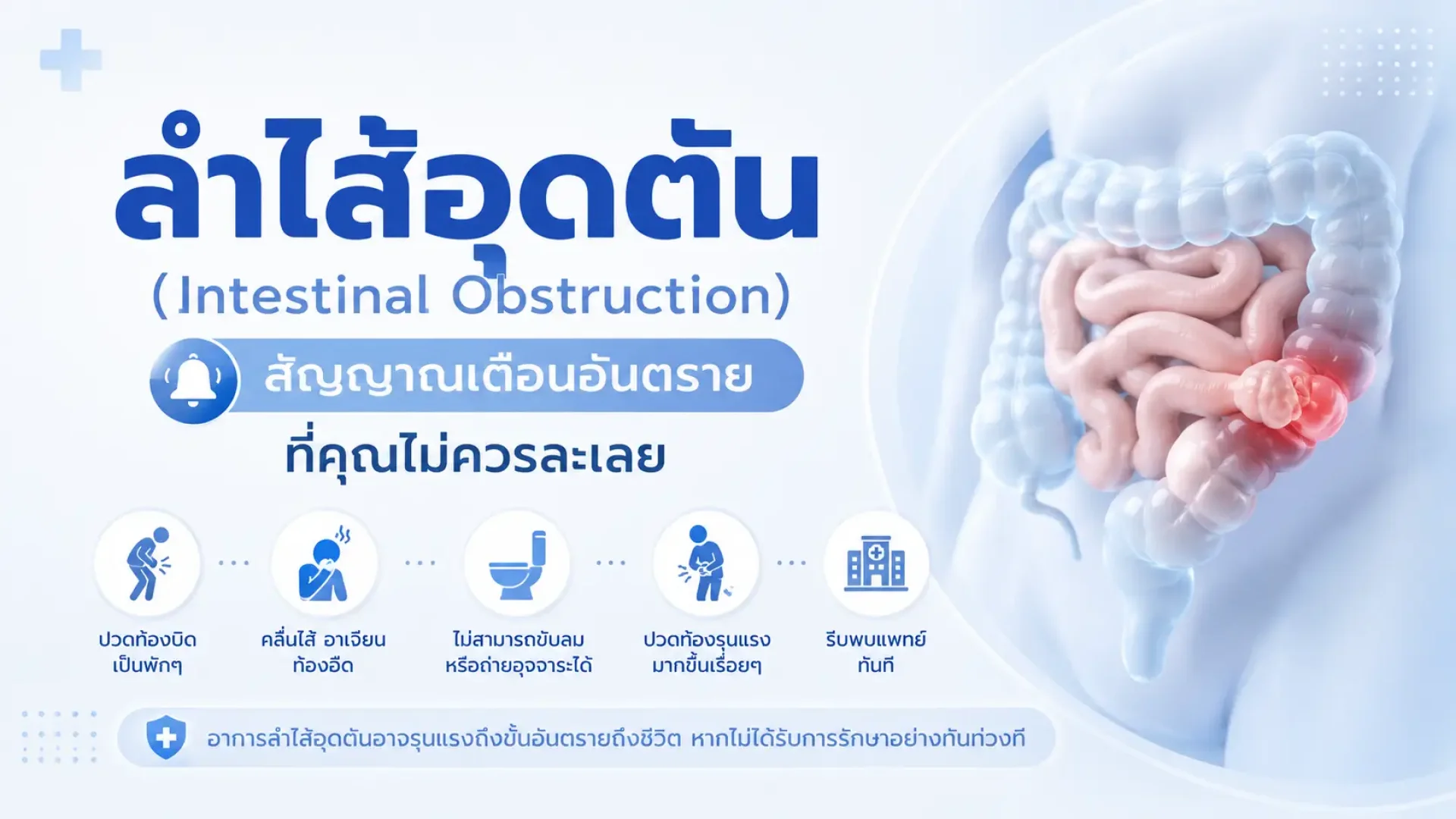
Intestinal Obstruction: Warning Signs You Should Never Ignore
Intestinal obstruction is a medical emergency. Detecting and treating it early can significantly reduce the risk of severe complications. This article will help you understand the symptoms, causes, and warning signs so you can seek timely medical attention.
1. What is an Intestinal Obstruction?
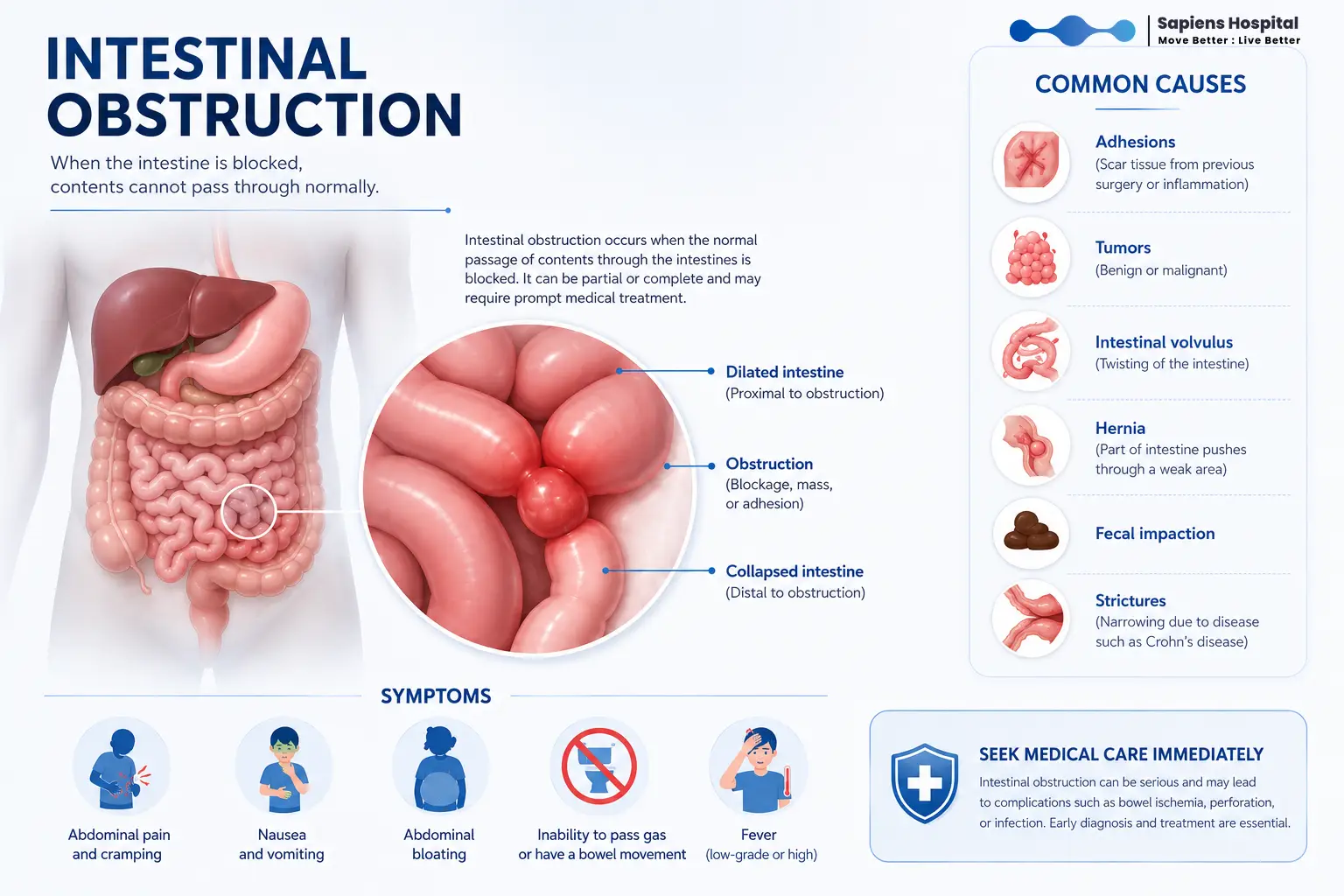
An intestinal obstruction occurs when the digestive tract (small or large intestine) is partially or completely blocked. This prevents food, gas, and fluids from passing through normally, causing a build-up of pressure within the intestines. If left untreated, it can lead to bowel ischemia (loss of blood supply) or intestinal perforation.
2. Warning Signs: Symptoms to Watch For
If you or a loved one experience these symptoms, please consult a doctor immediately:
4. Why "Time" is Crucial
If left untreated for too long, an intestinal obstruction can lead to life-threatening complications:
At Sapiens Hospital, our specialized gastroenterology and surgical teams are ready to provide care using advanced medical technology.
If you experience sudden, severe abdominal pain, do not self-medicate. Seek immediate medical attention at our Emergency Department. Early intervention can improve outcomes and may help you avoid major surgery.
Sapiens Hospital
Tel: 02-111-3703
Online Appointment: Click here
Intestinal obstruction is a medical emergency. Detecting and treating it early can significantly reduce the risk of severe complications. This article will help you understand the symptoms, causes, and warning signs so you can seek timely medical attention.
1. What is an Intestinal Obstruction?
An intestinal obstruction occurs when the digestive tract (small or large intestine) is partially or completely blocked. This prevents food, gas, and fluids from passing through normally, causing a build-up of pressure within the intestines. If left untreated, it can lead to bowel ischemia (loss of blood supply) or intestinal perforation.
2. Warning Signs: Symptoms to Watch For
If you or a loved one experience these symptoms, please consult a doctor immediately:
- Severe, Cramping Abdominal Pain: Often comes in waves and intensifies over time.
- Abdominal Bloating and Distension: Noticeable swelling of the abdomen.
- Nausea and Vomiting: Vomiting bile or, in severe cases, material that smells like feces.
- Severe Constipation: Inability to pass gas or have a bowel movement.
- Loss of Appetite and Fatigue: Resulting from dehydration and electrolyte imbalance.
- Abdominal Adhesions: Often resulting from previous abdominal surgeries.
- Hernias: When a portion of the intestine protrudes through a weak spot in the abdominal wall.
- Tumors or Colorectal Cancer: Masses obstructing the digestive tract.
- Intussusception: Where the intestine telescopes into itself (more common in children, but can occur in adults).
- Volvulus: When a loop of the intestine twists around itself.
4. Why "Time" is Crucial
If left untreated for too long, an intestinal obstruction can lead to life-threatening complications:
- Bowel Ischemia: Death of intestinal tissue due to restricted blood flow.
- Intestinal Perforation: A hole in the intestine that allows bacteria to leak into the abdominal cavity, causing severe sepsis.
- Shock and Death: Resulting from severe dehydration and infection.
At Sapiens Hospital, our specialized gastroenterology and surgical teams are ready to provide care using advanced medical technology.
- Diagnosis: Physical examination, abdominal X-rays, and CT scans to pinpoint the location and cause of the obstruction.
- Treatment:
- Supportive Care: Fasting (no food or water), nasogastric tube insertion to decompress the stomach, and intravenous (IV) fluids.
- Surgery: If symptoms do not improve or the obstruction is severe, surgery will be required to resolve the blockage (minimally invasive laparoscopic surgery may be an option in certain cases).
If you experience sudden, severe abdominal pain, do not self-medicate. Seek immediate medical attention at our Emergency Department. Early intervention can improve outcomes and may help you avoid major surgery.
Sapiens Hospital
Tel: 02-111-3703
Online Appointment: Click here
Tags :
Related Content

การมีซีสต์ในรังไข่สามารถเป็นสาเหตุของอาการปวดหลังช่วงมีประจำเดือนได้ โดยมักเกิดจากการที่ซีสต์กดทับอวัยวะในช่องท้อง การรักษาและการปรับพฤติกรรมสามารถช่วยบรรเทาอาการได้
3 Apr 2025

Pelvic floor muscles are a frequently overlooked source of chronic pelvic pain. Patients may present with lower pelvic or lower abdominal pain, perineal pain, painful urination (dysuria), pain during bowel movements (dyschezia), and pain during sexual intercourse (dyspareunia).
2 Jul 2026

พฤติกรรมการนั่งที่ไม่ถูกต้องอาจเป็นต้นเหตุของออฟฟิศซินโดรม มาปรับพฤติกรรมง่าย ๆ ด้วย 5 วิธี ที่ช่วยป้องกันอาการปวดหลังและลดความเสี่ยงจากออฟฟิศซินโดรม เพื่อสุขภาพที่ดีในระยะยาว
17 Apr 2025
