Understanding Malignant Hyperthermia: A Rare but Severe Anesthesia Emergency
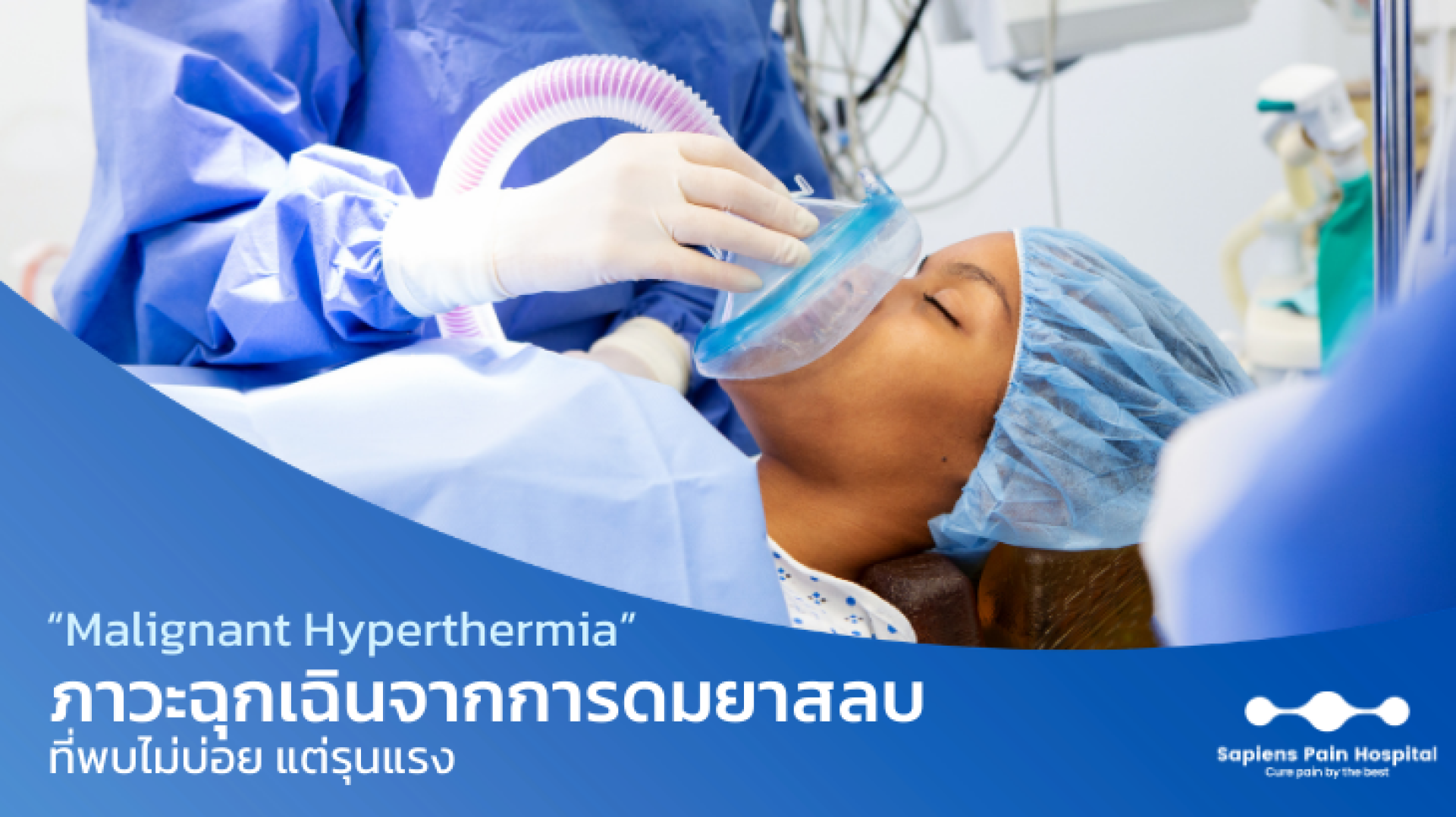
Malignant Hyperthermia (MH) has recently gained public attention following news of patients experiencing severe complications during anesthesia, particularly in aesthetic surgeries. It is important to understand that MH is not a common allergic reaction to anesthesia; rather, it is a life-threatening emergency caused by an abnormal body response to specific anesthetic agents. Although rare, immediate medical intervention is critical for survival.
What is Malignant Hyperthermia?
Malignant Hyperthermia is a condition where the body’s skeletal muscles react abnormally and severely to certain types of anesthesia. This reaction triggers a sudden and rapid increase in metabolism, leading to:
- Muscle rigidity (muscle contractions)
- Extreme heat production (high fever)
- Increased carbon dioxide (CO₂) levels
- Metabolic acidosis (high acid levels in the blood)
- Hyperkalemia (high potassium levels)
- Rhabdomyolysis (muscle breakdown)
If left untreated, it can lead to cardiac arrhythmia, kidney failure, blood clotting disorders, and cardiac arrest.
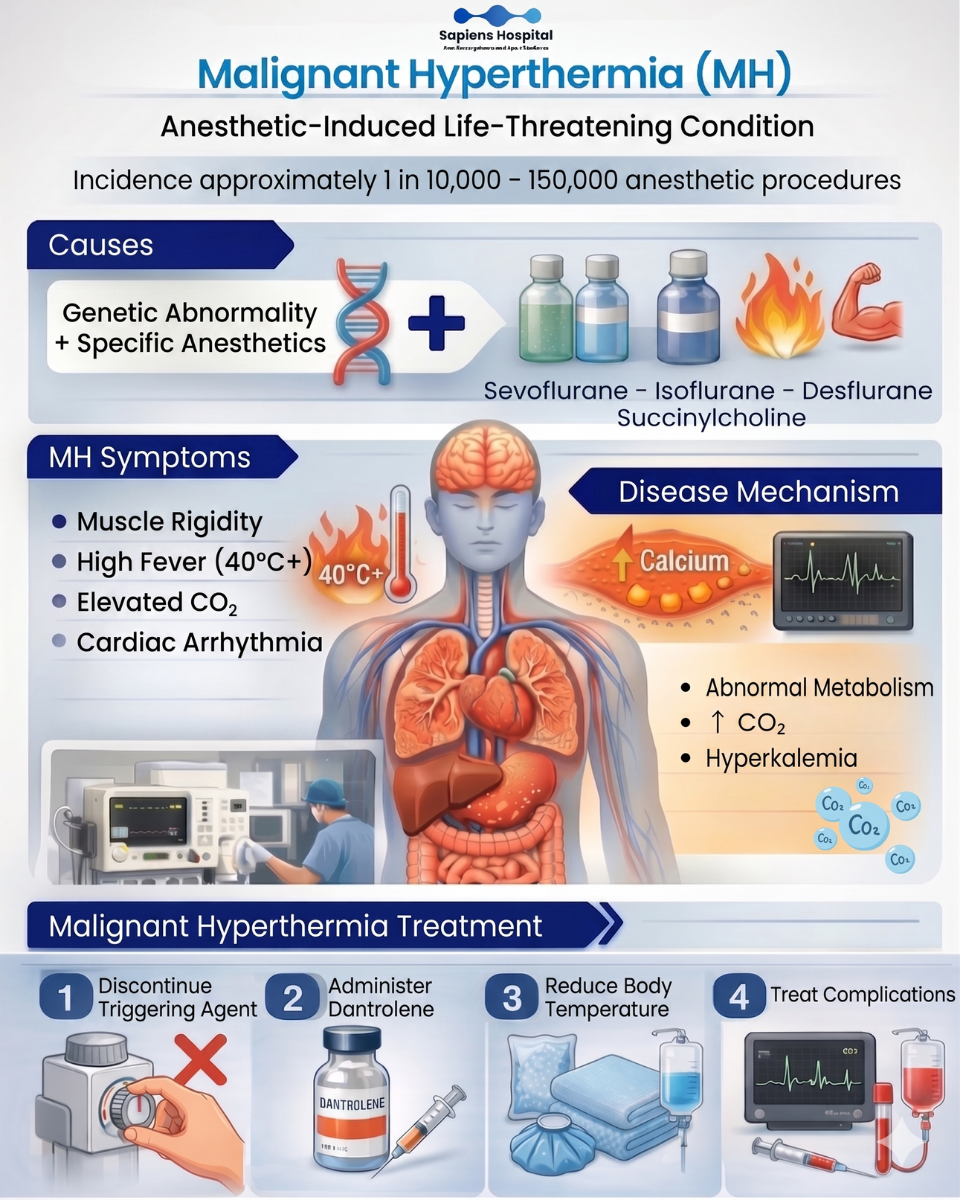
Malignant Hyperthermia (MH) at a Glance
- Occurrence: Approximately 1 in 10,000 to 150,000 anesthesia cases.
- Primary Cause: Genetic predisposition combined with specific triggering agents.
Common Triggering Agents
- Inhalation Anesthetics: Sevoflurane, Isoflurane, Desflurane.
- Muscle Relaxant: Succinylcholine.
Key Symptoms
- Rapid heart rate (Tachycardia)
- Muscle rigidity
- Elevated CO₂ levels
- High fever
- Irregular heartbeat (Arrhythmia)
The 4 Steps of Treatment
1. Discontinue Triggers: Stop the administration of triggering anesthetics immediately.
2. 100% Oxygen: Administer high-flow oxygen to reduce CO₂ and treat acidosis.
3. Administer Dantrolene: The life-saving medication for MH.
4. Manage Complications: Treat secondary symptoms and organ failure.
"Early detection saves lives."
How common is this condition?
While clinical MH is rare (estimated at 1 in 10,000 to 150,000 cases, with some studies suggesting 1 in 25,000), genetic susceptibility is more common. Approximately 1 in 2,000 to 3,000 people may carry the predisposing gene but will only exhibit symptoms when exposed to triggering agents.
Causes and Pathophysiology
MH is caused by genetic mutations, primarily in the RYR1 or CACNA1S genes. These genes regulate calcium levels within muscle cells. When triggered, these mutations cause a continuous release of calcium, leading to sustained muscle contraction and hypermetabolism.
Recognizing Symptoms
Symptoms typically occur during or shortly after surgery.
- Early Signs: High CO₂ levels, rapid heart rate, muscle rigidity, excessive sweating, and masseter muscle rigidity (lockjaw).
- Severe Symptoms: High fever is often not the first sign. If untreated, it can rapidly progress to extreme hyperthermia, muscle breakdown (dark-colored urine), hyperkalemia, kidney failure, and cardiac arrest.
Emergency Management
If MH is suspected, medical teams must act instantly:
1. Immediate Cessation: All triggering anesthetic agents are stopped.
2. Hyperventilation: Providing 100% oxygen helps clear CO₂ and correct blood pH.
3. Dantrolene Sodium: This is the most critical medication. It stops the abnormal muscle contraction and breaks the hypermetabolic cycle.
4. Supportive Care: Cooling the patient, correcting electrolyte imbalances, and supporting kidney function.
Genetic Testing for Risk Assessment
Genetic testing for RYR1 and CACNA1S mutations is available for individuals with a family history of MH or those who have previously experienced suspicious symptoms during surgery. However, a negative genetic test does not 100% rule out the risk.
Dantrolene in Thailand
Dantrolene is the specific antidote for Malignant Hyperthermia and is included in Thailand’s National List of Essential Medicines. International guidelines recommend that any healthcare facility using inhalation anesthetics must have Dantrolene readily available.
Malignant Hyperthermia is a severe but rare emergency. The keys to survival are early detection, immediate withdrawal of triggering agents, and rapid administration of Dantrolene. With professional management and quick response, the chances of survival are significantly increased.
Article by: Dr. Nattaya Udomsak
Specialist in Pain Management
Sapiens Hospital
Comprehensive Care, Professional Standards.