A holistic health check-up to prevent diseases and maintain quality of life.
Last updated: 17 Jul 2026

.Holistic Health Check-up for Disease Prevention and Maintaining Quality of Life
"The goal of a health check-up is not merely to find out if we have a disease, but to identify risks before the disease occurs."
This is the core concept of Preventive Medicine, which is transforming healthcare worldwide. Moving away from the traditional approach of waiting for a disease to develop before treating it, the focus has shifted to identifying risk factors in their early stages. This aims to prevent diseases from occurring or, at the very least, delay their progression for as long as possible.
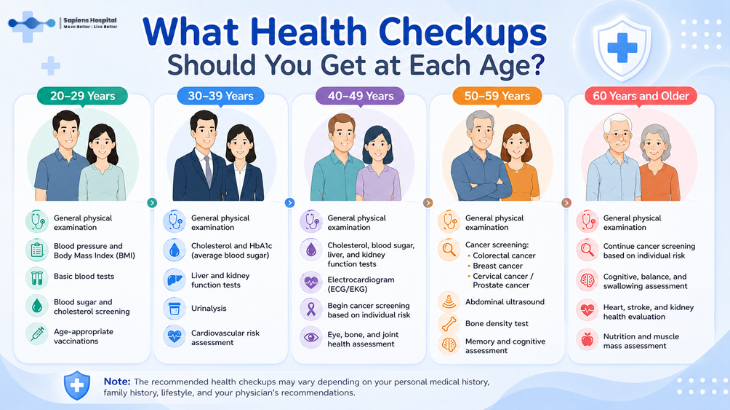
Many people believe that an annual health check-up consists of just a yearly blood test, chest X-ray, and urine test. In reality, everyone's health is different—depending on age, gender, genetics, underlying conditions, lifestyle, and family history. Therefore, a good health check-up is not a one-size-fits-all approach, but rather about selecting tests tailored to "individual risks."
Guidelines from the United States Preventive Services Task Force (USPSTF) and the World Health Organization (WHO) both emphasize that appropriate screening based on age and risk can significantly reduce mortality from heart disease, cancer, diabetes, and chronic illnesses when combined with appropriate lifestyle modifications.
Good Health Does Not Just Mean the "Absence of Disease"
The World Health Organization defines health as a state of complete physical, mental, and social well-being, and not merely the absence of disease or infirmity.
In real life, many people have normal blood test results but experience fatigue, insomnia, chronic back pain, weight gain, fatty liver, high stress, or early muscle loss. All these factors affect their quality of life, even if they haven't been officially diagnosed with a disease.
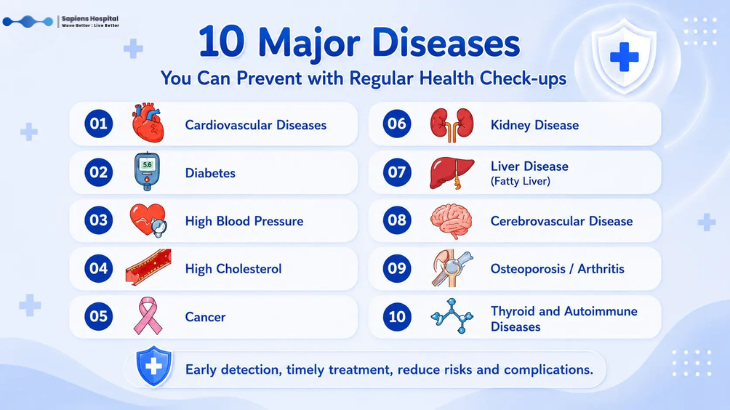
A holistic health check-up, therefore, looks deeper than blood values. It evaluates risks associated with cardiovascular disease, diabetes, kidney disease, liver disease, cancer, bone health, muscle mass, visceral obesity, sleep, mental health, physical mobility, and overall quality of life.
Why Prevention is More Important Than Treatment
Many chronic diseases do not happen overnight:
What Should a Holistic Health Check-up Include?
The most important thing is not the "test result" itself, but the care plan: Adjusting diet, exercising, losing weight, quitting smoking, controlling blood pressure, managing diabetes, rehabilitating muscles, getting vaccinated, and following up.
The best health check-up is not the most expensive one, but the one that leads to long-term behavioral changes and disease prevention.
A holistic health check-up is not just about finding diseases, but evaluating the risks of the entire body—from the heart, blood vessels, diabetes, kidneys, liver, cancer, bones, and muscles, to mental health, sleep, and quality of life. By identifying risks in their early stages, we have a much better chance of preventing diseases rather than waiting to treat them. Good health is not just about living a long life; it's about living a strong life, moving well, functioning at your full potential, and living happily at every age.
Sapiens Hospital Move Better : Live Better Tel. 02-111-3703
References
World Health Organization.Constitution of the World Health Organization (definition of health).
*[U.S. Preventive Services Task Force – A and B Recommendations](https://www.uspreventiveservicestaskforce.org/uspstf/recommendation-topics/uspstf-a-and-brecommendations?utm_source=chatgpt.com)
* [Centers for Disease Control and Prevention – About Chronic Diseases](https://www.cdc.gov/chronic-disease/about/index.html?utm_source=chatgpt.com)
* [American Heart Association – Cardiovascular Prevention Guidelines](https://www.heart.org? utm_source=chatgpt.com)
* [American Diabetes Association – Standards of Care in Diabetes 2025](https://diabetesjournals.org/care/issue/48/Supplement_1?utm_source=chatgpt.com)
* [KDIGO Clinical Practice Guideline for Chronic Kidney Disease Evaluation and Management] (https://kdigo.org/guidelines/ckd-evaluation-and-management/?utm_source=chatgpt.com)
"The goal of a health check-up is not merely to find out if we have a disease, but to identify risks before the disease occurs."
This is the core concept of Preventive Medicine, which is transforming healthcare worldwide. Moving away from the traditional approach of waiting for a disease to develop before treating it, the focus has shifted to identifying risk factors in their early stages. This aims to prevent diseases from occurring or, at the very least, delay their progression for as long as possible.
Many people believe that an annual health check-up consists of just a yearly blood test, chest X-ray, and urine test. In reality, everyone's health is different—depending on age, gender, genetics, underlying conditions, lifestyle, and family history. Therefore, a good health check-up is not a one-size-fits-all approach, but rather about selecting tests tailored to "individual risks."
Guidelines from the United States Preventive Services Task Force (USPSTF) and the World Health Organization (WHO) both emphasize that appropriate screening based on age and risk can significantly reduce mortality from heart disease, cancer, diabetes, and chronic illnesses when combined with appropriate lifestyle modifications.
Good Health Does Not Just Mean the "Absence of Disease"
The World Health Organization defines health as a state of complete physical, mental, and social well-being, and not merely the absence of disease or infirmity.
In real life, many people have normal blood test results but experience fatigue, insomnia, chronic back pain, weight gain, fatty liver, high stress, or early muscle loss. All these factors affect their quality of life, even if they haven't been officially diagnosed with a disease.
A holistic health check-up, therefore, looks deeper than blood values. It evaluates risks associated with cardiovascular disease, diabetes, kidney disease, liver disease, cancer, bone health, muscle mass, visceral obesity, sleep, mental health, physical mobility, and overall quality of life.
Why Prevention is More Important Than Treatment
Many chronic diseases do not happen overnight:
- Coronary artery disease takes decades to build up.
- Diabetes often begins with years of insulin resistance.
- Kidney decline may show no symptoms until more than 50% of function is lost.
- Many cancers take years before symptoms appear.
- Osteoarthritis starts with the gradual wearing down of cartilage.
What Should a Holistic Health Check-up Include?
- Medical History Taking: This is the most critical part. It includes family history, smoking, alcohol consumption, sleep, exercise, stress, diet, underlying conditions, and medications.
- Body Weight and Composition: It's not just about looking at BMI. It should assess waist circumference, body fat percentage, muscle mass, visceral fat, and abdominal obesity, which correlate with diabetes, fatty liver, heart disease, knee osteoarthritis, and back pain.
- Blood Pressure Measurement: High blood pressure is a "Silent Killer." Many patients have no symptoms, but it increases the risk of stroke, heart attack, kidney failure, and aortic aneurysm.
- Blood Tests: CBC, glucose, HbA1c, kidney function, liver function, uric acid, electrolytes, thyroid (if indicated), urine microalbumin (for diabetic patients), and lipid profiles. Note: Lipids are not only related to the heart but also associated with the brain, kidneys, vascular diseases, nerves, and chronic inflammation.
- Cancer Screening: Testing depends on age and risk (e.g., breast cancer, cervical cancer, colon cancer, prostate cancer, and lung cancer for smokers). The USPSTF and American Cancer Society recommend selecting screenings based on age, family history, and risk factors, rather than testing for everything at once.
- Bone Health and Mobility: Many people have normal blood tests but struggle to walk due to knee osteoarthritis, muscle loss, poor balance, or being prone to falls. Assessments for muscle strength, balance, flexibility, risk of falls, and bone health are highly important, especially for the elderly.
- Vaccinations: Health doesn't end with blood results. Reviewing vaccines—such as Influenza, Pneumococcal, Shingrix (Shingles), COVID-19, and RSV—is a crucial part of adult preventive medicine.
- Mental Health Evaluation: Stress, depression, insomnia, and burnout are all linked to heart disease, diabetes, obesity, chronic pain, and a decreased quality of life. A holistic health assessment must look at both the body and the mind simultaneously.
The most important thing is not the "test result" itself, but the care plan: Adjusting diet, exercising, losing weight, quitting smoking, controlling blood pressure, managing diabetes, rehabilitating muscles, getting vaccinated, and following up.
The best health check-up is not the most expensive one, but the one that leads to long-term behavioral changes and disease prevention.
A holistic health check-up is not just about finding diseases, but evaluating the risks of the entire body—from the heart, blood vessels, diabetes, kidneys, liver, cancer, bones, and muscles, to mental health, sleep, and quality of life. By identifying risks in their early stages, we have a much better chance of preventing diseases rather than waiting to treat them. Good health is not just about living a long life; it's about living a strong life, moving well, functioning at your full potential, and living happily at every age.
Sapiens Hospital Move Better : Live Better Tel. 02-111-3703
References
World Health Organization.Constitution of the World Health Organization (definition of health).
*[U.S. Preventive Services Task Force – A and B Recommendations](https://www.uspreventiveservicestaskforce.org/uspstf/recommendation-topics/uspstf-a-and-brecommendations?utm_source=chatgpt.com)
* [Centers for Disease Control and Prevention – About Chronic Diseases](https://www.cdc.gov/chronic-disease/about/index.html?utm_source=chatgpt.com)
* [American Heart Association – Cardiovascular Prevention Guidelines](https://www.heart.org? utm_source=chatgpt.com)
* [American Diabetes Association – Standards of Care in Diabetes 2025](https://diabetesjournals.org/care/issue/48/Supplement_1?utm_source=chatgpt.com)
* [KDIGO Clinical Practice Guideline for Chronic Kidney Disease Evaluation and Management] (https://kdigo.org/guidelines/ckd-evaluation-and-management/?utm_source=chatgpt.com)
Related Content

What causes shingles, how does it start, is it contagious, and how long does it take to heal? Find answers on how to manage shingles, effective treatments, and current shingles vaccine prices for safe prevention from our medical specialists.
26 Jun 2026

Stay informed on Hantavirus: Thailand's risk is low, but prevention remains key. Sapiens Hospital shares essential tips to keep your home safe and rodent-free.
9 May 2026

Diabetes is a highly prevalent chronic disease among Thai people, yet it is often overlooked because clear symptoms are rarely present in the early stages; many individuals only discover they have it by chance during an annual physical exam.
25 Jun 2026
