Chronic Fatigue & Dizziness: Sleep Loss or Hidden Disease?
Last updated: 2 Aug 2026
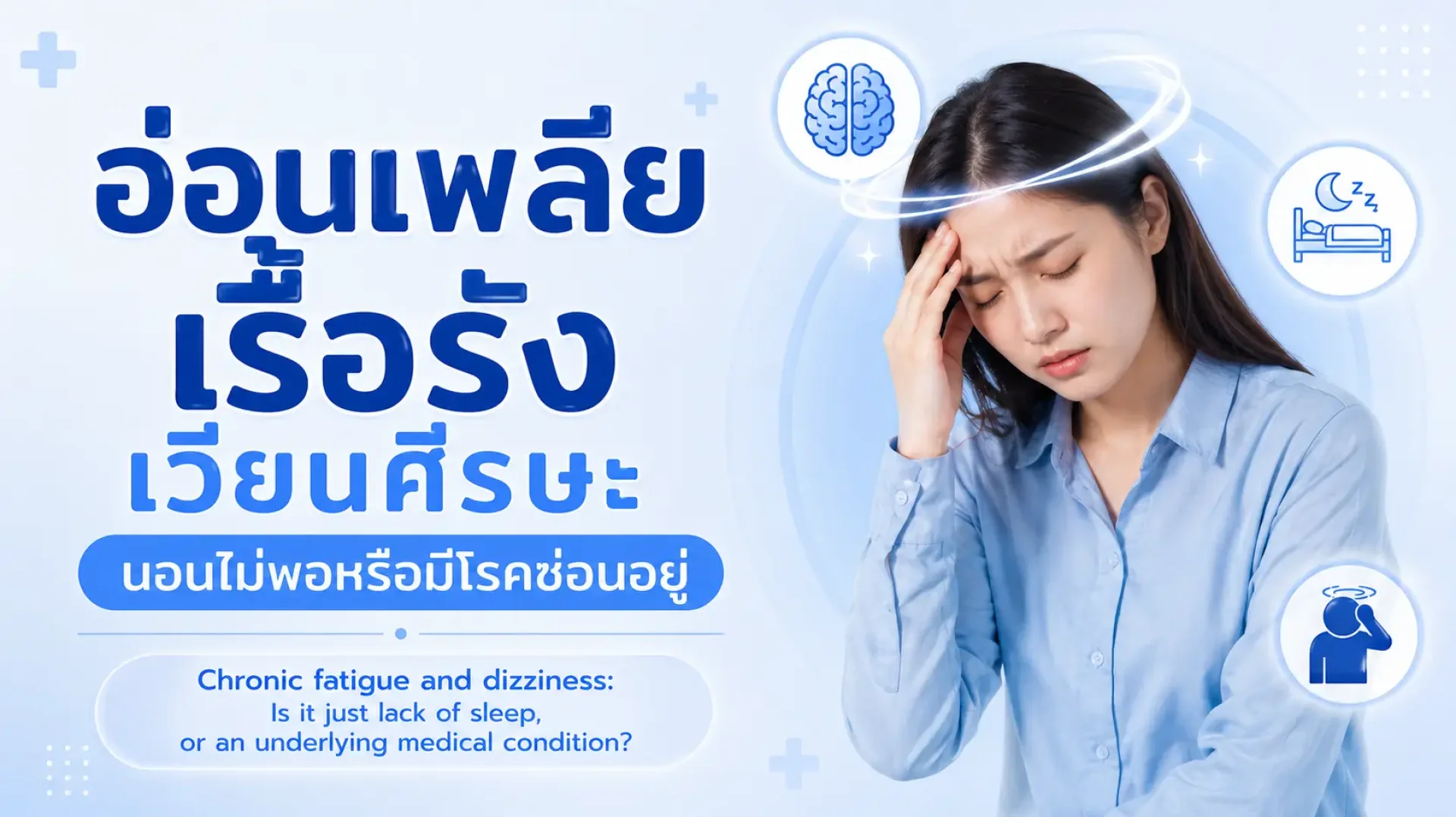
Chronic Fatigue and Dizziness: Is It Just Lack of Sleep or a Hidden Condition?
Many people start their days with a similar feeling: waking up unrefreshed despite sleeping for hours, feeling drained by midday, losing focus, and experiencing brain fog. On some days, this is accompanied by dizziness, a sense of unsteadiness, or feeling like your body is simply not operating at 100%.
In an era where late nights, prolonged screen time, accumulated stress, and fast-paced lifestyles are the norm, "fatigue" and "dizziness" are often dismissed as ordinary occurrences. We often tell ourselves, "I just need to sleep more," or "It will get better once I get some rest."
However, from a medical perspective, chronic fatigue and dizziness are not always caused by sleep deprivation. While some individuals genuinely just need more rest, others may be dealing with hidden conditions—such as anemia, thyroid disorders, diabetes, abnormal blood pressure, sleep disorders, vitamin deficiencies, medication side effects, heart disease, neurological issues, or even underlying stress, anxiety, and depression.
The key is not to simply guess that "it's just a lack of sleep" or "I'm probably just stressed," but to observe how long the symptoms have lasted, how much they interfere with your daily life, and whether there are other warning signs.
Normal Fatigue vs. Chronic Fatigue: What is the Difference?
Experiencing fatigue after intense physical labor, sleep deprivation, long-distance travel, or overexertion is completely normal. In most cases, these symptoms gradually resolve once you get enough rest, eat properly, and reduce your workload.
However, the type of fatigue that warrants medical attention includes symptoms that:
In general medical practice, fatigue is one of the most common complaints. Because it is a non-specific symptom, it can stem from various bodily systems—ranging from sleep, metabolism, hormones, blood, and the heart, to the nervous system and mental health. Therefore, an effective medical assessment goes beyond asking "How many hours do you sleep?" and focuses on asking, "What signals is your body trying to send?"
Does Lack of Sleep Really Cause Fatigue and Dizziness?
Yes, absolutely, and it is a very common cause. Insufficient sleep, irregular sleep patterns, or poor sleep quality can lead to fatigue, decreased concentration, irritability, headaches, brain fog, and dizziness. Some people may not feel overtly sleepy but describe feeling as though their brain is sluggish, they are working slower, or they are expending an unusual amount of energy to complete routine tasks.
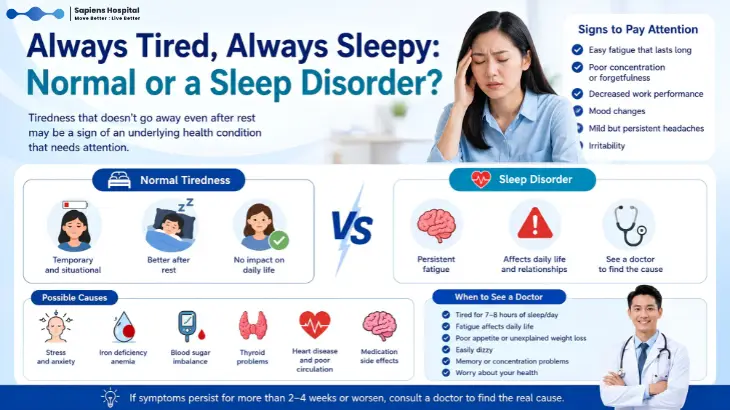
However, "lack of sleep" does not refer solely to the number of hours. Some people sleep 7–8 hours but still do not feel refreshed because their sleep quality is poor due to:
If you are sleeping enough but still feel exhausted every day, it is time to look deeper than just "getting enough hours."
Dizziness: One Word, Many Causes
"Dizziness" is a term frequently used by patients, but medically, it must be clearly categorized because different types of dizziness point to entirely different groups of diseases.
Hidden Conditions That Can Cause Chronic Fatigue and Dizziness
Fatigue and dizziness can arise from a combination of causes. It is not necessarily limited to a single condition:
If you experience any of the following symptoms, you should consult a doctor promptly or go to the hospital immediately, depending on severity:
How Will a Doctor Evaluate You?
Diagnosing chronic fatigue and dizziness does not mean ordering every possible test immediately. It begins with comprehensive history taking and a systematic physical examination.
A physician will generally assess:
If your symptoms are mild, you have no red flag warning signs, and you suspect they are related to lifestyle or lack of rest, you can begin with these basic behavioral adjustments:
The most important thing is not to let chronic symptoms become your "normal." The body almost always sends warning signs before a disease fully manifests. If you feel persistently exhausted, frequently dizzy, unrefreshed no matter how much you sleep, or find your daily functioning declining, undergoing a systematic medical evaluation is the right first step toward taking your health back.
For Inquiries and Appointments
Sapiens Hospital | Move Better : Live Better Tel. 02-111-3703
Academic References
Latimer KM, Gunther A, Kopec M. Fatigue in Adults: Evaluation and Management. American Family Physician. 2023;108(1):24-32.
National Institute for Health and Care Excellence. Myalgic encephalomyelitis/chronic fatigue syndrome: diagnosis and management. NICE Guideline NG206. 2021.
Institute of Medicine. Beyond Myalgic Encephalomyelitis/Chronic Fatigue Syndrome: Redefining an Illness. Washington, DC: The National Academies Press; 2015.
Ramar K, Malhotra RK, Carden KA, et al. Sleep is essential to health: an American Academy of Sleep Medicine position statement. Journal of Clinical Sleep Medicine. 2021;17(10):2115-2119.
Kapur VK, Auckley DH, Chowdhuri S, et al. Clinical Practice Guideline for Diagnostic Testing for Adult Obstructive Sleep Apnea. Journal of Clinical Sleep Medicine. 2017;13(3):479-504.
Edinger JD, Arnedt JT, Bertisch SM, et al. Behavioral and psychological treatments for chronic insomnia disorder in adults: an American Academy of Sleep Medicine clinical practice guideline. Journal of Clinical Sleep Medicine. 2021;17(2):255-262.
Newman-Toker DE, Edlow JA. TiTrATE: A Novel, Evidence-Based Approach to Diagnosing Acute Dizziness and Vertigo. Neurologic Clinics. 2015;33(3):577-599.
Ho DCH, Chan J, Wong SH, et al. Approach to fatigue in primary care. Singapore Medical Journal. 2022;63(12):650-654.
Many people start their days with a similar feeling: waking up unrefreshed despite sleeping for hours, feeling drained by midday, losing focus, and experiencing brain fog. On some days, this is accompanied by dizziness, a sense of unsteadiness, or feeling like your body is simply not operating at 100%.
In an era where late nights, prolonged screen time, accumulated stress, and fast-paced lifestyles are the norm, "fatigue" and "dizziness" are often dismissed as ordinary occurrences. We often tell ourselves, "I just need to sleep more," or "It will get better once I get some rest."
However, from a medical perspective, chronic fatigue and dizziness are not always caused by sleep deprivation. While some individuals genuinely just need more rest, others may be dealing with hidden conditions—such as anemia, thyroid disorders, diabetes, abnormal blood pressure, sleep disorders, vitamin deficiencies, medication side effects, heart disease, neurological issues, or even underlying stress, anxiety, and depression.
The key is not to simply guess that "it's just a lack of sleep" or "I'm probably just stressed," but to observe how long the symptoms have lasted, how much they interfere with your daily life, and whether there are other warning signs.
Normal Fatigue vs. Chronic Fatigue: What is the Difference?
Experiencing fatigue after intense physical labor, sleep deprivation, long-distance travel, or overexertion is completely normal. In most cases, these symptoms gradually resolve once you get enough rest, eat properly, and reduce your workload.
However, the type of fatigue that warrants medical attention includes symptoms that:
- Persist continuously for several weeks.
- Do not significantly improve with rest.
- Interfere with work or daily life.
- Are accompanied by dizziness, palpitations, easily feeling out of breath, weight changes, or other abnormalities.
- Recur frequently without a clear lifestyle-related cause.
In general medical practice, fatigue is one of the most common complaints. Because it is a non-specific symptom, it can stem from various bodily systems—ranging from sleep, metabolism, hormones, blood, and the heart, to the nervous system and mental health. Therefore, an effective medical assessment goes beyond asking "How many hours do you sleep?" and focuses on asking, "What signals is your body trying to send?"
Does Lack of Sleep Really Cause Fatigue and Dizziness?
Yes, absolutely, and it is a very common cause. Insufficient sleep, irregular sleep patterns, or poor sleep quality can lead to fatigue, decreased concentration, irritability, headaches, brain fog, and dizziness. Some people may not feel overtly sleepy but describe feeling as though their brain is sluggish, they are working slower, or they are expending an unusual amount of energy to complete routine tasks.
However, "lack of sleep" does not refer solely to the number of hours. Some people sleep 7–8 hours but still do not feel refreshed because their sleep quality is poor due to:
- Inability to reach deep sleep.
- Waking up frequently during the night.
- Snoring or sleep apnea.
- Prolonged screen time before bed.
- Consuming caffeine in the afternoon or evening.
- Overthinking and stress preventing the brain from resting.
- Chronic pain that disrupts restful sleep.
If you are sleeping enough but still feel exhausted every day, it is time to look deeper than just "getting enough hours."
Dizziness: One Word, Many Causes
"Dizziness" is a term frequently used by patients, but medically, it must be clearly categorized because different types of dizziness point to entirely different groups of diseases.
- Vertigo (A spinning sensation): Often related to the balance system in the inner ear, such as dislodged calcium crystals (BPPV), Meniere’s disease, or vestibular neuritis.
- Unsteadiness or Disequilibrium (Feeling wobbly or boat-like): May be associated with stress, migraines, sleep deprivation, medication side effects, or certain neurological issues.
- Presyncope (Lightheadedness or feeling faint): Could be related to a drop in blood pressure, low blood sugar, dehydration, irregular heartbeat, or anemia.
- Ataxia (Loss of balance): Characterized by stumbling, slurred speech, or weakness in the limbs. This requires immediate medical attention, as it may indicate a neurological emergency like a stroke, especially if it occurs suddenly.
Hidden Conditions That Can Cause Chronic Fatigue and Dizziness
Fatigue and dizziness can arise from a combination of causes. It is not necessarily limited to a single condition:
- Anemia: A lack of red blood cells reduces the amount of oxygen delivered throughout the body. Patients may tire easily, feel dizzy, faint, experience palpitations, have cold hands and feet, or feel exhausted upon exertion. In working-age women, this is often linked to heavy menstruation, iron deficiency, or inadequate iron intake. In the elderly or those with dark stools, weight loss, or unusual fatigue, hidden gastrointestinal bleeding must be ruled out.
- Thyroid Disorders: The thyroid gland acts as the body's metabolic pacemaker. Hypothyroidism (underactive) can cause fatigue, sleepiness, weight gain, cold intolerance, dry skin, constipation, or sluggishness. Hyperthyroidism (overactive) can cause palpitations, weight loss, excessive sweating, tremors, insomnia, and fatigue from the body being constantly overworked.
- Diabetes, Abnormal Blood Sugar, and Insulin Resistance: Blood sugar spikes or drops can cause fatigue, brain fog, frequent urination, excessive thirst, weight changes, or weakness. Many people are in the early stages of diabetes without knowing it until a health checkup. Working adults who gain weight easily, carry belly fat, feel sleepy after meals, or have a family history of diabetes should assess their blood sugar and metabolic risks.
- Abnormal Blood Pressure: Low blood pressure, especially when standing up quickly (orthostatic hypotension), can cause lightheadedness, dizziness, or fainting. Conversely, high blood pressure can cause headaches, dizziness, or a general feeling of being unwell, though many remain completely asymptomatic.
- Heart and Circulatory Diseases: Arrhythmia, heart failure, or coronary artery disease can manifest as easily getting tired, palpitations, dizziness, fainting, or reduced exercise tolerance. If fatigue is accompanied by chest pain, shortness of breath, severe palpitations, fainting, or leg swelling, seek immediate medical evaluation.
- Sleep Disorders: Chronic insomnia and sleep apnea are major culprits of chronic fatigue. This is especially true for individuals who snore loudly, wake up gasping, have a dry mouth in the morning, suffer from morning headaches, experience daytime sleepiness, or have a partner who observes pauses in their breathing.
- Vitamin or Nutrient Deficiencies: Deficiencies in iron, vitamin B12, folate, or vitamin D can cause fatigue, weakness, numbness in the extremities, body aches, or a lack of vitality. This is common in individuals on restrictive diets, those losing weight incorrectly, vegans without proper meal planning, or those with malabsorption issues.
- Medication Side Effects and Stimulants: Certain medications can cause drowsiness, dizziness, or fatigue. Examples include sleeping pills, specific antihistamines, anti-anxiety medications, certain blood pressure drugs, and some painkillers, as well as the use of alcohol or stimulants. Sometimes, the issue is not a new disease but polypharmacy (taking multiple medications without systematic review).
- Stress, Anxiety, and Depression: The mind and body are inseparable. Chronic stress, anxiety, or depression can manifest physically as fatigue, insomnia, dizziness, palpitations, chest tightness, headaches, muscle aches, or poor concentration. This does not mean the symptoms are "all in your head"; it means the nervous system, hormones, sleep cycles, and the body's perception of exhaustion are genuinely impacted.
- ME/CFS (Myalgic Encephalomyelitis/Chronic Fatigue Syndrome): In some patients, fatigue cannot be explained by common diseases. A hallmark of this condition is "Post-Exertional Malaise" (PEM)—symptoms worsen significantly after physical or mental exertion, even if the activity was mild. This is accompanied by unrefreshing sleep, cognitive difficulties, or dizziness upon standing. This condition requires a detailed assessment and should not be dismissed as laziness.
If you experience any of the following symptoms, you should consult a doctor promptly or go to the hospital immediately, depending on severity:
- Sudden, severe dizziness or severe inability to walk straight.
- Slurred speech, facial drooping, weakness, or numbness on one side of the body.
- Chest pain, shortness of breath, severe palpitations, or fainting.
- The worst headache of your life or a distinctly new type of headache.
- Fatigue accompanied by unexplained weight loss.
- Chronic fever, night sweats, or severe loss of appetite.
- Black/tarry stools, vomiting blood, or unusually heavy menstrual bleeding.
- Progressive weakness to the point of being unable to perform daily activities.
- Confusion, drowsiness, or an altered level of consciousness.
How Will a Doctor Evaluate You?
Diagnosing chronic fatigue and dizziness does not mean ordering every possible test immediately. It begins with comprehensive history taking and a systematic physical examination.
A physician will generally assess:
- When the symptoms started and whether they are continuous or intermittent.
- The exact nature of the fatigue (sleepy, drained, weak, or easily exhausted upon exertion).
- The exact nature of the dizziness (spinning, unsteadiness, lightheadedness, or loss of balance).
- Presence of fever, weight loss, palpitations, chest pain, or shortness of breath.
- Sleep patterns (snoring, waking at night, daytime sleepiness).
- Menstrual history, diet, weight changes, and exercise habits.
- Underlying diseases and current medications.
- Recent stress levels, emotional state, and life burdens.
- Complete Blood Count (CBC): To check for anemia or infections.
- Blood Chemistry: Blood sugar, lipid profile, kidney, and liver function.
- Thyroid Function Tests.
- Electrolyte Levels.
- Specific Deficiencies: Iron, Vitamin B12, or Vitamin D (in appropriate cases).
- Urinalysis.
- Electrocardiogram (ECG/EKG): For patients with palpitations, chest tightness, or cardiac risk factors.
- Sleep Study (Polysomnography): If sleep apnea is suspected.
- Neurological or Vestibular Exams: If specific types of dizziness are prominent.
If your symptoms are mild, you have no red flag warning signs, and you suspect they are related to lifestyle or lack of rest, you can begin with these basic behavioral adjustments:
- Maintain a Consistent Sleep Schedule: Try to go to bed and wake up at the same time every day. Reduce screen time before bed and avoid caffeine in the afternoon or evening.
- Don't Rely Solely on Coffee: Coffee provides a temporary wake-up call but does not fix the root cause of exhaustion. Needing increasing amounts of caffeine just to function is a signal that your body needs a proper medical evaluation.
- Eat Regular, Balanced Meals: Prolonged fasting or consuming overly sugary foods can cause blood sugar fluctuations, leading to dizziness, fatigue, or tremors. Eat balanced meals containing protein, vegetables, and complex carbohydrates, and stay well-hydrated.
- Move Your Body Moderately: Sitting for long periods causes bodily fatigue and poor circulation. Get up, stretch, and engage in light, regular exercise. (However, if exertion noticeably worsens your symptoms, consult a doctor before increasing physical activity).
- Review Your Medications and Supplements: If you started feeling fatigued after taking a new medication or are taking multiple drugs, bring your medication list to a doctor for review. Do not stop taking prescribed medications without medical advice.
- See a Doctor if Symptoms Persist: If you have adjusted your sleep and lifestyle for 2–4 weeks and still see no improvement, or if the symptoms are interfering with your work, seek medical attention to find the root cause.
- Can chronic fatigue be caused solely by a lack of sleep?
Yes, but it is not the only cause. If fatigue is continuous, does not improve with rest, or is accompanied by dizziness, palpitations, weight changes, or shortness of breath, you should be evaluated for other causes like anemia, thyroid issues, diabetes, sleep disorders, or heart disease. - I sleep 8 hours a night, but I'm still exhausted. What does this mean?
This often points to poor sleep quality, such as not reaching deep sleep, waking up frequently, snoring, sleep apnea, or underlying stress. It could also indicate a physical illness. Sleeping enough hours does not always guarantee high-quality, restorative rest. - What tests are needed if I am frequently dizzy?
It depends on the type of dizziness. Vertigo (spinning) may relate to the inner ear. Lightheadedness (feeling faint) may relate to blood pressure, blood sugar, anemia, or the heart. A doctor will take your history, perform a physical exam, and may order blood tests, blood pressure monitoring, an ECG, or neurological assessments as appropriate. - Are fatigue and depression connected?
Yes. Depression or chronic stress can cause easily triggered fatigue, insomnia, poor concentration, body aches, and a feeling of weakness. However, before concluding it is purely emotional, common physical conditions should always be ruled out first. - Should I take vitamin supplements for fatigue?
You should not take them blindly without knowing what your body actually lacks, as fatigue has many causes. Diagnosing and treating the root cause is much more effective. If iron, B12, or vitamin D deficiency is suspected, a doctor can run specific tests and prescribe targeted supplementation. - When should I see a doctor?
You should see a doctor if your fatigue or dizziness lasts longer than 2–4 weeks, does not improve with rest, interferes with your work, or is accompanied by symptoms like palpitations, easy exhaustion, weight loss, fainting, chest pain, shortness of breath, chronic fever, or neurological symptoms.
The most important thing is not to let chronic symptoms become your "normal." The body almost always sends warning signs before a disease fully manifests. If you feel persistently exhausted, frequently dizzy, unrefreshed no matter how much you sleep, or find your daily functioning declining, undergoing a systematic medical evaluation is the right first step toward taking your health back.
For Inquiries and Appointments
Sapiens Hospital | Move Better : Live Better Tel. 02-111-3703
Academic References
Latimer KM, Gunther A, Kopec M. Fatigue in Adults: Evaluation and Management. American Family Physician. 2023;108(1):24-32.
National Institute for Health and Care Excellence. Myalgic encephalomyelitis/chronic fatigue syndrome: diagnosis and management. NICE Guideline NG206. 2021.
Institute of Medicine. Beyond Myalgic Encephalomyelitis/Chronic Fatigue Syndrome: Redefining an Illness. Washington, DC: The National Academies Press; 2015.
Ramar K, Malhotra RK, Carden KA, et al. Sleep is essential to health: an American Academy of Sleep Medicine position statement. Journal of Clinical Sleep Medicine. 2021;17(10):2115-2119.
Kapur VK, Auckley DH, Chowdhuri S, et al. Clinical Practice Guideline for Diagnostic Testing for Adult Obstructive Sleep Apnea. Journal of Clinical Sleep Medicine. 2017;13(3):479-504.
Edinger JD, Arnedt JT, Bertisch SM, et al. Behavioral and psychological treatments for chronic insomnia disorder in adults: an American Academy of Sleep Medicine clinical practice guideline. Journal of Clinical Sleep Medicine. 2021;17(2):255-262.
Newman-Toker DE, Edlow JA. TiTrATE: A Novel, Evidence-Based Approach to Diagnosing Acute Dizziness and Vertigo. Neurologic Clinics. 2015;33(3):577-599.
Ho DCH, Chan J, Wong SH, et al. Approach to fatigue in primary care. Singapore Medical Journal. 2022;63(12):650-654.
Related Content

How Many Types of Influenza Are There? Learn About Influenza Symptoms, Early Warning Signs, and How Annual Flu Vaccination Helps Prevent Serious Complications and Protect Your Entire Family.
29 Jun 2026

Sapiens Hospital Services: Genetic testing for disease risk assessment, supported by a multidisciplinary team of Neurology Specialists and Pain Management Specialists to effectively manage associated neurological symptoms.
23 Sept 2025
An advanced innovation for chronic pain relief, restoring your quality of life and the joy of movement through spinal cord stimulation technology
8 Oct 2025
