What are the symptoms of a hernia? Does everyone need surgery?
Last updated: 2 Aug 2026

What Are the Symptoms of a Hernia? Does Everyone Need Surgery?
Many people first suspect they might have a "hernia" upon feeling a small bulge in their groin, belly button, or an old surgical incision site. Some notice the bulge becomes more pronounced when coughing, straining, lifting heavy objects, or standing for prolonged periods, only to disappear when they lie down. Some experience no pain at all and assume it is nothing to worry about. However, for others, a hernia can cause an uncomfortable heavy sensation, chronic aching, tightness, and disruption to daily life. In some instances, it can lead to surgical emergencies such as an incarcerated hernia, strangulated bowel, compromised blood supply, or bowel obstruction.
A frequently asked question from patients is: "If I have a hernia, do I have to undergo surgery?"
The answer is: "Not everyone needs immediate surgery," but neither should everyone just wait and see. The decision depends on the hernia's location, size, symptoms, risk of incarceration, underlying health conditions, age, gender, and its impact on daily life.
This article will help explain what a hernia is, its symptoms, when to see a surgeon, and when surgery is necessary.
What is a Hernia?
A hernia occurs when an internal organ or tissue, such as the bowel or intra-abdominal fat, pushes through a weak spot or opening in the abdominal wall. This creates a visible bulge in various parts of the body. Simply put, the abdominal wall is like a fabric holding your internal organs in place. If there is a thin or torn area in the fabric, the organs inside can push through and form a bulge, especially when intra-abdominal pressure increases (e.g., coughing, straining, lifting, or standing for a long time).
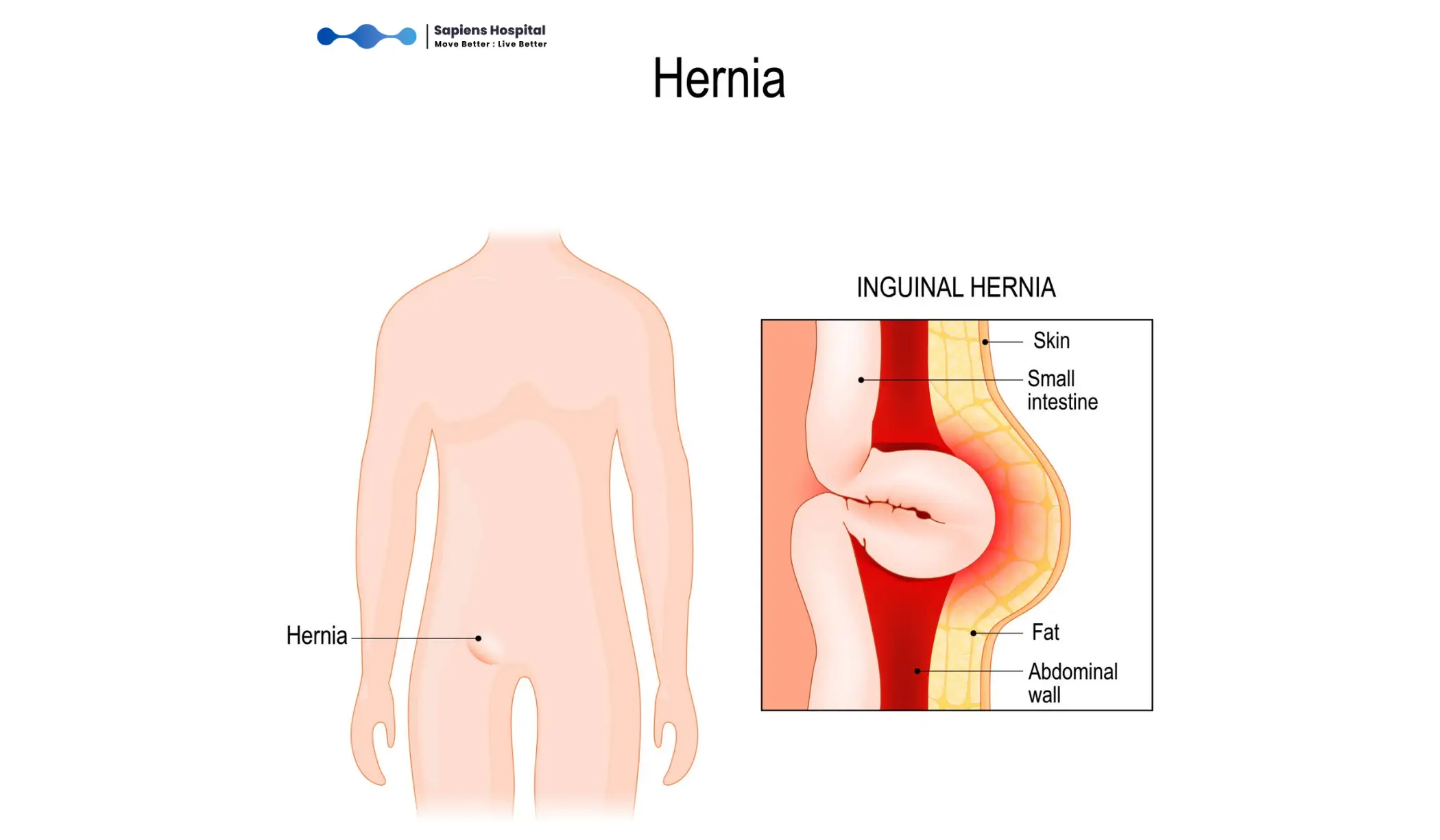
Common types of hernias include:
What Are the Symptoms?
Hernia symptoms can vary significantly. Some people have almost no symptoms, some experience mild annoyance, while others suffer severe pain or develop complications. Common symptoms include:
A hernia is caused by a combination of two factors: a "weak spot in the abdominal wall" and "increased intra-abdominal pressure." Risk factors include:
Common Types of Hernias
Some hernias are not immediately dangerous, particularly small ones that are asymptomatic and easily reducible (can be pushed back in). However, doctors are primarily concerned about two main complications:
Does Everyone Need Hernia Surgery?
The answer is "Not always." Hernia treatment depends on the type, symptoms, and individual risks.
When "Watchful Waiting" Might Be Appropriate: For some men with small, asymptomatic (or minimally symptomatic) inguinal hernias that are easily reducible and show no warning signs, a doctor might recommend "watchful waiting." This is done after explaining the risks and establishing an appropriate follow-up plan. However, watchful waiting does not mean ignoring the condition. Patients must be aware of the warning signs and return to see a doctor if the bulge grows, becomes more painful, is harder to push back in, or interferes with daily life.
When Surgery is Generally Recommended:
You should consult a surgeon to discuss surgery if any of the following apply:
How is Hernia Surgery Performed?
The main goal of hernia surgery is to return the displaced organ to its proper position and repair the weak spot in the abdominal wall to prevent recurrence. Main surgical methods include:
What is Surgical "Mesh"?
Mesh is a medical material used to reinforce the abdominal wall after a hernia repair. Its purpose is to help reduce the chance of the hernia returning, especially in adults and across various hernia types.
Some patients worry about potential issues with mesh. The reality is that mesh has been safely used in hernia surgeries worldwide for a long time and is part of the standard of care in many cases. However, like any medical device, the specific type and placement must be tailored to the patient. Potential risks, such as infection, chronic pain, or specific complications, are uncommon but must be discussed prior to surgery. A thorough consultation with your surgeon is crucial to understanding both the benefits and risks in a balanced way.
How to Care for Yourself if Not Proceeding with Surgery
If a doctor has assessed that watchful waiting is safe, you should take steps to minimize intra-abdominal pressure and prevent the condition from worsening:
How Long is the Recovery After Hernia Surgery?
Recovery time depends on the type of hernia, the surgical method, the hernia's size, underlying conditions, and the patient's occupation. Generally, many patients can return to light activities relatively quickly. However, heavy lifting or strenuous exertion should be avoided initially, strictly following the surgeon's advice. Office workers can often return to work sooner than those whose jobs require lifting, physical labor, or prolonged standing.
Post-operatively, monitor for abnormal signs such as fever, a red/swollen wound, worsening pain, pus or drainage, recurrence of the bulge, nausea/vomiting, or difficulty urinating. If any occur, contact the hospital.
When to See a Doctor or Surgeon
Schedule an appointment if:
Not every hernia patient needs immediate surgery, but everyone should receive a proper medical evaluation to identify the type, assess risks, and determine the safest treatment plan. If a hernia is small, asymptomatic, and easily reducible, watchful waiting may be an option. However, if there is pain, enlargement, difficulty reducing the bulge, or warning signs (e.g., severe pain, nausea, vomiting, severe bloating, inability to pass stool/gas, or fever), immediate hospital attention is required.
A hernia is not something you should self-diagnose or guess about. Early evaluation helps you decide between watchful waiting and timely surgery before it becomes a medical emergency.
Inquiries and Appointments
Sapiens Hospital | Move Better : Live Better Tel: 02-111-3703
Academic References:
HerniaSurge Group. International guidelines for groin hernia management. Hernia. 2018;22:1–165.
Stabilini C, et al. Update of the international HerniaSurge guidelines for groin hernia management. BJS Open. 2023;7(5):zrad080.
Henriksen NA, Montgomery A, Kaufmann R, et al. Guidelines for treatment of umbilical and epigastric hernias from the European Hernia Society and Americas Hernia Society. British Journal of Surgery. 2020;107(3):171–190.
Sanders DL, et al. Midline incisional hernia guidelines: the European Hernia Society. British Journal of Surgery. 2023;110(12):1732–1768.
Fitzgibbons RJ Jr, et al. Watchful waiting vs repair of inguinal hernia in minimally symptomatic men: a randomized clinical trial. JAMA. 2006;295(3):285–292.
Köckerling F, Simons MP. Current concepts of inguinal hernia repair. Visceral Medicine. 2018;34(2):145–150.
Many people first suspect they might have a "hernia" upon feeling a small bulge in their groin, belly button, or an old surgical incision site. Some notice the bulge becomes more pronounced when coughing, straining, lifting heavy objects, or standing for prolonged periods, only to disappear when they lie down. Some experience no pain at all and assume it is nothing to worry about. However, for others, a hernia can cause an uncomfortable heavy sensation, chronic aching, tightness, and disruption to daily life. In some instances, it can lead to surgical emergencies such as an incarcerated hernia, strangulated bowel, compromised blood supply, or bowel obstruction.
A frequently asked question from patients is: "If I have a hernia, do I have to undergo surgery?"
The answer is: "Not everyone needs immediate surgery," but neither should everyone just wait and see. The decision depends on the hernia's location, size, symptoms, risk of incarceration, underlying health conditions, age, gender, and its impact on daily life.
This article will help explain what a hernia is, its symptoms, when to see a surgeon, and when surgery is necessary.
What is a Hernia?
A hernia occurs when an internal organ or tissue, such as the bowel or intra-abdominal fat, pushes through a weak spot or opening in the abdominal wall. This creates a visible bulge in various parts of the body. Simply put, the abdominal wall is like a fabric holding your internal organs in place. If there is a thin or torn area in the fabric, the organs inside can push through and form a bulge, especially when intra-abdominal pressure increases (e.g., coughing, straining, lifting, or standing for a long time).
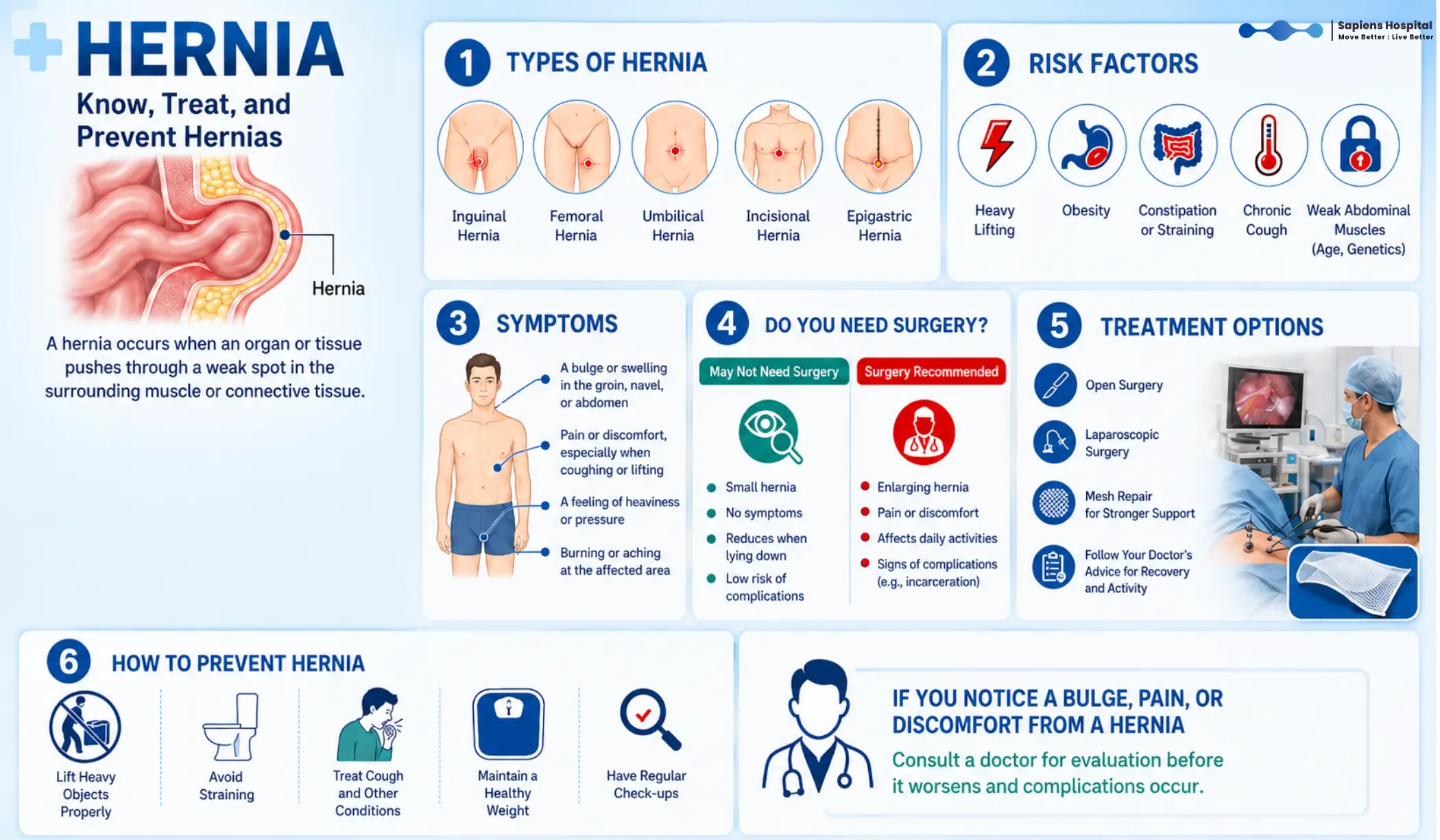
Common types of hernias include:
- Inguinal Hernia (Groin)
- Umbilical Hernia (Belly Button)
- Epigastric Hernia (Midline of the abdomen)
- Incisional Hernia (At a previous surgical scar)
- Femoral Hernia (Upper thigh): Less common than inguinal hernias but carries a higher risk of incarceration.
- Hiatal Hernia (Diaphragm): Often associated with acid reflux rather than an abdominal bulge.
What Are the Symptoms?
Hernia symptoms can vary significantly. Some people have almost no symptoms, some experience mild annoyance, while others suffer severe pain or develop complications. Common symptoms include:
- A noticeable bulge in the groin, belly button, or previous surgical scar. The bulge is usually more obvious when standing, walking, coughing, sneezing, straining, or lifting heavy objects, and may disappear when lying down or gently pushed back in.
- A feeling of heaviness, tightness, or aching around the bulge. Some do not feel sharp pain but rather a dull ache or pulling sensation, especially after standing or walking for a long time, or after physical exertion.
- Intermittent symptoms: Initially, the bulge may only appear at certain times, such as in the evening after a long day of work or during exertion. Over time, the bulge may appear more frequently, grow larger, or become harder to push back in.
- In men, a mass in the scrotum: Some inguinal hernias can descend into the scrotum, causing swelling on one side and a heavy or dragging sensation.
- No pain at all: This is the reason many people leave it untreated for a long time, thinking it is harmless. However, even without symptoms, it should be evaluated to confirm the type of hernia and assess the level of risk.
A hernia is caused by a combination of two factors: a "weak spot in the abdominal wall" and "increased intra-abdominal pressure." Risk factors include:
- Aging: Causes tissues and muscles to weaken.
- Male gender: Especially for inguinal hernias.
- Family history of hernias.
- Chronic coughing: From smoking or chronic lung disease.
- Chronic constipation: Requiring frequent straining.
- Enlarged prostate: Causing straining during urination.
- Regular heavy lifting.
- Overweight or obesity (especially abdominal fat).
- Pregnancy.
- Previous abdominal surgery: The incision site may heal weakly or have post-operative infections.
- Conditions causing fluid in the abdomen (Ascites): Such as certain cases of cirrhosis.
Common Types of Hernias
- Inguinal Hernia: The most common type, usually appearing as a bulge in the groin. It is more common in men. Symptoms often worsen with coughing, standing, or heavy lifting. While they are classified as direct and indirect, for patients, what matters most is whether there are symptoms, if the bulge can be pushed back, and the risk of incarceration.
- Femoral Hernia: Typically located slightly below the groin. It is more common in women and carries a higher risk of incarceration or strangulation compared to some inguinal hernias. Suspected femoral hernias should be seriously evaluated by a surgeon.
- Umbilical Hernia: Found in both children and adults. In adults, it is often associated with being overweight, pregnancy, ascites, or increased intra-abdominal pressure. The bulge at the belly button may be small at first but can gradually enlarge.
- Epigastric Hernia: A bulge along the midline between the chest (epigastrium) and the belly button. It is usually caused by fat or tissue pushing through a weak spot in the abdominal wall. Some experience localized pain, especially during exertion.
- Incisional Hernia: Occurs at a previous abdominal surgical scar due to a weakened abdominal wall layer. It can develop months or years after surgery. This type usually requires careful assessment of size, location, abdominal wall strength, and surgical risks.
Some hernias are not immediately dangerous, particularly small ones that are asymptomatic and easily reducible (can be pushed back in). However, doctors are primarily concerned about two main complications:
- Incarcerated Hernia: The bulging tissue becomes trapped and cannot be pushed back in. Patients may experience increased pain, and the bulge may become tense, hard, or swollen. This condition requires urgent evaluation as it can lead to strangulation.
- Strangulated Hernia: If the trapped organ is compressed to the point where its blood supply is cut off, the bowel can become ischemic (lack of blood flow), necrotize (tissue death), or perforate. This is a medical emergency requiring rapid surgical intervention.
- The bulge cannot be pushed back in.
- Progressively worsening pain at the bulge.
- The bulge is red, hot, or very tender to the touch.
- Nausea and vomiting.
- Severe abdominal bloating, inability to pass gas or have a bowel movement.
- Fever.
- Fatigue, dizziness, or looking visibly ill.
Does Everyone Need Hernia Surgery?
The answer is "Not always." Hernia treatment depends on the type, symptoms, and individual risks.
When "Watchful Waiting" Might Be Appropriate: For some men with small, asymptomatic (or minimally symptomatic) inguinal hernias that are easily reducible and show no warning signs, a doctor might recommend "watchful waiting." This is done after explaining the risks and establishing an appropriate follow-up plan. However, watchful waiting does not mean ignoring the condition. Patients must be aware of the warning signs and return to see a doctor if the bulge grows, becomes more painful, is harder to push back in, or interferes with daily life.
When Surgery is Generally Recommended:
You should consult a surgeon to discuss surgery if any of the following apply:
- The hernia causes pain, a heavy sensation, or disrupts daily life.
- The bulge is progressively enlarging.
- The bulge is becoming difficult to push back in.
- You have a history of incarceration or sudden, severe pain.
- It is a femoral hernia.
- You are a woman with a groin hernia (as it could be a hidden femoral hernia).
- It is an incisional hernia that is growing or causing symptoms.
- Complications are present, such as incarceration, obstruction, or suspected bowel ischemia.
How is Hernia Surgery Performed?
The main goal of hernia surgery is to return the displaced organ to its proper position and repair the weak spot in the abdominal wall to prevent recurrence. Main surgical methods include:
- Open Surgery: The surgeon makes an incision over the hernia, repairs the abdominal wall, and in many cases, uses a synthetic "mesh" to reinforce the area. This is a long-established method suitable for many patient groups.
- Laparoscopic Surgery: A minimally invasive approach using small incisions, a camera, and specialized instruments to repair the hernia from the inside. The benefits include smaller scars, less post-operative pain in some cases, and faster recovery, especially for bilateral or recurrent hernias.
- Specialized Techniques for Large or Complex Hernias: For example, large incisional hernias may require detailed planning, including radiological imaging, weight management, smoking cessation, diabetes control, and precise mesh placement.
What is Surgical "Mesh"?
Mesh is a medical material used to reinforce the abdominal wall after a hernia repair. Its purpose is to help reduce the chance of the hernia returning, especially in adults and across various hernia types.
Some patients worry about potential issues with mesh. The reality is that mesh has been safely used in hernia surgeries worldwide for a long time and is part of the standard of care in many cases. However, like any medical device, the specific type and placement must be tailored to the patient. Potential risks, such as infection, chronic pain, or specific complications, are uncommon but must be discussed prior to surgery. A thorough consultation with your surgeon is crucial to understanding both the benefits and risks in a balanced way.
How to Care for Yourself if Not Proceeding with Surgery
If a doctor has assessed that watchful waiting is safe, you should take steps to minimize intra-abdominal pressure and prevent the condition from worsening:
- Avoid lifting heavy objects.
- Do not strain during bowel movements; treat constipation.
- Treat chronic coughs.
- Maintain a healthy weight.
- Avoid improper physical exertion that makes the bulge more prominent.
- Observe changes: Is the bulge growing, becoming more painful, or harder to push back in?
- Attend all follow-up appointments.
How Long is the Recovery After Hernia Surgery?
Recovery time depends on the type of hernia, the surgical method, the hernia's size, underlying conditions, and the patient's occupation. Generally, many patients can return to light activities relatively quickly. However, heavy lifting or strenuous exertion should be avoided initially, strictly following the surgeon's advice. Office workers can often return to work sooner than those whose jobs require lifting, physical labor, or prolonged standing.
Post-operatively, monitor for abnormal signs such as fever, a red/swollen wound, worsening pain, pus or drainage, recurrence of the bulge, nausea/vomiting, or difficulty urinating. If any occur, contact the hospital.
When to See a Doctor or Surgeon
Schedule an appointment if:
- You feel a bulge in the groin, belly button, or an old surgical scar.
- The bulge becomes more obvious when coughing, straining, standing, or lifting.
- You experience pain, a heavy/tight feeling, or discomfort around the bulge.
- The bulge is continuously growing or becomes difficult to push back in.
- Symptoms affect your work, exercise, or daily life.
- You have a bulge near a previous abdominal surgery scar.
- The bulge cannot be pushed back in.
- Severe or worsening pain at the bulge.
- The bulge is red, hot, or highly tender.
- Nausea and vomiting.
- Severe bloating, unable to pass gas or stool.
- Fever, dizziness, extreme fatigue, or looking visibly ill.
- Can a hernia heal on its own?
In adults, hernias generally do not heal on their own because they are caused by a structural weakness in the abdominal wall. Lifestyle modifications can help reduce symptoms or slow progression, but they will not close the hernia defect. If symptoms are present or there is a risk of complications, surgical repair may be necessary.
- If a hernia doesn't hurt, do I still need surgery?
Immediate surgery is not mandatory for everyone, particularly men with small, asymptomatic, and reducible inguinal hernias. However, you should at least see a doctor to evaluate the type of hernia, assess the risks, and receive guidance on warning signs. - Which types of hernias are dangerous?
Hernias that cannot be pushed back in, cause increasing pain, become red or very tender, accompanied by nausea/vomiting, severe bloating, inability to pass gas/stool, or fever are considered dangerous. These are signs of an incarcerated or strangulated hernia and require immediate hospital care. - What should women watch out for with groin hernias?
In women, a groin lump may be a femoral hernia, which carries a higher risk of incarceration than some inguinal hernias. It should be promptly evaluated by a surgeon and not ignored. - Can a hernia recur after surgery?
Yes, recurrence is possible. The risk depends on the hernia type, surgical technique, use of mesh, tissue strength, underlying conditions, weight, smoking habits, and post-operative behavior. Managing risk factors helps minimize the chance of recurrence. - How long should I avoid lifting heavy objects after surgery?
This depends on the surgical method and your surgeon's recommendations. Generally, you should avoid heavy lifting and strenuous exertion during the initial recovery period and gradually increase activity according to your recovery plan. Do not rush back to heavy lifting before your incision and abdominal wall have fully strengthened. - Can I use a hernia truss or belt instead of having surgery?
A support belt may temporarily relieve symptoms for some, but it does not cure the hernia and may not be suitable for everyone. It should especially be avoided if the hernia is incarcerated or very painful. Consult a surgeon before using one.
Not every hernia patient needs immediate surgery, but everyone should receive a proper medical evaluation to identify the type, assess risks, and determine the safest treatment plan. If a hernia is small, asymptomatic, and easily reducible, watchful waiting may be an option. However, if there is pain, enlargement, difficulty reducing the bulge, or warning signs (e.g., severe pain, nausea, vomiting, severe bloating, inability to pass stool/gas, or fever), immediate hospital attention is required.
A hernia is not something you should self-diagnose or guess about. Early evaluation helps you decide between watchful waiting and timely surgery before it becomes a medical emergency.
Inquiries and Appointments
Sapiens Hospital | Move Better : Live Better Tel: 02-111-3703
Academic References:
HerniaSurge Group. International guidelines for groin hernia management. Hernia. 2018;22:1–165.
Stabilini C, et al. Update of the international HerniaSurge guidelines for groin hernia management. BJS Open. 2023;7(5):zrad080.
Henriksen NA, Montgomery A, Kaufmann R, et al. Guidelines for treatment of umbilical and epigastric hernias from the European Hernia Society and Americas Hernia Society. British Journal of Surgery. 2020;107(3):171–190.
Sanders DL, et al. Midline incisional hernia guidelines: the European Hernia Society. British Journal of Surgery. 2023;110(12):1732–1768.
Fitzgibbons RJ Jr, et al. Watchful waiting vs repair of inguinal hernia in minimally symptomatic men: a randomized clinical trial. JAMA. 2006;295(3):285–292.
Köckerling F, Simons MP. Current concepts of inguinal hernia repair. Visceral Medicine. 2018;34(2):145–150.
Related Content

At Sapiens Hospital, we do not use generic rehabilitation plans. Instead, we provide a Tailor-Made Recovery Program through comprehensive assessments conducted by specialists in Pain Intervention.
22 Sept 2025

Rectal bleeding isn't always just hemorrhoids; it could be an early warning sign of underlying colon cancer. Learn how to identify crucial symptoms and discover when to seek expert medical screening at Sapiens Hospital.
8 Jul 2026