Hemorrhoids and Rectal Bleeding: Is It Dangerous?
Last updated: 2 Aug 2026
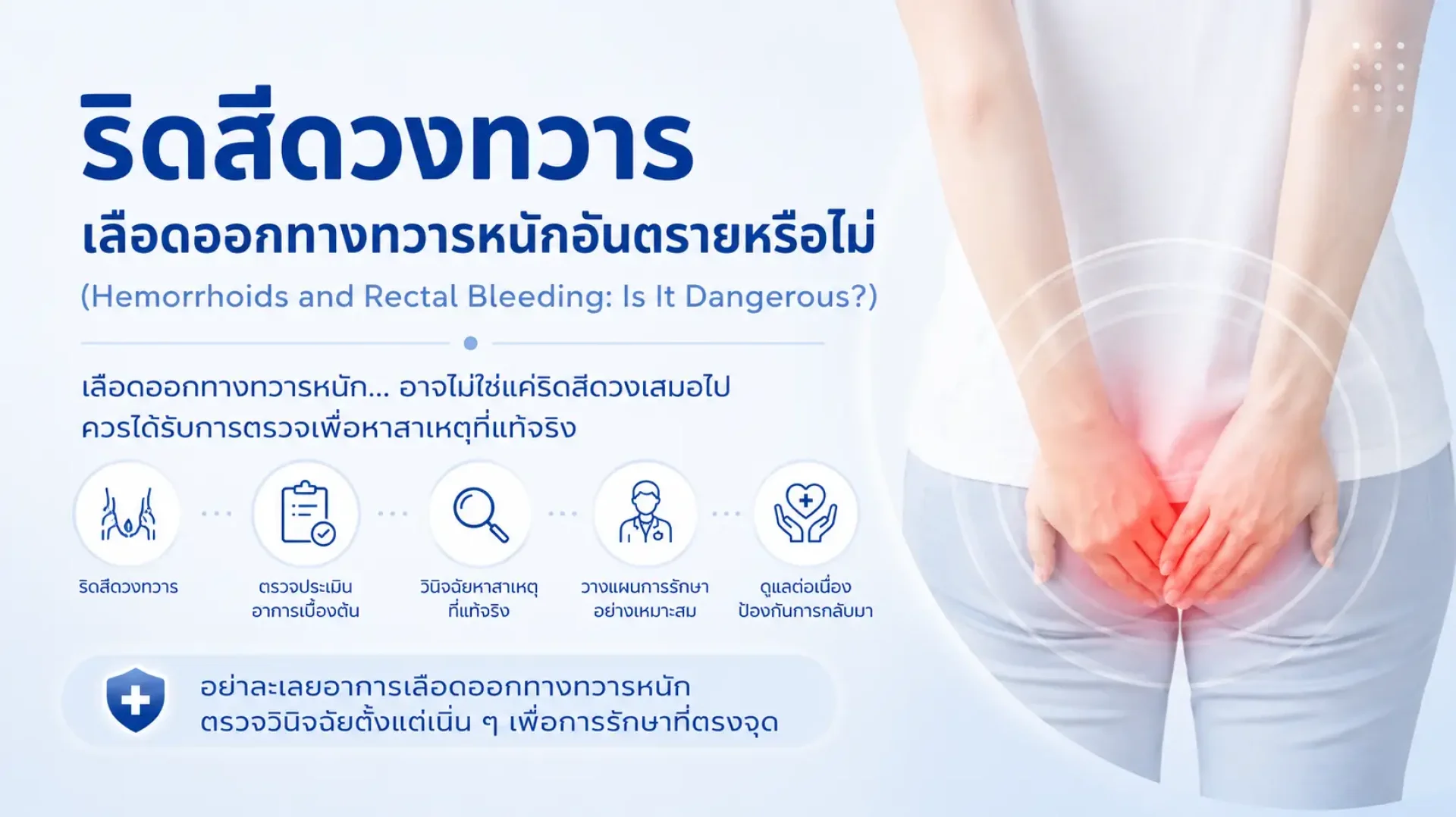
Hemorrhoids: Is Rectal Bleeding Dangerous?
Rectal bleeding is a symptom that alarms many people. Some may notice bright red blood on toilet paper, while others might see blood dripping into the toilet bowl after a bowel movement or coating their stool. For many, the immediate thought is, “Do I have hemorrhoids?” or even a more anxious concern, “Could it be colon cancer?”
The truth is, hemorrhoids are one of the most common causes of rectal bleeding, particularly when bright red blood appears after a bowel movement. However, medically speaking, it shouldn't be automatically assumed that all rectal bleeding is caused by hemorrhoids. Bleeding can stem from various sources, ranging from anal fissures, inflammatory bowel disease, and colon polyps to colorectal and anal cancer. Therefore, the crucial question isn't just "Are these hemorrhoids?", but rather, "What type of bleeding indicates hemorrhoids, what warrants further investigation, and when should you consult a surgeon?"
This article will help you understand hemorrhoids correctly—so you neither panic unnecessarily nor become complacent and overlook a potentially serious condition.
What are Hemorrhoids?
Hemorrhoids are a condition where the blood vessels and supporting tissues in the lower rectum and anus become swollen, enlarged, or slip downward. This leads to symptoms such as bleeding, itching, pain, a protruding lump, or a feeling of incomplete bowel evacuation.
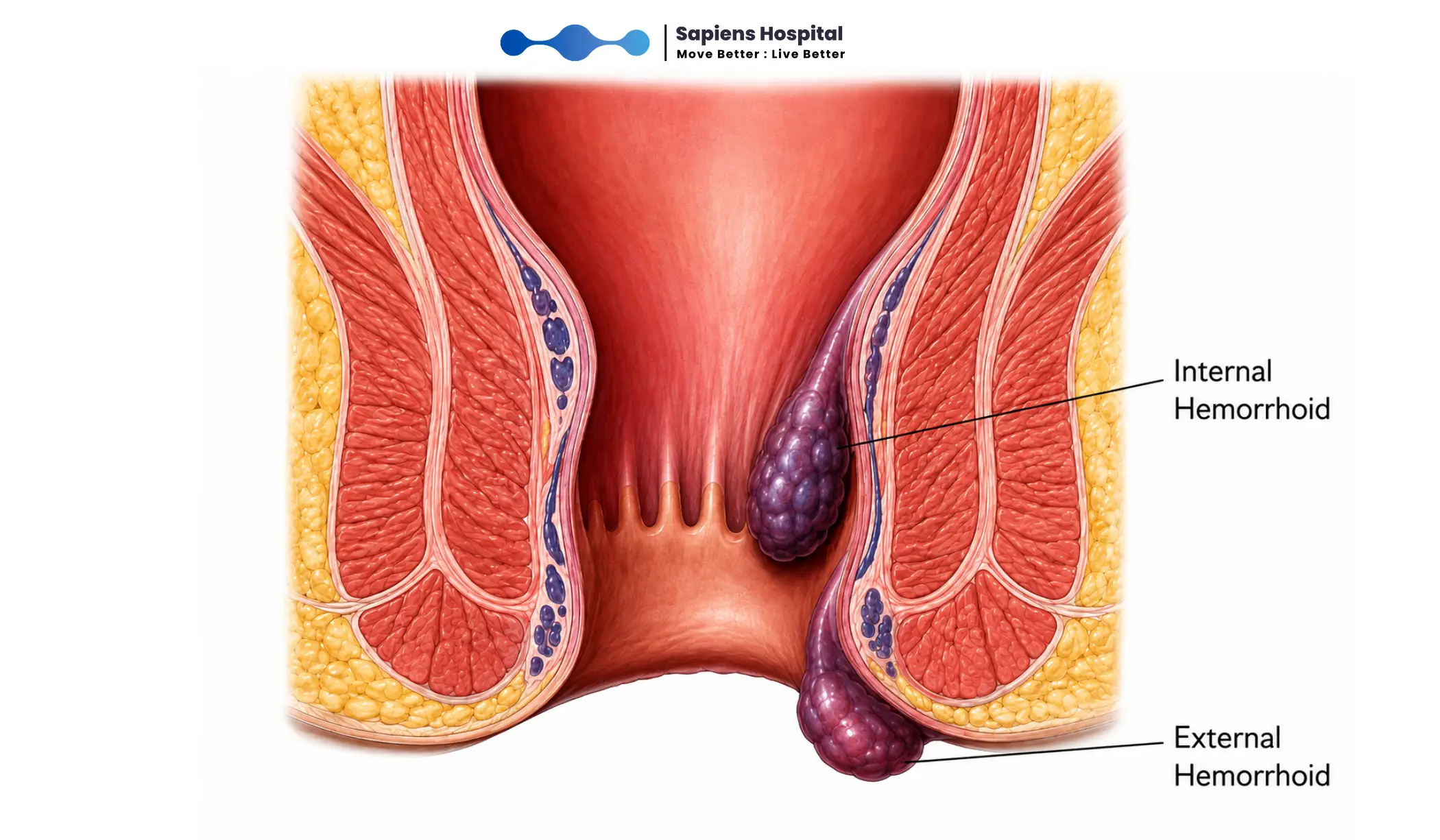
In reality, everyone naturally has these vascular cushions in the anal canal. They function to help close the anus and maintain bowel continence. However, when these tissues swell, expand, or shift abnormally, it develops into "hemorrhoidal disease." Hemorrhoids are generally divided into two main categories:
What Does Bleeding from Hemorrhoids Look Like?
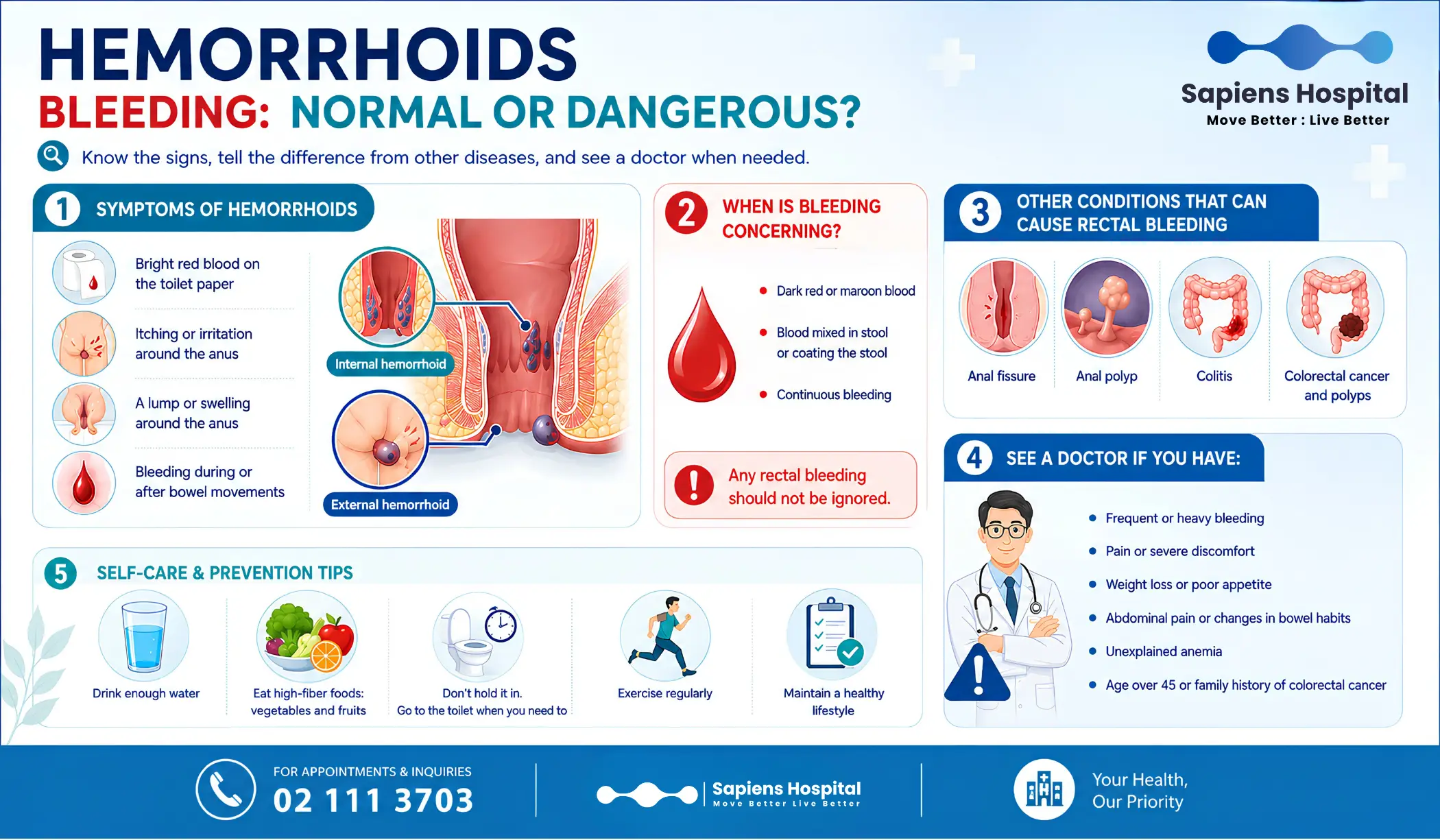
Bleeding from hemorrhoids is typically bright red blood that appears after a bowel movement. It may be seen on toilet paper, coating the surface of the stool, or dripping into the toilet bowl. It is usually not mixed into the stool itself or dark in color.
Common accompanying symptoms include:
What Causes Hemorrhoids?
Hemorrhoids are generally caused by increased pressure in the lower rectum and the natural degeneration of supporting tissues over time. Common contributing factors include:
Is Rectal Bleeding Dangerous?
The answer is: "It depends on the cause and accompanying symptoms."
If it is genuinely caused by hemorrhoids, it may not be immediately dangerous, and many cases improve with lifestyle modifications, medication, or minor procedures. However, rectal bleeding should never be normalized, especially if it is recurrent, increasing in frequency, or accompanied by other symptoms.
Rectal bleeding can also be a sign of other conditions, such as:
When to See a Doctor Promptly
You should consult a doctor or a surgeon if you experience any of the following:
If you have these symptoms, do not continually self-medicate with over-the-counter hemorrhoid treatments without getting examined, as this could lead to a delayed diagnosis of a more serious condition.
When to Go to the Hospital Immediately
Seek emergency medical care if you experience:
How Do Doctors Diagnose Hemorrhoids?
The diagnosis begins with a detailed medical history, including how long the bleeding has occurred, the color and volume of the blood, presence of pain, bowel habits (constipation/diarrhea), and any red flags like weight loss, anemia, or a family history of colon cancer.
Next, the doctor will likely perform a physical examination of the anal area to check for external hemorrhoids, fissures, abnormal lumps, or inflammation. A digital rectal examination (DRE) may be performed carefully using a lubricated, gloved finger.
In some cases, the doctor may use instruments like an anoscope or proctoscope to visualize internal hemorrhoids and identify the source of bleeding. If the patient is older, has recurrent bleeding, exhibits warning signs, or has a high risk of colon cancer, the doctor may recommend further testing, such as a colonoscopy, to ensure the bleeding isn't originating from a disease higher up in the colon.
Key Takeaway: Finding hemorrhoids does not rule out the presence of other concurrent diseases, especially in patients with red-flag symptoms.
How Are Hemorrhoids Treated?
Treatment depends on the type and severity of the hemorrhoids, as well as the patient's symptoms.
1. Lifestyle and Bowel Habit Modifications
This is the foundation of treatment for almost all patients, particularly those in the early stages. Key recommendations include:
Certain medications can help reduce swelling, itching, pain, or irritation. However, they should be used as directed. Steroid-containing creams should not be used continuously for long periods without consulting a doctor, as they can thin the skin or cause further irritation.
3. Sitz Baths (Warm Water Soaks)
Soaking the anal area in warm water for 10–15 minutes can help alleviate pain, muscle spasms, and irritation, especially after a bowel movement.
4. Minimally Invasive Procedures
For certain stages of internal hemorrhoids, a doctor may consider office-based procedures such as rubber band ligation, sclerotherapy (injections), or various coagulation methods. Rubber band ligation is a frequently used method for symptomatic, early-to-moderate internal hemorrhoids.
5. Hemorrhoid Surgery Surgery
is usually considered for large hemorrhoids, advanced stages with significant prolapse that cannot be pushed back in, extensive external hemorrhoids, recurrent blood clots (thrombosis), or cases that have not responded to other treatments. There are several surgical techniques, and the surgeon will choose the most appropriate one based on the type, severity, and individual patient suitability.
Does Everyone with Hemorrhoids Need Surgery?
No. A large number of hemorrhoid patients, particularly those in early stages, improve significantly with lifestyle adjustments, increased fiber intake, adequate hydration, preventing constipation, and using appropriate medications or minor procedures.
However, if you experience frequent recurrent bleeding, large prolapsing lumps that cannot be reduced, severe pain, thrombosis, or if the symptoms severely disrupt your daily life, you should consult a surgeon to determine the most suitable treatment plan.
Consulting a surgeon does not mean immediate surgery; it means establishing a proper management plan and, most importantly, ruling out other conditions that could be causing the rectal bleeding.
How to Prevent Hemorrhoids from Recurring
Hemorrhoids can recur if underlying bowel habits remain unchanged. Prevention is crucial. Guidelines to reduce recurrence include:
Frequently Asked Questions (FAQs)
1. Is bright red bleeding after a bowel movement always hemorrhoids?
Not always. While bright red blood is very common with hemorrhoids, it can also be caused by anal fissures, polyps, colitis, or distal colon cancer. If bleeding recurs, if you are older, or if you have warning signs, you should see a doctor.
2. Are hemorrhoids dangerous?
Hemorrhoids themselves are rarely life-threatening. However, severe or chronic bleeding can lead to anemia. More importantly, you should never assume all bleeding is just hemorrhoids without a proper examination, as you might miss a more serious condition.
3. Can hemorrhoids go away on their own?
Symptoms in many cases can improve with lifestyle modifications, adequate hydration, increased fiber, and constipation management. However, severe cases, significant prolapse, recurrent bleeding, or intense pain may require medical procedures or surgery.
4. If there is a lump protruding during a bowel movement, is surgery mandatory?
Not necessarily. It depends on how far it protrudes, whether it can be pushed back in, and if there is accompanying pain or bleeding. If it prolapses frequently, is hard to push back, or affects your daily life, you should consult a surgeon for an evaluation.
5. Can I use over-the-counter hemorrhoid creams on my own?
They can be used temporarily in some cases. However, if you have recurrent bleeding, severe pain, an abnormal lump, or if symptoms don't improve, you should see a doctor. Do not use topical creams or suppositories continuously for an extended period without knowing the exact cause.
6. When does rectal bleeding warrant a colonoscopy?
A colonoscopy should be considered if you are older, have recurrent bleeding, a family history of colon cancer, unexplained weight loss, anemia, changes in bowel habits, chronic abdominal pain, or if deemed necessary by a physician after examination. It helps rule out hidden diseases in the colon.
7. What is the difference between hemorrhoids and anal fissures?
Hemorrhoids usually present as painless bright red bleeding after a bowel movement and may involve a protruding lump or itching. Anal fissures typically cause sharp, severe burning pain during a bowel movement, especially when passing hard stools, often accompanied by a small amount of bright red blood on the toilet paper. Both conditions can occur together.
Hemorrhoids are a common cause of rectal bleeding, especially bright red blood after a bowel movement. However, rectal bleeding should never be automatically dismissed as hemorrhoids, as it can be a symptom of other conditions like anal fissures, colitis, polyps, or colon cancer.
If you experience mild, one-time bleeding at a young age related to constipation, you might start with lifestyle changes and observation. But if bleeding recurs, is heavy, you are older, or if you experience weight loss, anemia, changes in bowel habits, abdominal pain, or have a family history of colon cancer, you must see a doctor for a proper evaluation.
Treatment for hemorrhoids ranges from lifestyle modifications, medications, and minor office procedures to surgery for severe cases. Not everyone needs surgery, but everyone with abnormal rectal bleeding deserves an accurate diagnosis. Rectal bleeding could be a minor issue, or it could be the first sign of a significant disease. Getting thoroughly examined early on is the safest approach.
For Inquiries and Appointments Sapiens Hospital | Move Better : Live Better Tel. 02-111-3703
Academic References
Hawkins AT, Davis BR, Bhama AR, et al. The American Society of Colon and Rectal Surgeons Clinical Practice Guidelines for the Management of Hemorrhoids. Diseases of the Colon & Rectum. 2024;67(5):614–623.
American Society of Colon and Rectal Surgeons. Management of Hemorrhoids: 2024 Clinical Practice Guideline. ASCRS Toolkit. 2024.
National Institute for Health and Care Excellence. Suspected cancer: recognition and referral. NICE Guideline NG12. Updated guidance.
National Institute for Health and Care Excellence. Gastrointestinal tract lower cancers: recognition and referral. NICE Clinical Knowledge Summary.
Mott T, Latimer K, Edwards C. Hemorrhoids: Diagnosis and Treatment Options. American Family Physician. 2018;97(3):172–179.
Lohsiriwat V. Treatment of hemorrhoids: A coloproctologist’s view. World Journal of Gastroenterology. 2015;21(31):9245–9252.
Rectal bleeding is a symptom that alarms many people. Some may notice bright red blood on toilet paper, while others might see blood dripping into the toilet bowl after a bowel movement or coating their stool. For many, the immediate thought is, “Do I have hemorrhoids?” or even a more anxious concern, “Could it be colon cancer?”
The truth is, hemorrhoids are one of the most common causes of rectal bleeding, particularly when bright red blood appears after a bowel movement. However, medically speaking, it shouldn't be automatically assumed that all rectal bleeding is caused by hemorrhoids. Bleeding can stem from various sources, ranging from anal fissures, inflammatory bowel disease, and colon polyps to colorectal and anal cancer. Therefore, the crucial question isn't just "Are these hemorrhoids?", but rather, "What type of bleeding indicates hemorrhoids, what warrants further investigation, and when should you consult a surgeon?"
This article will help you understand hemorrhoids correctly—so you neither panic unnecessarily nor become complacent and overlook a potentially serious condition.
What are Hemorrhoids?
Hemorrhoids are a condition where the blood vessels and supporting tissues in the lower rectum and anus become swollen, enlarged, or slip downward. This leads to symptoms such as bleeding, itching, pain, a protruding lump, or a feeling of incomplete bowel evacuation.
In reality, everyone naturally has these vascular cushions in the anal canal. They function to help close the anus and maintain bowel continence. However, when these tissues swell, expand, or shift abnormally, it develops into "hemorrhoidal disease." Hemorrhoids are generally divided into two main categories:
- Internal Hemorrhoids: These develop inside the rectum. They are usually painless because this area has fewer pain-sensing nerves. The prominent symptoms are bright red bleeding after a bowel movement or a lump that prolapses (protrudes) while straining.
- External Hemorrhoids: These form under the skin around the anus and can usually be felt as an external lump. If a blood clot forms inside (thrombosed external hemorrhoid), it can cause severe pain, swelling, and difficulty sitting.
What Does Bleeding from Hemorrhoids Look Like?
Bleeding from hemorrhoids is typically bright red blood that appears after a bowel movement. It may be seen on toilet paper, coating the surface of the stool, or dripping into the toilet bowl. It is usually not mixed into the stool itself or dark in color.
Common accompanying symptoms include:
- Itching or irritation around the anal region.
- Pain during bowel movements, especially if there is an anal fissure or an inflamed external hemorrhoid.
- A lump protruding from the anus during bowel movements.
- A feeling of incomplete bowel evacuation.
- Mucus or persistent moisture around the anus.
- Pain and swelling around the anal opening, particularly if a blood clot is present in an external hemorrhoid.
What Causes Hemorrhoids?
Hemorrhoids are generally caused by increased pressure in the lower rectum and the natural degeneration of supporting tissues over time. Common contributing factors include:
- Chronic constipation
- Prolonged straining during bowel movements
- Sitting on the toilet for long periods (especially while using a smartphone)
- Passing hard stools
- Chronic diarrhea
- Pregnancy
- Being overweight or having abdominal obesity
- Regular heavy lifting
- Advancing age
- A low-fiber diet
- Inadequate water intake
- A sedentary lifestyle or sitting at a desk for long hours
Is Rectal Bleeding Dangerous?
The answer is: "It depends on the cause and accompanying symptoms."
If it is genuinely caused by hemorrhoids, it may not be immediately dangerous, and many cases improve with lifestyle modifications, medication, or minor procedures. However, rectal bleeding should never be normalized, especially if it is recurrent, increasing in frequency, or accompanied by other symptoms.
Rectal bleeding can also be a sign of other conditions, such as:
- Anal fissures
- Proctitis or Colitis (bowel inflammation)
- Intestinal or anal infections
- Colon polyps
- Inflammatory Bowel Disease (IBD)
- Diverticular disease
- Colorectal or anal cancer
When to See a Doctor Promptly
You should consult a doctor or a surgeon if you experience any of the following:
- Recurrent rectal bleeding.
- Heavy bleeding or a significant amount of blood dripping.
- Bleeding that is unrelated to bowel movements.
- Black, tarry stools, or dark-colored blood.
- Symptoms of anemia: paleness, easily fatigued, dizziness, or palpitations.
- Unexplained weight loss.
- Unusual loss of appetite.
- Chronic abdominal pain.
- A change in bowel habits (e.g., alternating constipation and diarrhea, narrower stools, or a feeling of incomplete evacuation).
- Blood mixed with mucus.
- Feeling an abnormal lump around the anus.
- You are over 40–50 years old and are experiencing rectal bleeding for the first time.
If you have these symptoms, do not continually self-medicate with over-the-counter hemorrhoid treatments without getting examined, as this could lead to a delayed diagnosis of a more serious condition.
When to Go to the Hospital Immediately
Seek emergency medical care if you experience:
- Excessive bleeding causing dizziness, palpitations, or severe weakness.
- Passing large amounts of blood multiple times.
- Passing unusually foul-smelling, black stools.
- Severe abdominal pain accompanied by bleeding.
- High fever along with anal or abdominal pain.
- Extreme pain in the hemorrhoid lump, making it swollen, tense, and impossible to sit.
- Heavy bleeding while taking blood thinners or antiplatelet medications.
- Abnormal bleeding in the elderly or individuals with underlying medical conditions.
How Do Doctors Diagnose Hemorrhoids?
The diagnosis begins with a detailed medical history, including how long the bleeding has occurred, the color and volume of the blood, presence of pain, bowel habits (constipation/diarrhea), and any red flags like weight loss, anemia, or a family history of colon cancer.
Next, the doctor will likely perform a physical examination of the anal area to check for external hemorrhoids, fissures, abnormal lumps, or inflammation. A digital rectal examination (DRE) may be performed carefully using a lubricated, gloved finger.
In some cases, the doctor may use instruments like an anoscope or proctoscope to visualize internal hemorrhoids and identify the source of bleeding. If the patient is older, has recurrent bleeding, exhibits warning signs, or has a high risk of colon cancer, the doctor may recommend further testing, such as a colonoscopy, to ensure the bleeding isn't originating from a disease higher up in the colon.
Key Takeaway: Finding hemorrhoids does not rule out the presence of other concurrent diseases, especially in patients with red-flag symptoms.
How Are Hemorrhoids Treated?
Treatment depends on the type and severity of the hemorrhoids, as well as the patient's symptoms.
1. Lifestyle and Bowel Habit Modifications
This is the foundation of treatment for almost all patients, particularly those in the early stages. Key recommendations include:
- Drinking adequate water.
- Eating fruits, vegetables, and high-fiber foods.
- Avoiding prolonged straining.
- Not sitting on the toilet for long periods.
- Going to the bathroom as soon as the urge arises (do not hold it in).
- Exercising regularly.
- Maintaining a healthy weight.
- Treating chronic constipation or diarrhea.
- Some patients may require stool softeners or fiber supplements as prescribed by a doctor.
Certain medications can help reduce swelling, itching, pain, or irritation. However, they should be used as directed. Steroid-containing creams should not be used continuously for long periods without consulting a doctor, as they can thin the skin or cause further irritation.
3. Sitz Baths (Warm Water Soaks)
Soaking the anal area in warm water for 10–15 minutes can help alleviate pain, muscle spasms, and irritation, especially after a bowel movement.
4. Minimally Invasive Procedures
For certain stages of internal hemorrhoids, a doctor may consider office-based procedures such as rubber band ligation, sclerotherapy (injections), or various coagulation methods. Rubber band ligation is a frequently used method for symptomatic, early-to-moderate internal hemorrhoids.
5. Hemorrhoid Surgery Surgery
is usually considered for large hemorrhoids, advanced stages with significant prolapse that cannot be pushed back in, extensive external hemorrhoids, recurrent blood clots (thrombosis), or cases that have not responded to other treatments. There are several surgical techniques, and the surgeon will choose the most appropriate one based on the type, severity, and individual patient suitability.
Does Everyone with Hemorrhoids Need Surgery?
No. A large number of hemorrhoid patients, particularly those in early stages, improve significantly with lifestyle adjustments, increased fiber intake, adequate hydration, preventing constipation, and using appropriate medications or minor procedures.
However, if you experience frequent recurrent bleeding, large prolapsing lumps that cannot be reduced, severe pain, thrombosis, or if the symptoms severely disrupt your daily life, you should consult a surgeon to determine the most suitable treatment plan.
Consulting a surgeon does not mean immediate surgery; it means establishing a proper management plan and, most importantly, ruling out other conditions that could be causing the rectal bleeding.
How to Prevent Hemorrhoids from Recurring
Hemorrhoids can recur if underlying bowel habits remain unchanged. Prevention is crucial. Guidelines to reduce recurrence include:
- Eat high-fiber foods daily.
- Drink plenty of water.
- Avoid straining during bowel movements.
- Do not sit on the toilet for too long.
- Exercise regularly.
- Manage your weight.
- Treat chronic constipation and diarrhea.
- Avoid lifting heavy objects with improper posture.
- Do not overuse laxatives unnecessarily.
Frequently Asked Questions (FAQs)
1. Is bright red bleeding after a bowel movement always hemorrhoids?
Not always. While bright red blood is very common with hemorrhoids, it can also be caused by anal fissures, polyps, colitis, or distal colon cancer. If bleeding recurs, if you are older, or if you have warning signs, you should see a doctor.
2. Are hemorrhoids dangerous?
Hemorrhoids themselves are rarely life-threatening. However, severe or chronic bleeding can lead to anemia. More importantly, you should never assume all bleeding is just hemorrhoids without a proper examination, as you might miss a more serious condition.
3. Can hemorrhoids go away on their own?
Symptoms in many cases can improve with lifestyle modifications, adequate hydration, increased fiber, and constipation management. However, severe cases, significant prolapse, recurrent bleeding, or intense pain may require medical procedures or surgery.
4. If there is a lump protruding during a bowel movement, is surgery mandatory?
Not necessarily. It depends on how far it protrudes, whether it can be pushed back in, and if there is accompanying pain or bleeding. If it prolapses frequently, is hard to push back, or affects your daily life, you should consult a surgeon for an evaluation.
5. Can I use over-the-counter hemorrhoid creams on my own?
They can be used temporarily in some cases. However, if you have recurrent bleeding, severe pain, an abnormal lump, or if symptoms don't improve, you should see a doctor. Do not use topical creams or suppositories continuously for an extended period without knowing the exact cause.
6. When does rectal bleeding warrant a colonoscopy?
A colonoscopy should be considered if you are older, have recurrent bleeding, a family history of colon cancer, unexplained weight loss, anemia, changes in bowel habits, chronic abdominal pain, or if deemed necessary by a physician after examination. It helps rule out hidden diseases in the colon.
7. What is the difference between hemorrhoids and anal fissures?
Hemorrhoids usually present as painless bright red bleeding after a bowel movement and may involve a protruding lump or itching. Anal fissures typically cause sharp, severe burning pain during a bowel movement, especially when passing hard stools, often accompanied by a small amount of bright red blood on the toilet paper. Both conditions can occur together.
Hemorrhoids are a common cause of rectal bleeding, especially bright red blood after a bowel movement. However, rectal bleeding should never be automatically dismissed as hemorrhoids, as it can be a symptom of other conditions like anal fissures, colitis, polyps, or colon cancer.
If you experience mild, one-time bleeding at a young age related to constipation, you might start with lifestyle changes and observation. But if bleeding recurs, is heavy, you are older, or if you experience weight loss, anemia, changes in bowel habits, abdominal pain, or have a family history of colon cancer, you must see a doctor for a proper evaluation.
Treatment for hemorrhoids ranges from lifestyle modifications, medications, and minor office procedures to surgery for severe cases. Not everyone needs surgery, but everyone with abnormal rectal bleeding deserves an accurate diagnosis. Rectal bleeding could be a minor issue, or it could be the first sign of a significant disease. Getting thoroughly examined early on is the safest approach.
For Inquiries and Appointments Sapiens Hospital | Move Better : Live Better Tel. 02-111-3703
Academic References
Hawkins AT, Davis BR, Bhama AR, et al. The American Society of Colon and Rectal Surgeons Clinical Practice Guidelines for the Management of Hemorrhoids. Diseases of the Colon & Rectum. 2024;67(5):614–623.
American Society of Colon and Rectal Surgeons. Management of Hemorrhoids: 2024 Clinical Practice Guideline. ASCRS Toolkit. 2024.
National Institute for Health and Care Excellence. Suspected cancer: recognition and referral. NICE Guideline NG12. Updated guidance.
National Institute for Health and Care Excellence. Gastrointestinal tract lower cancers: recognition and referral. NICE Clinical Knowledge Summary.
Mott T, Latimer K, Edwards C. Hemorrhoids: Diagnosis and Treatment Options. American Family Physician. 2018;97(3):172–179.
Lohsiriwat V. Treatment of hemorrhoids: A coloproctologist’s view. World Journal of Gastroenterology. 2015;21(31):9245–9252.
Related Content


การมีซีสต์ในรังไข่สามารถเป็นสาเหตุของอาการปวดหลังช่วงมีประจำเดือนได้ โดยมักเกิดจากการที่ซีสต์กดทับอวัยวะในช่องท้อง การรักษาและการปรับพฤติกรรมสามารถช่วยบรรเทาอาการได้
3 Apr 2025

Struggling with chronic fatigue and dizziness? It may not be just sleep deprivation, but a hidden medical condition! Discover the root cause and receive targeted treatment from expert physicians at Sapiens Hospital.
9 Jul 2026
