Fatty Liver Disease: Symptoms, Causes, and How to Reduce Liver Fat for Working Adults
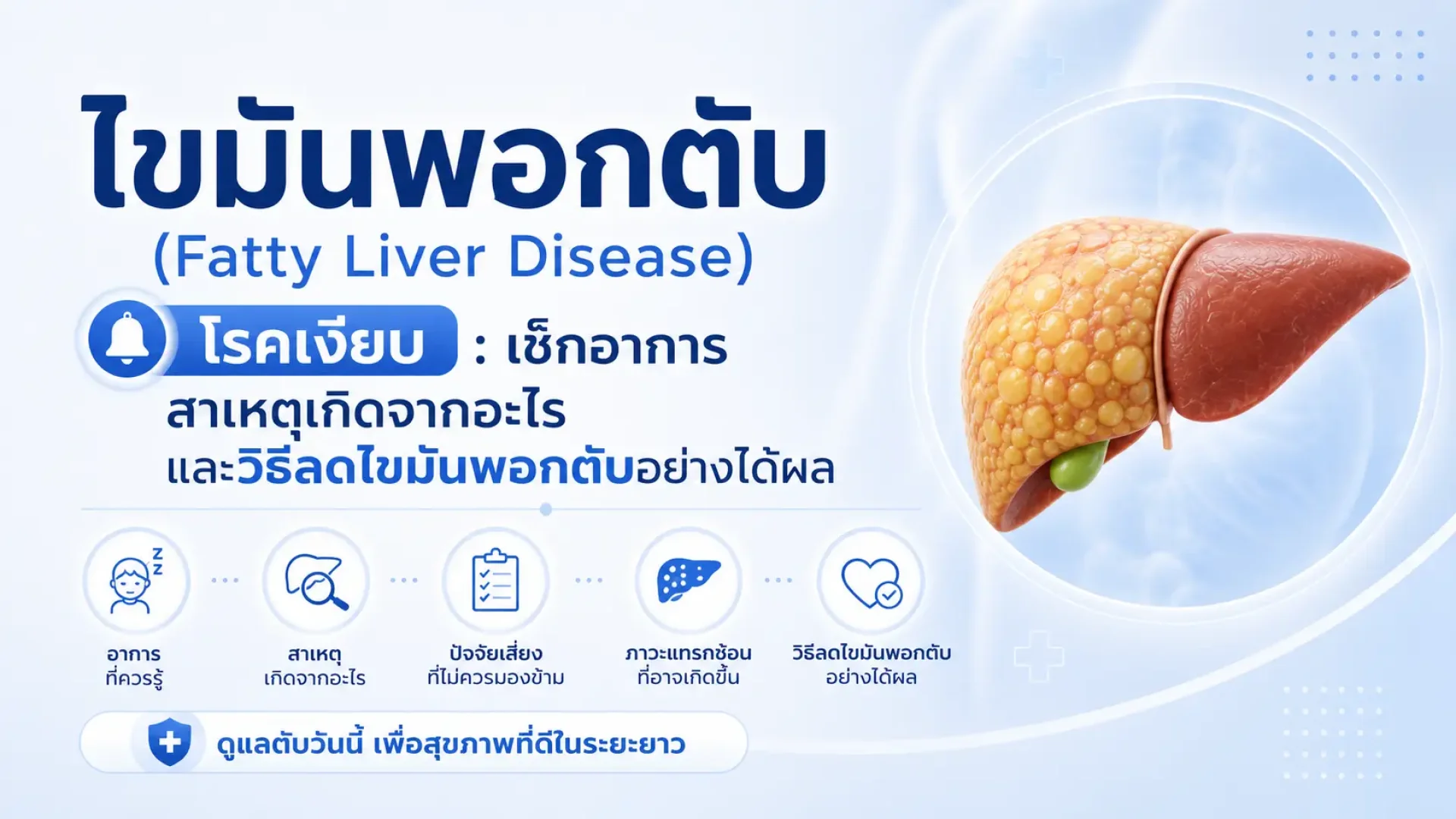
Fatty Liver Disease: The Silent Threat to Office Workers
Check Your Symptoms, Understand the Causes, and Learn Effective Management Strategies
In the fast-paced life of office workers, we often prioritize our careers over our physical well-being. Morning meetings are fueled by condensed-milk-sweetened coffee, lunches are rushed, and late nights lead to minimal exercise, inadequate sleep, and chronic stress. Many rely solely on their annual physical examination to monitor their health, unaware that certain conditions develop silently without any warning signs. Fatty Liver Disease is one of these hidden dangers.
Most people only discover they have a fatty liver during a routine check-up. They feel perfectly fine—no fever, no abdominal pain, and no jaundice (yellowing of the eyes or skin). This often leads to the question: "If there are no symptoms, is a fatty liver actually dangerous?"
The answer is yes. While it may not be immediately life-threatening, it should never be ignored. A fatty liver is not just a localized liver issue; it is a critical warning sign that your metabolism is failing. It is closely linked to metabolic syndrome, type 2 diabetes, dyslipidemia (high blood cholesterol), and hypertension, significantly increasing the long-term risk of cardiovascular disease.
Causes and Risk Factors: Why Does It Happen?
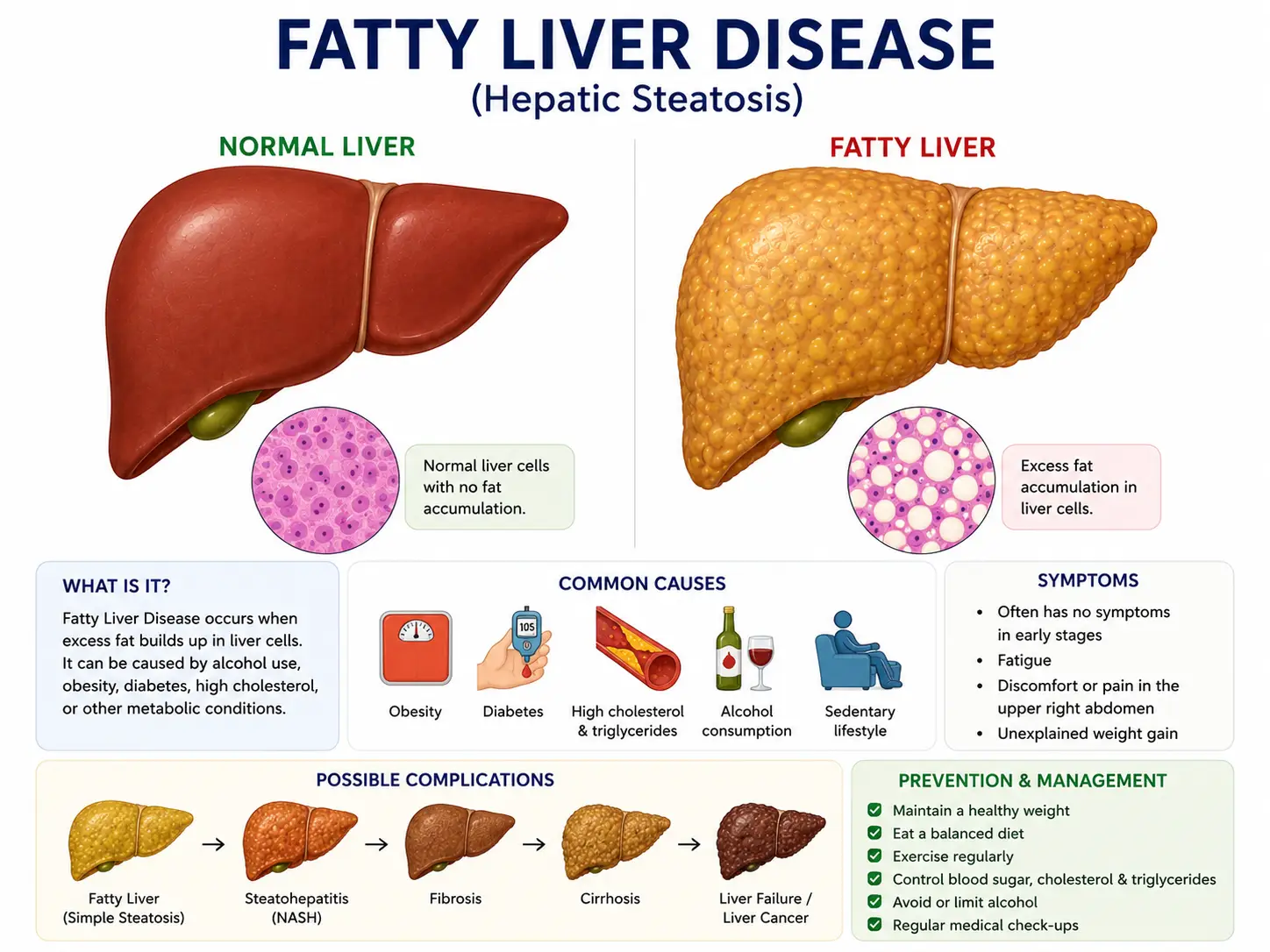
When looking at the body’s metabolic mechanisms, fatty liver disease—known medically today as MASLD (Metabolic dysfunction-associated steatotic liver disease)—is not caused by eating dietary fat alone. Instead, it stems from metabolic dysfunction, heavily triggered by common modern lifestyles:
- Excessive Sugar and Carbohydrate Intake: Consuming high amounts of bubble tea, sweetened coffee, soft drinks, or refined carbohydrates causes the body to convert excess sugar (particularly fructose) into triglycerides, which are then directly deposited into liver cells.
- Sedentary Lifestyle: Sitting at a desk for more than 6–8 hours a day without regular physical activity drastically slows down the body's metabolism, leading to energy surplus and fat accumulation.
- Insulin Resistance: This is a condition where the body's cells do not respond effectively to insulin, leading to elevated blood sugar levels. This process signals the body to transport and store more fat in the liver, directly correlating with obesity and type 2 diabetes.
- "Skinny Fat" (Visceral Fat Accumulation): It is a common misconception that only overweight individuals suffer from this disease. Lean individuals with high amounts of visceral fat (fat stored around internal organs) face an equally high risk of developing a fatty liver.
- Sleep Deprivation: Late nights and poor sleep quality disrupt hormones that regulate hunger and satiety, ultimately throwing the metabolic system off balance.
Symptoms: Spotting the Silent Signs
Fatty liver disease is called a "silent threat" because it rarely causes noticeable symptoms in its early stages. It is typically detected incidentally via an abdominal ultrasound or blood tests.
However, as fat continues to accumulate or if liver inflammation begins, the body may show subtle warning signs:
- Chronic Fatigue: Feeling constantly drained or lacking energy, even after getting what seems like enough sleep.
- Abdominal Discomfort: A feeling of fullness, tightness, or mild pain in the upper right abdomen (where the liver is located).
- Digestive Issues: Experiencing persistent bloating, gas, or indigestion after meals.
- Weight Gain around the Midsection: An increasing waistline (abdominal obesity) is a strong visual indicator of visceral and liver fat accumulation.
Note: Severe symptoms such as jaundice (yellowing of the skin and eyes), abdominal swelling (ascites), or leg edema only manifest when the disease has progressed to an advanced, critical stage like cirrhosis.
5 Effective Ways to Reverse Fatty Liver Disease
The good news is that early-stage fatty liver disease is entirely reversible. However, there are no shortcuts or "liver detox" miracles. The core of treatment relies on sustainable lifestyle modifications:
- Lose 7–10% of Your Body Weight (The Most Crucial Step): Gradual weight loss (about 0.5 kg per week) aiming for a 7–10% reduction of your current body weight is clinically proven to reduce liver fat, alleviate liver inflammation, and potentially reverse early fibrosis. For instance, if you weigh 80 kg, losing 6–8 kg can profoundly protect your liver.
- Adopt a Liver-Healthy Diet: Cut out sugary beverages, desserts, fried foods, processed meals, and refined carbohydrates. Replace them with green leafy vegetables, lean proteins (such as fish and chicken breast), and complex carbohydrates like brown rice or whole-wheat bread.
- Exercise at Least 150 Minutes per Week: Engage in moderate-intensity aerobic exercises such as brisk walking, cycling, or swimming, combined with resistance training to build muscle mass. For busy office workers, simple changes like standing up every hour or taking a walk after dinner can make a difference.
- Manage Underlying Metabolic Conditions: If you have comorbidities such as diabetes, hypertension, or high cholesterol, it is imperative to take your prescribed medications and follow your physician's advice strictly, as these conditions directly impact liver health.
- Avoid Self-Medicating with Liver Supplements: Currently, there is no approved medical supplement or "detox pill" that can cure fatty liver disease. Taking unregulated supplements can actually overburden the liver, leading to drug-induced liver injury or toxic buildup.
The 5 Stages of Fatty Liver Disease Progression
The severity of the condition depends on how much damage the liver has sustained. It progresses through five distinct stages:
| Stage | Disease Progression | Severity & Symptoms |
| 1. Simple Fatty Liver (Steatosis) | Fat begins to accumulate in liver cells, but there is no inflammation yet. | Asymptomatic. It remains hidden and is usually detected only via ultrasound. |
| 2. Liver Inflammation (MASH / NASH) | Excess fat triggers an inflammatory response, injuring liver cells. | The risk of permanent liver cell damage begins to escalate. |
| 3. Liver Fibrosis | Chronic inflammation leads to the formation of scar tissue as the liver tries to heal itself. | The liver loses its elasticity. More scarring means a higher risk of progressing to cirrhosis. |
| 4. Liver Cirrhosis | Extensive scarring severely damages the liver’s architecture, drastically reducing its function. | Severe complications appear, such as fluid retention (ascites), jaundice, and varicose veins. |
| 5. Liver Cancer (HCC) | Damaged liver cells mutate and become cancerous. | Highly life-threatening; strongly associated with long-term cirrhosis. |
How is Fatty Liver Disease Diagnosed?
To accurately screen for and assess fatty liver disease, physicians utilize a combination of three primary methods:
- Blood Tests (Liver Function Test - LFT): Done to check the levels of liver enzymes (AST and ALT). However, because some patients with fatty liver may show normal enzyme levels, doctors will evaluate these alongside blood sugar and lipid profiles.
- Abdominal Ultrasound: A quick, non-invasive imaging procedure that clearly shows whether the liver appears "bright" or "white," which indicates fat infiltration.
- FibroScan (Transient Elastography): A specialized, advanced technology used to measure both the amount of fat accumulation and the stiffness of the liver. This allows doctors to detect fibrosis or cirrhosis accurately without the need for an invasive liver biopsy.
Take Action Today Before It Is Too Late
A fatty liver is not just about the liver—it is a distress signal from your metabolism asking for help. Small, daily behavioral changes in your diet, physical activity, and sleep patterns are far more valuable than trying to treat the disease once it has progressed to irreversible cirrhosis.
If you are an office worker with a sedentary routine, or if your latest health check-up shows rising blood sugar, cholesterol, or liver enzymes, do not wait. Schedule a consultation with our specialists today for a comprehensive evaluation and take the first step toward safeguarding your long-term health.