Shingles: A Silent Viral Threat Lurking Within—Symptoms, Treatment, and Prevention.
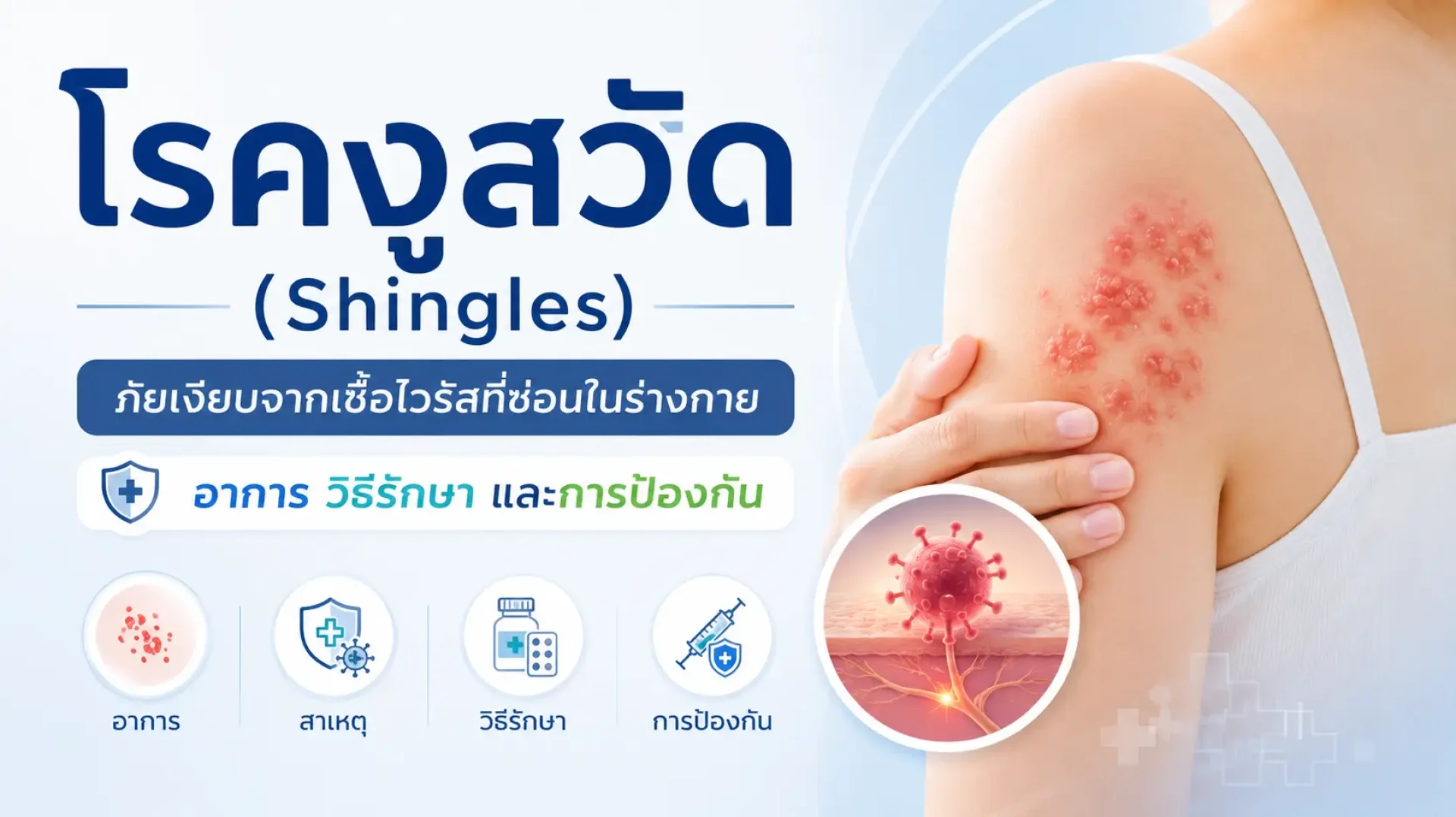
Shingles (Herpes Zoster) is a painful skin condition that can significantly disrupt your daily life. Many people often wonder: What causes shingles, how does it start, is shingles contagious, and how long does shingles last? Here is everything you need to know, compiled by our medical specialists.
1. What Causes Shingles?
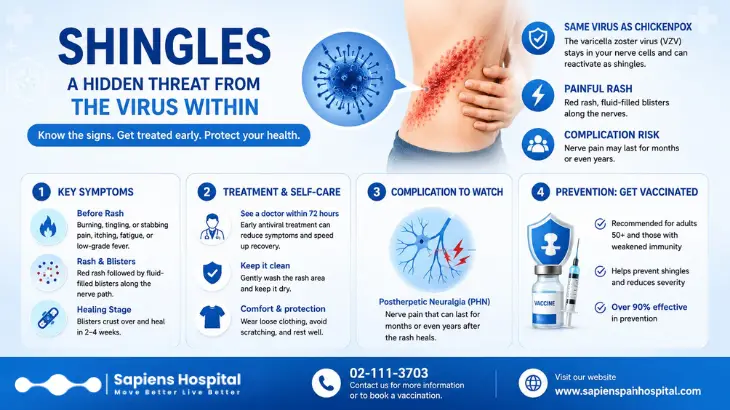
Shingles is caused by the Varicella-Zoster Virus (VZV), the same virus that causes chickenpox. After a person recovers from chickenpox, the virus stays dormant (inactive) in the body's nerve tissues. Years later, when the immune system weakens due to aging, stress, or illnesses, the virus reactivates and travels along the nerve paths to the skin, resulting in shingles.
2. How Does It Start & How Long Does Shingles Last?
How it starts (Initial Symptoms):
- Early Stage: It usually begins with burning pain, tingling, or itching on one specific side of the body or face. Some may experience a mild fever or fatigue.
- Blister Stage: Within 2–3 days, a red rash appears, followed by clusters of fluid-filled blisters along the nerve pathway.
- Crusting Stage: The blisters break open and begin to crust over.
How long does shingles last? For most healthy individuals, the rash and blisters will crust over and heal completely within 2 to 4 weeks. However, older adults may suffer from lingering nerve pain (Postherpetic Neuralgia or PHN) that can last for months.
3. Is Shingles Contagious?
No, you cannot catch shingles directly from someone who has it. However, the fluid inside the shingles blisters contains the virus. If someone who has never had chickenpox or the chickenpox vaccine comes into direct contact with the blister fluid, they can catch the virus and develop chickenpox, not shingles. Therefore, patients should keep the rash covered and avoid close contact with vulnerable groups.
4. Shingles Treatment: What Should You Do?
If you suspect you have shingles, "it is crucial to seek medical treatment within the first 72 hours of the rash appearing."
Medical Treatment Options:
- Antiviral Medications: Prescribed by a doctor to speed up healing, reduce the severity of symptoms, and prevent complications.
- Pain Relievers: Medication to manage acute nerve pain and burning sensations.
Home Care Tips:
- Do not scratch or pop the blisters to prevent secondary bacterial infections.
- Clean the affected area gently with water or saline solutions and pat dry.
- Wear loose-fitting clothing to minimize skin irritation.
5. Prevention: Shingles Vaccine and Price
The most effective way to prevent shingles and its painful complications is the Shingles Vaccine (Recombinant Vaccine). It is recommended for adults aged 50 and older, or individuals aged 18 and older with compromised immune systems. It is administered in 2 doses (2–6 months apart) and offers over 90% protection.
Comprehensive Shingles Prevention and Care at Sapiens Hospital
We understand how deeply Shingles and Postherpetic Neuralgia (PHN) can impact your quality of life and that of your loved ones. Sapience Hospital offers comprehensive, end-to-end medical care led by highly experienced specialists and advanced medical technologies:
- Advanced Immunization Services: We provide the latest Recombinant Zoster Vaccine, offering high-efficacy protection to boost your immune system and significantly reduce the risk of developing Shingles.
- Specialized Pain Management Center: For patients suffering from acute or chronic nerve pain following a Shingles outbreak, our dedicated Pain Management Specialists are here to help. We design personalized, targeted treatment plans to relieve your discomfort and help you regain a pain-free, active lifestyle.
Consult our specialists for a diagnosis or schedule your Shingles vaccination today. Call 02-111-3703.