How to care for diabetic and chronic wounds to prevent them from worsening
Last updated: 1 Aug 2026

Diabetic and Chronic Wounds: How to Prevent Complications
A diabetic ulcer, a chronic wound, or a non-healing sore on the foot can escalate into severe infections, osteomyelitis (bone infection), or even risk amputation if not properly managed. Knowing the danger signs, proper wound care methods, and when to see a doctor is crucial.
A tiny wound on the foot might not seem like a big deal.
Therefore, the most critical questions are not just about "what ointment to apply," but rather:
What is a Diabetic Foot Ulcer?
A diabetic wound is an ulcer that occurs in diabetic patients, most commonly found on the feet, toes, soles, heels, or areas that bear weight and experience friction from shoes. These wounds are typically caused by a combination of factors, including:
Why Do Diabetics Get Wounds Easily and Heal Slowly?
Many people assume diabetic wounds are caused solely by high blood sugar. In reality, they are the result of several bodily systems beginning to malfunction simultaneously.
1. Peripheral Neuropathy (Loss of Sensation)
Many diabetic patients suffer from nerve damage, which diminishes sensation in their feet. Symptoms can include numbness, burning sensations, a "pins and needles" feeling, or a complete lack of pain. The danger here is that when a patient steps on a sharp object, gets a shoe bite, or sustains a minor scrape, they might not feel it. By the time they notice, the wound may have already deepened or become infected. This is why diabetic patients must visually inspect their feet daily, even if they feel no pain.
2. Poor Blood Circulation (Delayed Healing)
Diabetes is closely linked to peripheral artery disease, which reduces blood flow to the legs and feet. Without adequate blood supply, wounds do not receive enough oxygen and essential nutrients, causing them to heal slowly and increasing the risk of tissue necrosis. Warning signs of poor circulation include:
When blood glucose levels are chronically high, the white blood cells responsible for fighting off pathogens cannot function effectively. This makes the wound highly susceptible to infection and compromises the body's ability to combat bacteria.
How to Care for Diabetic Wounds to Prevent Complications
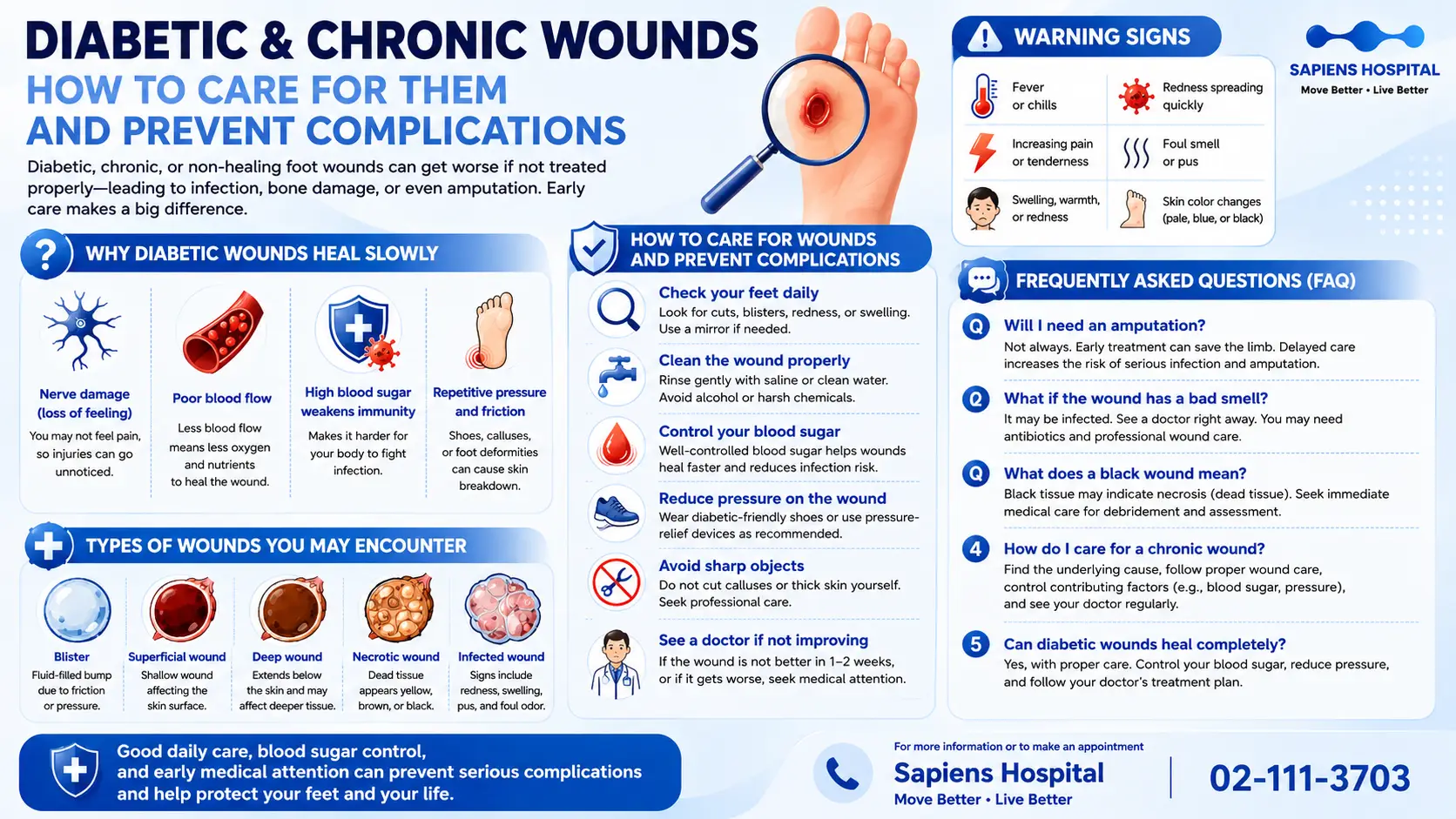
Frequently Asked Questions (FAQ)
A diabetic wound may start small, but improper care can turn it into a major health crisis. Early intervention and seeking medical attention at the first warning signs will help prevent complications and significantly improve the chances of successful healing.
Inquiries and Appointments
Sapiens Hospital Move Better : Live Better Tel: 02-111-3703
References:
IWGDF (International Working Group on the Diabetic Foot) 2023.
IDSA (Infectious Diseases Society of America) Diabetic Foot Infection.
ADA (American Diabetes Association) Standards of Care in Diabetes 2026.
NICE (National Institute for Health and Care Excellence).
A diabetic ulcer, a chronic wound, or a non-healing sore on the foot can escalate into severe infections, osteomyelitis (bone infection), or even risk amputation if not properly managed. Knowing the danger signs, proper wound care methods, and when to see a doctor is crucial.
A tiny wound on the foot might not seem like a big deal.
- Some start from a simple shoe bite.
- Some begin as a corn.
- Some result from cutting a toenail too deep.
- Some happen after unknowingly stepping on a sharp object.
- Some are only discovered when washing feet or taking off socks.
Therefore, the most critical questions are not just about "what ointment to apply," but rather:
- How can we prevent the wound from worsening?
- When should you immediately see a doctor?
- What types of wounds are at high risk of infection?
- Does a diabetic wound always lead to amputation?
What is a Diabetic Foot Ulcer?
A diabetic wound is an ulcer that occurs in diabetic patients, most commonly found on the feet, toes, soles, heels, or areas that bear weight and experience friction from shoes. These wounds are typically caused by a combination of factors, including:
- Peripheral neuropathy (nerve damage) caused by diabetes.
- Peripheral artery disease (PAD) or poor blood circulation to the extremities.
- High blood sugar, which compromises the immune system.
- Repetitive mechanical stress from walking, footwear, or foot deformities.
- Improper foot care, such as cutting nails too deep, picking at corns, using sharp objects, or soaking feet in hot water.
Why Do Diabetics Get Wounds Easily and Heal Slowly?
Many people assume diabetic wounds are caused solely by high blood sugar. In reality, they are the result of several bodily systems beginning to malfunction simultaneously.
1. Peripheral Neuropathy (Loss of Sensation)
Many diabetic patients suffer from nerve damage, which diminishes sensation in their feet. Symptoms can include numbness, burning sensations, a "pins and needles" feeling, or a complete lack of pain. The danger here is that when a patient steps on a sharp object, gets a shoe bite, or sustains a minor scrape, they might not feel it. By the time they notice, the wound may have already deepened or become infected. This is why diabetic patients must visually inspect their feet daily, even if they feel no pain.
2. Poor Blood Circulation (Delayed Healing)
Diabetes is closely linked to peripheral artery disease, which reduces blood flow to the legs and feet. Without adequate blood supply, wounds do not receive enough oxygen and essential nutrients, causing them to heal slowly and increasing the risk of tissue necrosis. Warning signs of poor circulation include:
- Cold feet
- Dark, pale, or purplish skin discoloration
- Calf pain while walking that improves with rest
- Slow-healing wounds
- Weak or absent pulses in the feet
When blood glucose levels are chronically high, the white blood cells responsible for fighting off pathogens cannot function effectively. This makes the wound highly susceptible to infection and compromises the body's ability to combat bacteria.
How to Care for Diabetic Wounds to Prevent Complications
- Inspect your feet daily: Look for cuts, scrapes, cracked skin, or abnormal red spots. If you cannot see the bottom of your feet clearly, use a mirror.
- Clean wounds properly: Wash gently with normal saline solution or clean water. Do not use alcohol, hydrogen peroxide, or harsh chemicals, as they can damage healing tissue.
- Control blood sugar levels: Well-managed blood sugar is one of the most effective ways to speed up wound healing.
- Offload pressure from the wound: Use prescribed diabetic footwear or offloading devices as recommended by your physician to reduce pressure on the affected area.
- Avoid DIY foot surgery: Never use sharp objects to cut or peel corns, calluses, or hard skin yourself. Always have a specialist doctor or nurse handle this.
- See a doctor immediately if there is no improvement: If the wound does not get smaller within 1-2 weeks, or if it becomes red, swollen, painful, emits a foul odor, or discharges pus, see a doctor immediately to prevent the infection from spreading.
Frequently Asked Questions (FAQ)
- Does a diabetic foot wound always mean amputation?
- What should I do if a diabetic wound has a foul odor?
- What does it mean if a diabetic wound turns black?
- How should chronic wounds be managed?
- Can diabetic foot ulcers be completely cured?
A diabetic wound may start small, but improper care can turn it into a major health crisis. Early intervention and seeking medical attention at the first warning signs will help prevent complications and significantly improve the chances of successful healing.
Inquiries and Appointments
Sapiens Hospital Move Better : Live Better Tel: 02-111-3703
References:
IWGDF (International Working Group on the Diabetic Foot) 2023.
IDSA (Infectious Diseases Society of America) Diabetic Foot Infection.
ADA (American Diabetes Association) Standards of Care in Diabetes 2026.
NICE (National Institute for Health and Care Excellence).
Related Content

What is appendicitis, and what kind of abdominal pain should raise concern? Discover the underlying causes, the warning signs you shouldn't ignore, and how modern surgical advancements promote faster recovery for your health.
30 Jun 2026

At Sapiens Hospital, we do not use generic rehabilitation plans. Instead, we provide a Tailor-Made Recovery Program through comprehensive assessments conducted by specialists in Pain Intervention.
22 Sept 2025

หากล้มหัวฟาดพื้นและปวดคอ ให้สังเกตอาการ เช่น ความเจ็บปวดที่รุนแรงหรือความชาบริเวณคอ ถ้ามีอาการเหล่านี้ ควรรีบไปพบแพทย์เพื่อรับการรักษาที่เหมาะสม
28 May 2025
