Essential Vaccines for Adults
When we talk about "vaccines," many people immediately think of young children, vaccination record books, or school-age immunizations. In reality, vaccines are not just for children—adults need them too.
The primary reason is that as we age, our immune system gradually weakens. Certain diseases that might have once seemed like a common cold can develop into severe infections requiring hospitalization. This is especially true for the elderly, individuals with diabetes, heart disease, lung disease, kidney disease, those with weakened immune systems, pregnant women, or those who are in close contact with large crowds.
Another commonly overlooked point is that the immunity gained from childhood vaccines can fade over time. Some vaccines require booster shots, some are newly recommended for adults, and others should be administered based on specific lifestyle risks—such as occupation, travel, underlying health conditions, or pregnancy planning.
Therefore, adult healthcare should not be limited to blood tests, blood pressure checks, or chronic disease screening. It must also include the crucial question: “Are my vaccinations up to date and age-appropriate?” The right vaccine today can reduce the risk of severe disease in the future far more than many realize.
Why Do Adults Still Need Vaccines?
Many adults do not fall ill because there is no way to prevent the disease, but rather because they are unaware that vaccines exist to help lower their risks. Adult vaccination serves several key purposes:
- Reduces the chances of contracting certain infections.
- Decreases disease severity if an infection occurs.
- Lowers the likelihood of hospitalization.
- Prevents severe complications, such as pneumonia, chronic nerve pain from shingles, chronic hepatitis, or certain types of cancer.
- Protects people around you, particularly young children, the elderly, and those with weakened immune systems.
- Prepares you for travel, working in high-risk areas, or planning for pregnancy.
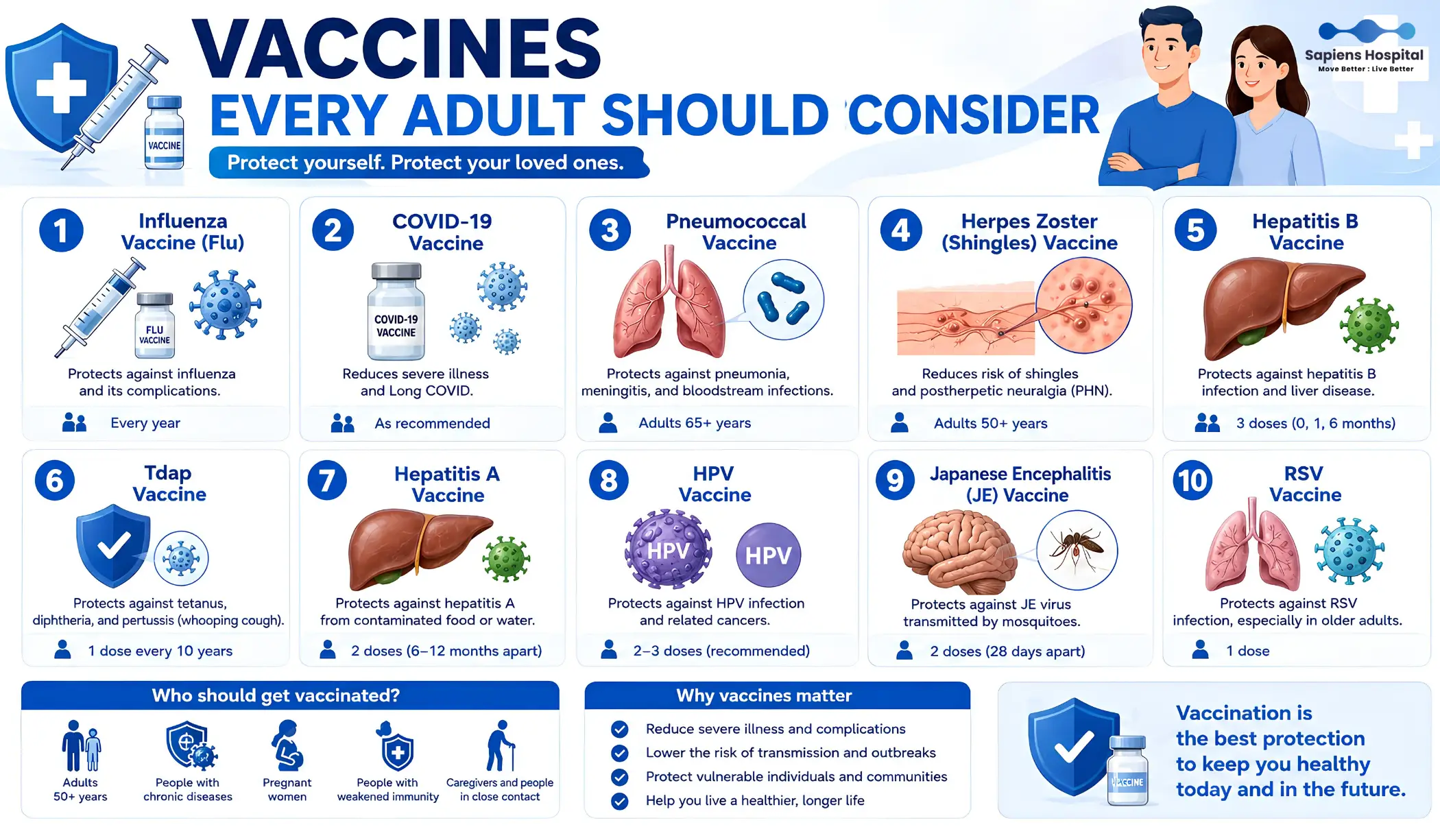
10 Essential Vaccines for Adults
1. Influenza (Flu) Vaccine: An Annual Essential
The flu is not just a common cold. In the general population, it can cause high fever, body aches, fatigue, coughing, and sore throat, leading to missed workdays. However, in high-risk groups—the elderly, pregnant women, and patients with heart, lung, or kidney disease—it can lead to pneumonia, respiratory distress, exacerbation of chronic conditions, and hospitalization.
Because influenza virus strains mutate constantly, the vaccine is updated annually to match the circulating seasonal strains.
- Who should prioritize this? The elderly, individuals with chronic diseases (diabetes, heart, lung, kidney), pregnant women, healthcare professionals, and those in close contact with children, seniors, or large crowds.
- Note: While the flu vaccine does not prevent infection 100%, it significantly reduces disease severity, complications, and the need for hospitalization in high-risk groups.
Although the COVID-19 landscape has evolved, the virus has not disappeared. Certain groups remain at high risk for severe symptoms, particularly as immunity from previous infections or past vaccines wanes over time. Updated COVID-19 vaccines play a vital role in reducing severe illness and complications.
- Who should consult a doctor? The elderly, individuals with chronic conditions (heart, lung, diabetes, kidney, liver), immunocompromised individuals, those on immunosuppressants, pregnant women, and frontline workers.
- Note: Recommendations may shift based on variants and national guidelines. Always consult your physician first.
The Streptococcus pneumoniae bacteria can cause various illnesses, including pneumonia, middle ear infections, sinusitis, meningitis, and bloodstream infections. In older adults and those with underlying conditions, these infections can be exceptionally severe.
- Who should consider this? Adults aged 65 and older, individuals with chronic lung disease (like COPD or severe asthma), chronic heart, kidney, or liver disease, diabetes, immunocompromised individuals, those without a spleen (asplenia), smokers, and those with a history of severe pneumococcal infection.
Shingles is caused by the varicella-zoster virus—the same virus that causes chickenpox. After a chickenpox infection, the virus lies dormant in the nervous system and can reactivate when immunity drops. The most concerning complication is Postherpetic Neuralgia (PHN), a chronic, severe burning nerve pain that can last for months or years, especially in older adults.
- Who should consider this? Adults aged 50 and older, individuals with a history of shingles, chronic disease patients, and certain immunocompromised individuals aged 19 and older (as advised by a doctor).
- Note: The recombinant zoster vaccine is typically given in 2 doses. It does not treat active shingles but prevents the disease and its future complications.
Many adults received these shots as children or after an injury but aren't sure if their immunity is still active. These vaccines prevent severe diseases, including Tetanus (from contaminated wounds), Diphtheria, and Pertussis (Whooping Cough, which is highly dangerous to unvaccinated infants).
- General Guideline: Adults should receive at least one dose of Tdap if they haven't before, followed by a Td or Tdap booster every 10 years. Pregnant women should receive a Tdap dose during each pregnancy to pass protective antibodies to their newborn.
Hepatitis B is a leading cause of chronic hepatitis, cirrhosis, and liver cancer. It spreads through blood, bodily fluids, sexual contact, shared needles, or from mother to child. Many are infected without knowing it due to a lack of early symptoms.
- Who should consider this? Unvaccinated adults, those with multiple sexual partners, healthcare workers, chronic kidney/dialysis patients, chronic liver disease patients, those living with an infected person, and travelers to high-risk areas. Blood screening is recommended before vaccination to check for existing immunity or active infection.
Hepatitis A spreads through contaminated food and water, causing acute liver inflammation (fever, fatigue, jaundice, dark urine). While most recover, it can be severe in adults, particularly those with pre-existing liver conditions.
- Who should consider this? Travelers to high-risk areas, patients with chronic liver disease, men who have sex with men, people who use illicit drugs, and those with occupational exposure risks. It is typically given in 2 doses.
Human Papillomavirus (HPV) is linked to several cancers, including cervical, anal, and certain oral/throat cancers, as well as genital warts. It benefits both men and women by reducing cancer risks and preventing transmission.
- Who should consider this? Unvaccinated individuals, teens, and young adults. Adults aged 27–45 may also benefit and should discuss this with their doctor based on personal risk factors.
While known as a childhood illness, RSV can cause severe bronchitis, pneumonia, and breathing difficulties in vulnerable adults, often leading to hospitalization.
- Who should consider this? Adults aged 75 and older, and adults aged 50–74 with high-risk conditions (heart/lung disease, diabetes, kidney disease, weakened immunity). It is generally a single-dose vaccine.
With increased international travel and occasional outbreaks, ensuring immunity against these diseases is crucial for adults lacking vaccination records or prior infection history.
- Who should consider this? Individuals with unknown vaccination histories, travelers, healthcare workers, and women planning pregnancy.
- Warning: These are live vaccines and must NOT be given during pregnancy or to severely immunocompromised individuals. Always consult a physician first.
For your safety, always inform your doctor or nurse about the following before receiving any vaccine:
- History of severe allergic reactions to vaccines or vaccine components.
- Current pregnancy or plans to become pregnant.
- Immunocompromised status.
- Current use of immunosuppressants, high-dose steroids, biologic drugs, or chemotherapy.
- Recent administration of other vaccines.
- Current fever or acute illness.
- Blood disorders or use of blood thinners (anticoagulants).
- Any previous severe adverse reactions to a vaccine.
(Side effects like mild pain, swelling at the injection site, low-grade fever, or temporary fatigue are common and generally safe).
Integrating Vaccines with Your Annual Health Check-Up
Your annual physical is the perfect time to review your immunization needs. Your doctor can assess your age, underlying diseases, blood results, and lifestyle to create a prioritized, personalized vaccination plan.
For those with chronic illnesses, proactive vaccination is a critical part of long-term care—protecting the lungs for respiratory patients, guarding the heart against infection-triggered exacerbations, and shielding the immunocompromised.
Frequently Asked Questions (FAQs)
1. Do adults really need vaccines?
Yes. Immunity from certain childhood vaccines fades over time, and the risk of severe disease increases with age and underlying health conditions.
2. What if I don't remember my vaccination history?
Bring any past records to your doctor. If records are unavailable, your doctor may order blood tests to check your immunity levels or simply restart specific vaccination series safely.
3. Do I need every adult vaccine listed?
No. Vaccine needs are individualized based on age, occupation, health status, and lifestyle risks.
4. Do I really have to get the flu shot every year?
Yes. The influenza virus mutates constantly, and vaccine-induced immunity wanes over time. Annual vaccination is highly recommended.
5. If I’ve already had shingles, do I still need the vaccine?
Yes. Clinical guidelines recommend the vaccine even if you’ve had the disease, as it prevents recurrences and lowers the risk of severe nerve pain complications.
6. Can multiple vaccines be administered on the same day?
Many vaccines can be safely co-administered. However, certain combinations (like multiple live vaccines) may require specific spacing. Your healthcare provider will schedule them appropriately.
7. Can people with chronic diseases get vaccinated?
Not only can they, but they often should. Chronic illness puts individuals at a much higher risk for severe infections. However, the timing and type of vaccine (especially live vaccines) must be carefully evaluated by a physician.
Vaccines for adults are not a distant concern, nor are they something to think about only after falling ill. As we age, our immunity drops, chronic conditions develop, and we face new exposures. Vaccines are just as vital to preventive healthcare as routine check-ups, exercise, diet, and adequate sleep.
The goal isn't to get every vaccine, but to get the right vaccines at the right time, safely.
Inquire for more information or book an appointment:
Sapiens Hospital | Move Better : Live Better Tel. 02-111-3703
Academic References
Centers for Disease Control and Prevention. Adult Immunization Schedule by Age: Recommendations for Ages 19 Years or Older, United States, 2025; updated 2026.
Centers for Disease Control and Prevention. Adult Immunization Schedule Notes: Recommendations for Ages 19 Years or Older, United States, 2025.
Centers for Disease Control and Prevention. Pneumococcal Vaccine Recommendations, 2026.
Centers for Disease Control and Prevention. RSV Vaccine Guidance for Adults, 2026.
Centers for Disease Control and Prevention. Shingles Vaccine Recommendations, 2024–2025.
Centers for Disease Control and Prevention. Hepatitis B Vaccine Administration, 2025.
Centers for Disease Control and Prevention. Staying Up to Date with COVID-19 Vaccines, 2025–2026.
Centers for Disease Control and Prevention. Tdap Vaccine Information Statement and Adult Booster Recommendations.
Centers for Disease Control and Prevention. HPV Vaccination Recommendations.
Centers for Disease Control and Prevention. Hepatitis A Vaccine Administration and CDC Yellow Book 2026.
World Health Organization. Immunization Agenda 2030: A Global Strategy to Leave No One Behind, 2020.
Lu PJ, Hung MC, Srivastav A, et al. Surveillance of Vaccination Coverage Among Adult Populations — United States. MMWR Surveillance Summaries.