Hepatitis: The Silent Killer with No Warning! Check 6 Danger Signs Before Risking Liver Cirrhosis
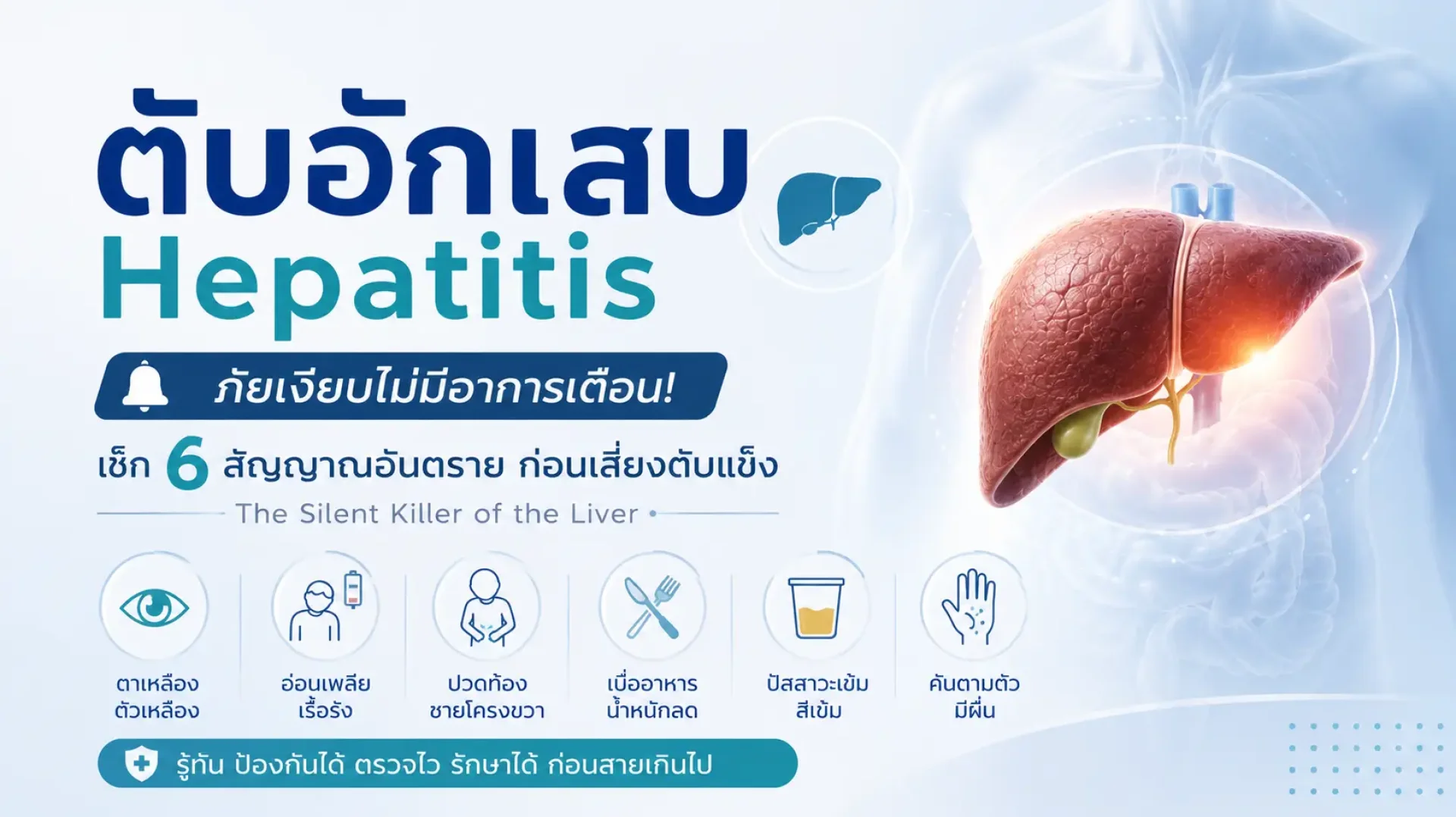
Hepatitis: The Silent Killer of the Liver – Causes, Symptoms, and Screening
The liver is the largest internal organ in the human body, performing over 500 essential functions, including filtering toxins, producing bile, and storing energy. However, Hepatitis remains a silent threat globally because it rarely shows warning signs in its early stages. Left untreated, it can eventually lead to liver cirrhosis and liver cancer.
What is Hepatitis?
Hepatitis is an inflammation of the liver cells, which impairs liver function. Because many people do not experience early symptoms, the disease often progresses silently. Regular health check-ups and liver function tests are highly recommended, especially for those with risk factors.
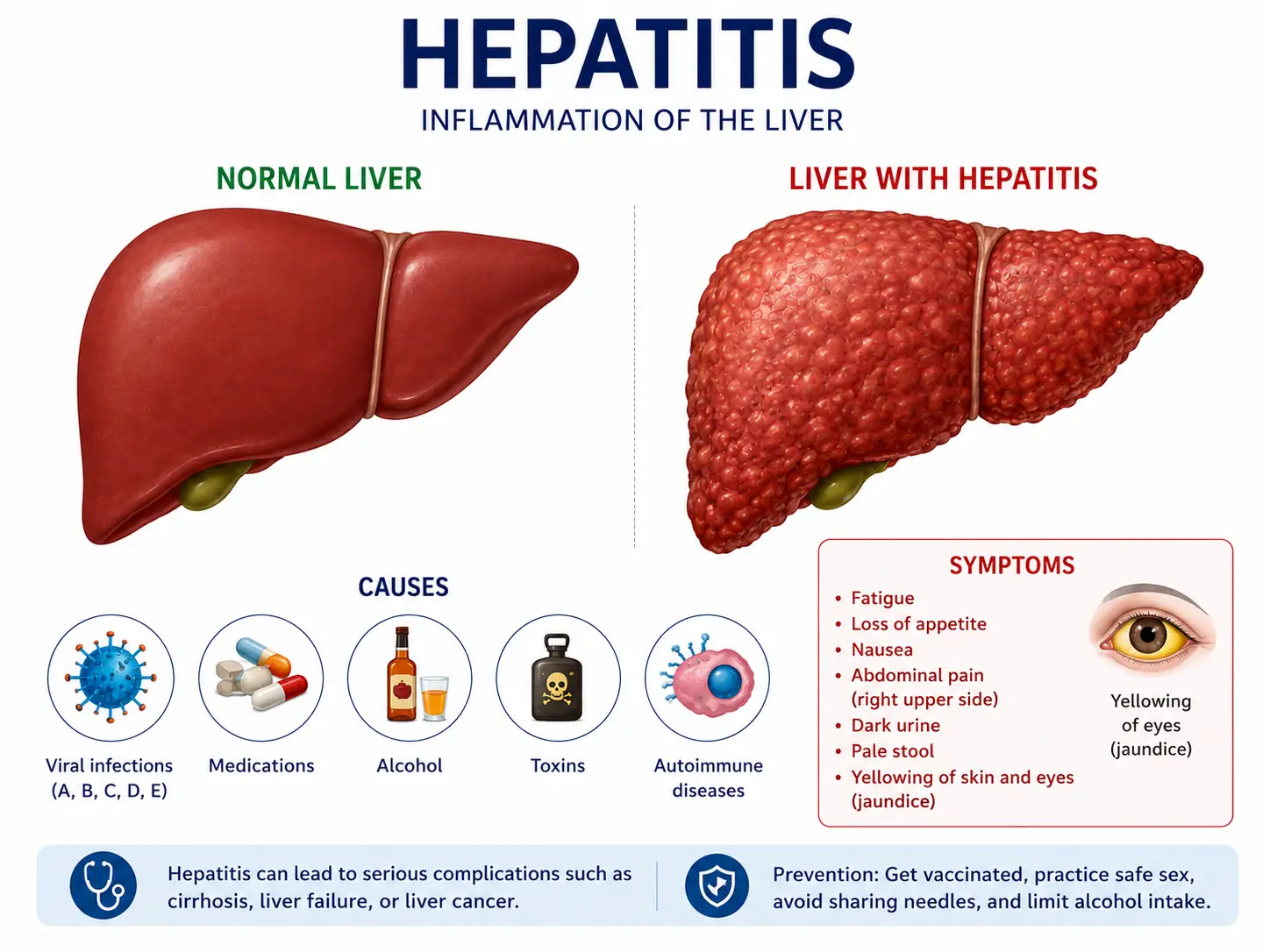
- What Causes Hepatitis?
Hepatitis can be broadly categorized into two main groups based on its causes:
1.1 Viral Hepatitis
This is the most common cause, triggered by 5 primary virus strains, each with different transmission routes:
| Virus Strain | Transmission Route | Severity / Chronicity |
| Hepatitis A (HAV) | Contaminated food or water | Usually acute, fully recoverable, does not become chronic. |
| Hepatitis B (HBV) | Blood, sexual contact, mother-to-child during childbirth | Can become chronic, leading to cirrhosis and liver cancer. |
| Hepatitis C (HCV) | Blood (sharing needles, past blood transfusions), sexual contact | High chronicity rate (>80% of cases become chronic). |
| Hepatitis D (HDV) | Blood, sexual contact (requires HBV to replicate) | Increases severity in patients already infected with HBV. |
| Hepatitis E (HEV) | Raw food or contaminated water | Usually acute, but highly dangerous for pregnant women. |
1.2 Non-Viral Hepatitis
- Lifestyle Factors: Excessive alcohol consumption (Alcoholic Hepatitis) and fatty liver disease caused by obesity or diabetes (NASH).
- Medications and Toxins: Drug overdoses (e.g., paracetamol) or prolonged, unmonitored use of certain herbal remedies and dietary supplements.
- Immune System: An autoimmune response where the body’s immune system attacks its own liver cells (Autoimmune Hepatitis).
2. Recognizing the Warning Signs: Symptoms of Hepatitis
While early-stage hepatitis is often "asymptomatic," acute inflammation or declining liver function may trigger the following symptoms:- Low-grade fever, fatigue, and unexplained weakness
- Loss of appetite, nausea, and vomiting
- Dull pain or discomfort in the upper right abdomen (where the liver is located)
- Dark-colored urine (resembling dark tea)
- Jaundice (yellowing of the skin and eyes)
- Pale or clay-colored stools
⚠️ Important Notice: Chronic hepatitis (commonly caused by HBV and HCV) can remain completely asymptomatic for decades. Patients often find out only when severe liver damage has already progressed to cirrhosis, showing symptoms like abdominal swelling (ascites), swollen legs, or vomiting blood.
3. Treatment Approaches for Hepatitis
Treatment depends on the root cause and severity of the disease, carefully evaluated by a physician:
- Acute Hepatitis (e.g., HAV or HEV): Focuses on symptomatic treatment, adequate rest, a nutritious diet, and avoiding liver-damaging substances like alcohol and unnecessary medications while the liver heals itself.
- Chronic Hepatitis (e.g., HBV or HCV): Modern medicine offers highly effective Antiviral Drugs. Hepatitis C can now be completely cured, while Hepatitis B can be successfully controlled to minimize liver damage and drastically reduce the risk of liver cancer.
- Lifestyle-Induced Hepatitis: Requires lifestyle modifications, such as cutting back on alcohol, managing weight, and controlling underlying conditions like diabetes or high cholesterol.
4. Screening: Know Your Status Before It's Too Late
Because hepatitis is a silent disease, screening is crucial—especially for individuals with high-risk behaviors or anyone born before 1992 (1935 B.E.), who may not have received the mandatory Hepatitis B vaccine at birth.
Standard screening methods include:
- Liver Function Test (LFT): A blood test checking liver enzyme levels (SGOT/SGPT). Elevated levels indicate active liver inflammation.
- Viral Hepatitis Serology: Blood tests to screen for Hepatitis B antigens (HBsAg), Hepatitis C antibodies (Anti-HCV), and immunity levels.
- Upper Abdominal Ultrasound: An imaging test to evaluate the liver's physical structure and screen for fatty liver or tumors.
- FibroScan: A non-invasive, painless procedure used to assess liver stiffness (fibrosis) and the amount of fatty accumulation.
Comprehensive Liver Screening and Care at Sapience Hospital
Do not wait for jaundice or yellowing eyes to appear, as that often means severe liver damage has already occurred. Sapience Hospital provides comprehensive viral hepatitis screening and specialized liver care led by experienced gastroenterologists and hepatologists, backed by precise diagnostic technology to ensure your peace of mind.
Consult a specialist for an accurate diagnosis or book your liver screening package today. Call: 02-111-3703